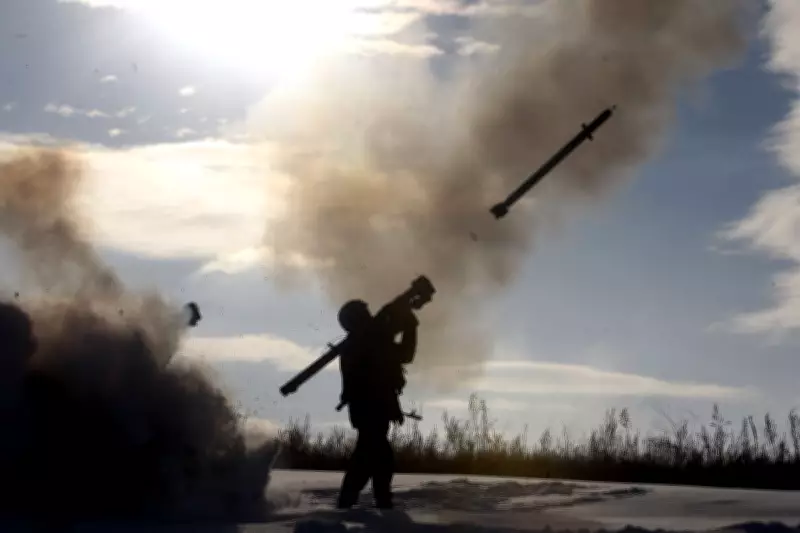
According to a new report, United States intelligence assessments allege that China is quietly taking a more active role in the Iran war and may have even sent shoulder missiles to Iran in recent weeks. The missiles in question are man-portable air-defense systems, commonly known as MANPADs, which are designed to shoot down low-flying aircraft.
Intelligence Details and Denials
Sources familiar with the intelligence told CNN that China was working to route the shipments through third countries to make it difficult to trace their origin. However, the intelligence is not conclusive, and there is no evidence that Chinese missiles have been used against American or Israeli troops so far, according to the New York Times.
A spokesperson for the Chinese embassy in Washington, D.C., denied the allegation to CNN, stating, "China has never provided weapons to any party in this conflict; the information in question is untrue." Liu Pengyu, the spokesperson for the Chinese Embassy, further told the New York Times, "As a responsible major country, China consistently fulfills its international obligations. We urge the U.S. side to refrain from making baseless allegations, maliciously drawing connections, and engaging in sensationalism; we hope that relevant parties will do more to help de-escalate tensions."

Broader Context and Escalation Risks
If true, China's intervention would signal a significant global escalation in the conflict and indicate that Chinese officials are positioning themselves against the U.S. This development comes despite reports earlier this week indicating China had helped Pakistan broker a ceasefire deal. Recent intelligence assessments also indicated that Chinese companies have continued to sell materials to Iran needed to produce rocket fuel, even after the U.S. attacked Iran in February.
Specifically, the week of March 2, two state-owned Iranian vessels, believed to be transporting sodium perchlorate, departed from a Chinese port, according to a report from the U.S.–China Economic and Security Review Commission. The new intelligence assessments suggest the Chinese government is directly playing a larger role in supplying Iran with weapons.
International Diplomacy and Meetings
President Donald Trump is expected to meet with China's president, Xi Jinping, next month. Initially, the two were supposed to meet at the end of March, but Trump delayed the trip due to the ongoing conflict. This potential missile supply issue could complicate these diplomatic efforts.
Last month, US intelligence indicated that Russia was found to be assisting Iran with intelligence on U.S. forces in the Middle East and advanced drone technology. America's European allies, including the United Kingdom, have reportedly warned U.S. officials of a deepening military cooperation between Russia and Iran. Russian intelligence forces have also allegedly helped Iran in determining the locations of U.S. military assets, including its warships.
Ukrainian President Volodymyr Zelensky publicized this information on X last month, declaring it had "irrefutable evidence" that Russia was providing Iran with intelligence. This adds to the complex geopolitical landscape, where multiple nations are increasingly involved in the Iran conflict, raising concerns about further escalation and global stability.