EU's Top Court Declares Hungary's Anti-LGBTQ Restrictions Illegal
The European Court of Justice (ECJ) delivered a landmark ruling on Tuesday, stating unequivocally that Hungary's outgoing government violated European Union law through its restrictive measures targeting LGBTQ content. The court determined these policies actively stigmatised and marginalised gay and transgender individuals, contravening the bloc's foundational principles.
A Pivotal Test for Hungary's New Leadership
This significant legal judgment arrives at a critical juncture, poised to serve as an early examination of the social policy direction under Hungary's new Prime Minister, Peter Magyar. Magyar recently secured a decisive electoral victory on 12 April, ending Viktor Orban's uninterrupted 16-year tenure as the nation's leader. The ruling places immediate pressure on the incoming administration to address these contentious issues.
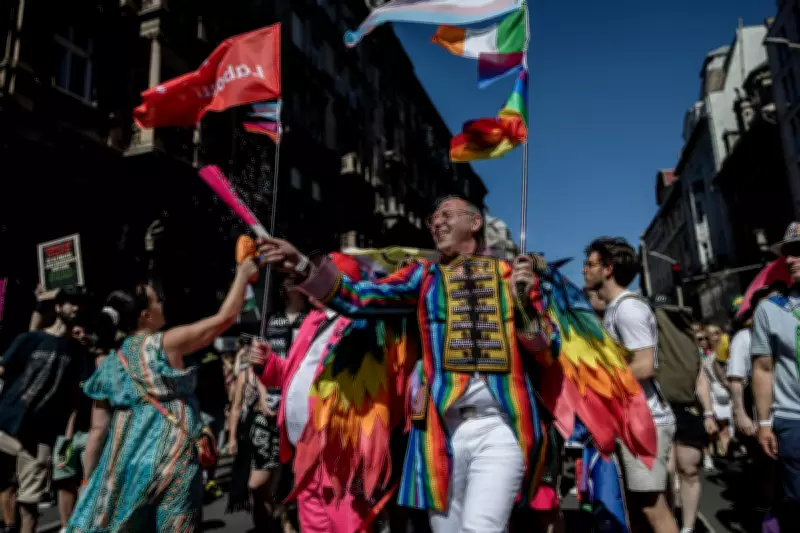
Under Orban's governance, LGBTQ rights in Hungary experienced severe regression. Notable actions included the controversial ban on Pride marches implemented in 2025 and the deployment of police-operated facial recognition technology to identify event participants. Peter Magyar, a former official within Orban's right-wing Fidesz party, campaigned under a banner of equality. However, he has notably refrained from articulating a definitive position on LGBTQ rights since his election.

Breaches of EU Treaties and Fundamental Freedoms
The European Court of Justice concluded that Hungary's legislative actions constituted a clear breach of Article 2 of the EU Treaty, which enshrines the fundamental values shared by all 27 member states. Furthermore, the court found the Hungarian laws violated the freedom to provide and receive services and infringed upon established data protection regulations.
The contentious legislation empowered authorities to impose penalties on individuals who organised or participated in Pride events. It also sanctioned the use of facial recognition software to monitor and identify attendees, raising profound concerns over privacy and civil liberties.
Widespread European Condemnation and Diplomatic Pressure
At the height of the controversy, seventeen European Union member states collectively urged Hungary to amend the law, reflecting deepening anxieties about the country's adherence to democratic standards. A coalition of EU diplomatic heavyweights, including France, Germany, and Spain, signed a formal declaration expressing grave concern.
These nations stated they were "extremely concerned about these developments, which are against the fundamental values of human dignity, freedom, equality, and respect for human rights enshrined in the EU treaties." The coordinated response highlighted the broader geopolitical tensions surrounding rule of law and human rights within the Union.
Magyar's Ambiguous Stance and Constitutional Pledges
In the wake of his landslide victory, Peter Magyar vowed to initiate constitutional reforms aimed at restoring democratic standards. While his campaign platform emphasised support for equality, his public statements on LGBTQ rights have been deliberately ambiguous.
Magyar stated, "I have clearly stated several times already last year that everyone has the right to assemble in Hungary. We have clearly stated that, according to Tisza and the many millions of Hungarians who support Tisza, everyone can live with, and love, whomever they want, as long as they do not violate the laws and do not harm others."
This ruling from the EU's highest court now creates an unavoidable legal and political imperative for the new Hungarian government. It forces a reckoning with European legal standards and sets the stage for potential conflicts between national sovereignty and supranational law, with profound implications for the future of LGBTQ rights in Central Europe.