Explosives Found Near Serbian Gas Pipeline Deemed Insufficient for Sabotage
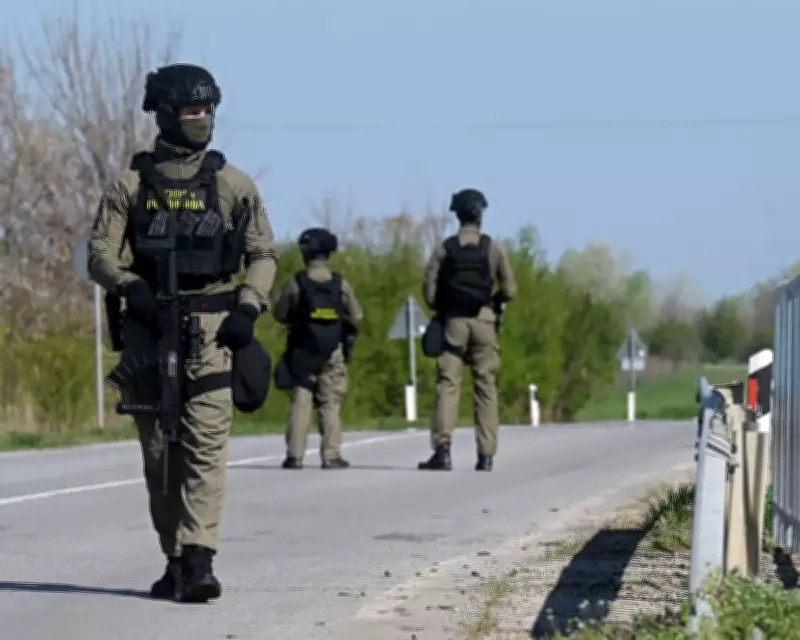
Serbian military police officers blocked a road near Kanjiža on 6 April after a cache of plastic explosives was discovered close to a critical gas pipeline. The incident, which occurred just days before Hungary's national election, has sparked allegations of foreign interference and covert operations.
Expert Analysis Points to Political Provocation
Mykola Zentsev, a former Ukrainian major general and munitions specialist, has asserted that the 4kg of explosives recovered by Serbia's military security agency would have been inadequate to cause significant damage to the Balkan Stream pipeline. This pipeline is a vital conduit for Russian gas, traversing Turkey, Bulgaria, and Serbia before reaching Hungary.
Zentsev, whose firm Andromeda conducted a technical analysis, explained that the steel and polypropylene construction of the pipeline would require a substantially larger quantity of explosives to achieve a disruptive breach. "Four kilograms is not sufficient to put the gas pipeline to a standstill," he stated. "Even if optimally placed, it would likely result only in localised damage or limited penetration, repairable within days without long-term supply disruption."

Hungarian Political Context and Accusations
The timing of the discovery has raised suspicions, as it preceded Hungary's election where Prime Minister Viktor Orbán, known for his pro-Russian stance, faced a challenging political battle. Orbán confirmed that Serbian President Aleksandar Vučić informed him of the explosives, while Hungary's Foreign Minister Péter Szijjártó suggested Ukrainian involvement, calling it "an attack on our sovereignty."
However, opposition leader Péter Magyar accused Orbán of orchestrating "false-flag operations" to instill fear among voters, allegedly following advice from Russian agents. Ukraine has categorically denied any role, a position supported by the head of Serbia's investigative military security agency.
Potential Beneficiaries and Russian Involvement
Zentsev argued that the primary beneficiaries of the incident appear to be the Hungarian government, which could gain political leverage ahead of the election, and Russia, which aims to discredit Ukraine internationally. He noted that the explosives were found in backpacks several hundred metres from the pipeline, with no apparent attempt to place them directly on the infrastructure.
This lack of direct placement, combined with the insufficient explosive quantity, led Zentsev to conclude the event was likely a provocation orchestrated by Russia's GRU military intelligence. "This meets the standards of the GRU," he remarked, highlighting the operation's military characteristics. Recent allegations have surfaced that Orbán invited GRU agents to assist his re-election campaign, though the Russian embassy in Budapest dismissed these claims as false.
Broader Implications for European Energy Security
Under Orbán's leadership, Hungary has maintained close ties with Russia, continuing to purchase gas and oil while blocking a €90bn loan to Ukraine in March over pipeline repair disputes. Serbia's Vučić warned that the explosives could have "endangered many lives" and damaged the pipeline, but expert analysis contradicts the potential for severe harm.
The incident underscores ongoing tensions in the region, where energy infrastructure becomes a tool for geopolitical maneuvering. As Europe grapples with energy dependencies and political alliances, such provocations risk escalating conflicts and undermining stability.