

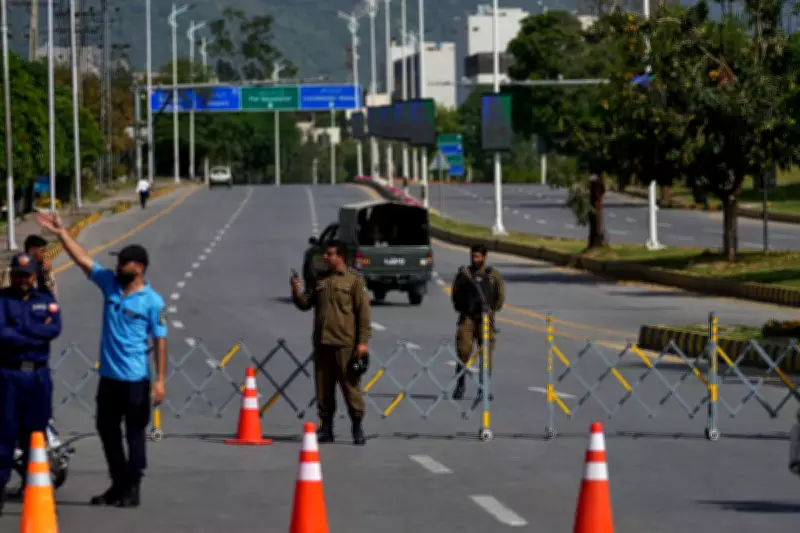
Iranian state television has issued a formal on-screen alert stating unequivocally that no delegation from Iran has visited Islamabad, as speculation intensifies regarding potential diplomatic talks with the United States. The alert, broadcast on Tuesday, explicitly noted that this situation persists "so far," highlighting the ongoing uncertainty surrounding international negotiations.
Internal Debate Within Iran's Theocracy
The on-screen message likely mirrors the intense internal debate currently unfolding within Iran's theocratic leadership. This deliberation centers on how to respond to the recent seizure of an Iranian container ship by the U.S. Navy over the weekend, an incident that has escalated tensions between the two nations. Iranian state television, which is controlled by hard-line factions within the theocracy, has not provided any official acknowledgment of a delegation being dispatched to Islamabad.
Speculation Over US-Iran Talks
Officials in Islamabad have reportedly been on standby for days, awaiting the possible commencement of talks. On the American side, U.S. Vice President JD Vance is expected to lead the delegation. However, Iran has remained silent regarding who might lead its own team, with parliamentary speaker Mohammad Bagher Qalibaf having previously represented Iran in such discussions.

There has been no public discourse in Iran about resuming negotiations, and extreme hard-liners have recently pushed back against the idea, particularly in the aftermath of the ship seizure. This resistance has fueled online campaigns urging Supreme Leader Ayatollah Mojtaba Khamenei to issue a public statement either supporting or opposing further talks. Notably, the new Iranian leader has not made any such proclamation and has not been seen in public since the conflict, with Israeli and U.S. officials claiming he was wounded.
Power Shift to Revolutionary Guard
This absence has likely positioned Iran's paramilitary Revolutionary Guard at the forefront of governing the Islamic Republic. The Guard's forces played a crucial role in the war and have largely operated independently from Tehran in selecting targets, suggesting a significant shift in internal power dynamics.
Iran's civilian leadership has remained largely quiet, especially after Foreign Minister Abbas Araghchi's online statement this weekend about the strait being opened was later contradicted by other officials in Tehran. Since the U.S. and Israel initiated attacks on Iran on February 28, Iran has restricted traffic through the strategic strait connecting the Persian Gulf to open seas. In response, the U.S. has enforced a blockade of Iranian ports, further complicating diplomatic efforts.






