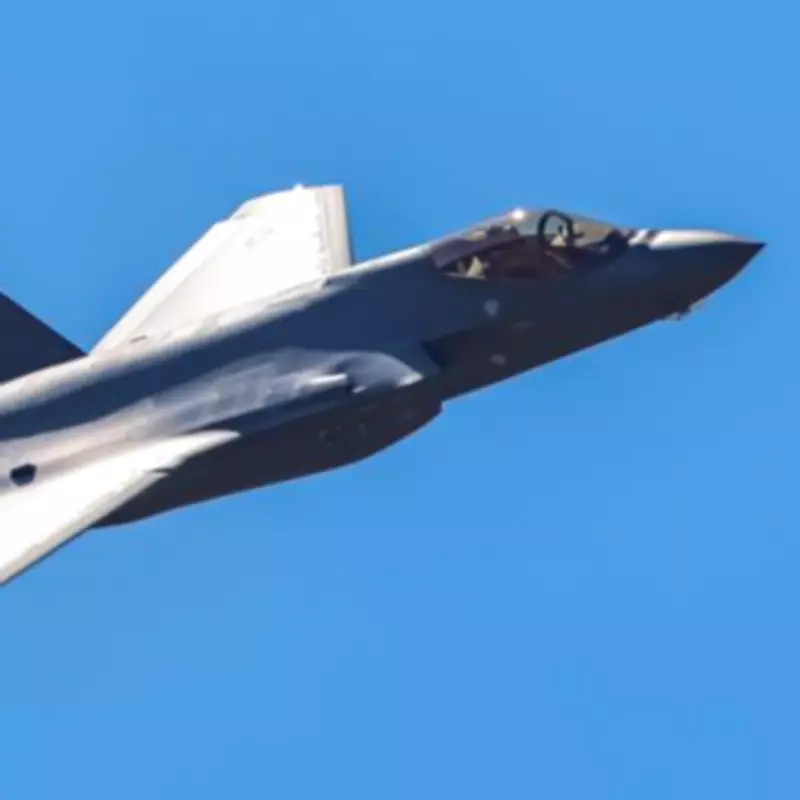
Iran's Islamic Revolutionary Guard Corps (IRGC) has claimed responsibility for shooting down an American MQ-9 Reaper drone and opening fire on a US F-35 fighter jet, forcing it to flee the area. The incident occurred amid escalating tensions in the Strait of Hormuz, where a fragile ceasefire between the United States and Iran remains under threat.
US Airstrikes and Iranian Retaliation
The United States confirmed it conducted self-defense strikes in southern Iran on Monday night, targeting missile launch sites and boats that US forces alleged were attempting to place mines. US Central Command stated that the strikes were necessary to protect troops from threats posed by Iranian forces.
In response, the IRGC announced it had downed an MQ-9 Reaper drone and engaged an American fighter jet, asserting its legitimate right to defend against US aggression. The Iranian regime declared, "The era where West Asia bows quietly to intimidation is long over."

Impact on Global Energy Markets
The ongoing conflict has severely disrupted global energy markets, particularly through the closure of the Strait of Hormuz, a critical trade route for about 20% of the world's oil. Oil prices fell more than 4% to two-week lows on Monday amid growing optimism for a peace deal, but uncertainty persists.
British households are already feeling the effects, with energy bills expected to rise by £209 per year from July, driven by increased wholesale prices linked to the Iran war.
Peace Negotiations and Sticking Points
Talks between the US and Iran are ongoing in Qatar, with Iran's top negotiator Mohammad Bagher Qalibaf joining Foreign Minister Abbas Araghchi and Central Bank Governor Abdolnaser Hemmati in Doha. Key unresolved issues include the reopening of the Strait of Hormuz, Iran's stockpile of highly enriched uranium, and the release of $24 billion in frozen Iranian assets.
US President Donald Trump has stated that negotiations are "proceeding nicely" but warned against rushing into a deal. He reiterated that the US blockade on Iranian ships in the Strait of Hormuz will remain until an agreement is reached and signed.
Regional and International Reactions
Iran's Supreme Leader Ayatollah Mojtaba Khamenei warned that Gulf states will no longer serve as shields for US bases, while Pakistan's Defence Minister Khawaja Asif expressed opposition to joining the Abraham Accords. Meanwhile, former Trump national security advisor John Bolton criticized the ceasefire, calling it a "mistake" that could lead to a "catastrophic loss" for the US.
As the world watches closely, the potential peace agreement remains fragile, with both sides demanding significant concessions. The coming days will be critical in determining whether a lasting resolution can be achieved or if the region will slide back into full-scale conflict.