Iran has lost track of mines it deployed in the Strait of Hormuz and is now incapable of clearing them, according to warnings issued by US officials overnight. The regime's failure to locate these explosives, which were laid in a disorganised and reckless manner, is believed to be responsible for the delay in Tehran allowing more vessels to navigate the critical shipping lane. This situation leaves tankers and other commercial ships traversing the Strait, a passage for up to 25 percent of the world's oil, at severe risk of detonation.
Fragile Ceasefire and Escalating Tensions
The warnings emerged as peace negotiations between the United States and Iran commenced in Islamabad, Pakistan's capital, yesterday. These talks follow a delicate truce agreed upon last Wednesday after six weeks of intense conflict between the two nations. However, the ceasefire appeared to be on the brink of collapse even before the crucial discussions began, following Tehran's threat to destroy any US naval ships entering the Strait of Hormuz.
Iran's warning came in response to reports that at least two US Navy vessels passed through the shipping lane yesterday, though their mission remains undisclosed. Adding to the confusion, President Donald Trump posted on Truth Social, asserting that the US is actively clearing mines in the Strait of Hormuz and promising its imminent reopening.

Trump's Statements and Diplomatic Moves
He stated: 'We're now starting the process of clearing out the Strait of Hormuz as a favour to countries all over the world, including China, Japan, South Korea, France, Germany and many others. Incredibly, they don't have the courage or will to do this work themselves.' Prior to the talks, Mr Trump appeared to mock Tehran, adding: 'Their navy is gone, their air force is gone, their anti-aircraft apparatus is non-existent, radar is dead, their missile and drone factories have been largely obliterated along with the missiles and drones themselves and, most importantly, their long-time leaders are no longer with us, praise be to Allah!'
A US delegation, led by Vice President JD Vance, Mr Trump's special envoy Steve Witkoff, and the President's son-in-law Jared Kushner, engaged in historic face-to-face meetings with Iranian negotiators in Islamabad. This marks the first direct talks between the US and Iran in a decade, with the most recent being the Iranian nuclear deal during the Barack Obama administration.
Iran's Demands and Regional Conflicts
Tehran claimed yesterday that one of the preconditions for the talks was the cessation of all Israeli attacks on Lebanon, which it said was part of the truce agreed last week. However, Israel reportedly conducted at least 100 strikes on Lebanon yesterday, targeting Hezbollah. In retaliation, the terror group launched missiles and drones at Israel. Israel also announced it will participate in direct peace talks with the Lebanese government in Washington on Tuesday.
Symbolic Gestures and Leadership Updates
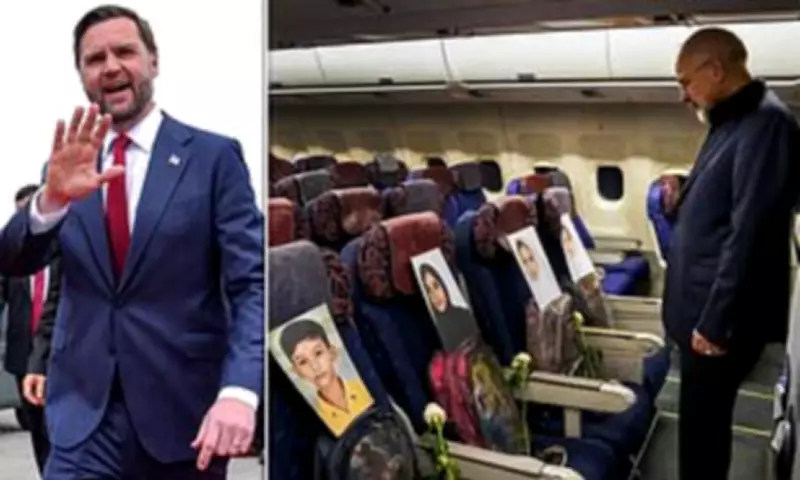
The Iranian delegation, comprising 70 members in Pakistan, was headed by parliamentary speaker Mohammad Bagher Ghalibaf and foreign minister Abbas Araghchi. On Mr Ghalibaf's flight to Islamabad, empty seats displayed photographs of some of the 120 children from a school in Minab, southern Iran, who were killed during a US air strike on the first day of the six-week conflict.
Both the US and Iran reported that talks were 'going well', though few specifics have been released. It was revealed last night that Iran's new leader, Mojtaba Khamenei, aged 56, sustained serious facial injuries that have left him disfigured, and he may have also undergone a leg amputation.
Anonymous Tehran officials indicated that despite his injuries, Khamenei remains 'mentally sharp' and is actively participating in all meetings, including those related to the war and the Islamabad negotiations. These sources refute previous US claims that the new Supreme Leader was either deceased or in a coma after being injured in US air strikes on a regime compound in Tehran, which resulted in the death of his father, Ayatollah Ali Khamenei, and most family members.