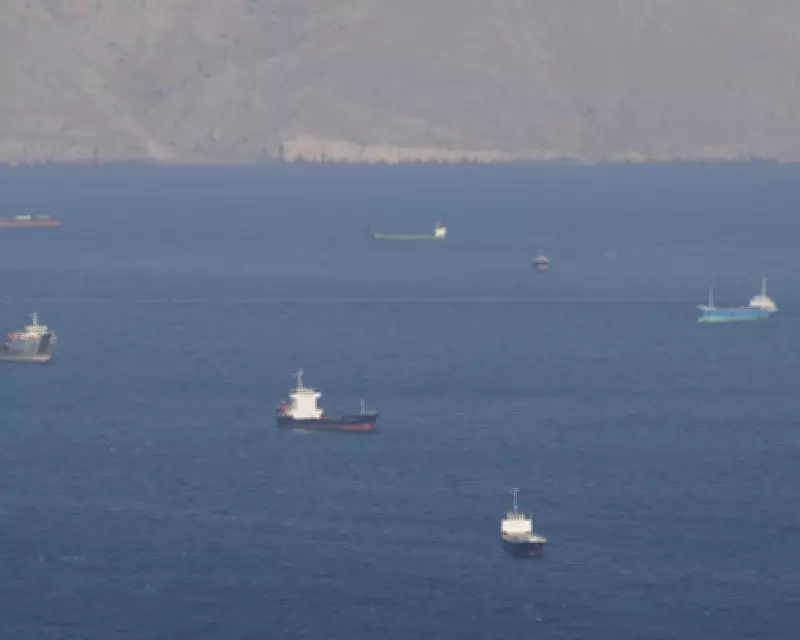
Iran Reimposes Restrictions on Strait of Hormuz Following US Blockade Standoff
In a dramatic reversal, Iranian officials have announced the closure of the Strait of Hormuz once again, citing the United States' refusal to end its blockade of Iranian ports. This critical shipping lane, which typically facilitates approximately one-fifth of global oil shipments, had been briefly reopened after a ten-day ceasefire agreement between Israel and Lebanon. However, the reopening was short-lived as tensions flared over ongoing diplomatic disputes.
Military Actions and Maritime Incidents Escalate Tensions
According to reports from the UK's Maritime Trade Operations Centre, Islamic Revolutionary Guard Corps (IRGC) vessels fired upon a tanker attempting to navigate the strait on Saturday. The incident occurred approximately 20 nautical miles north-east of Oman, with the captain noting that no prior radio warning was issued. Fortunately, the tanker and its crew emerged unharmed, and authorities are currently investigating the matter. Additionally, Reuters documented an attack on an Indian-flagged crude oil carrier within the same waterway, underscoring the volatile situation.
Iran's Khatam al-Anbiya joint military command confirmed that the strait has been restored to its "previous status," placing it under stringent management and control by the nation's armed forces. Deputy Foreign Minister Saeed Khatibzadeh and the IRGC's navy command reiterated that restrictions will persist unless Washington guarantees full freedom of navigation for vessels traveling to and from Iran.

Diplomatic Deadlock and Regional Implications
Top Iranian negotiator Mohammad Bagher Ghalibaf acknowledged that recent talks with the US have yielded some progress, but significant gaps remain, particularly concerning nuclear issues and the Strait of Hormuz. He emphasized that while both sides have red lines, these sticking points could be narrowed down to just one or two key issues. Meanwhile, former US President Donald Trump warned against "blackmail" over the strategic channel, praising ally Israel and criticizing other nations for their responses during the conflict.
The ongoing war, now in its eighth week, has resulted in thousands of casualties and has expanded to include Israeli attacks in Lebanon. The closure of the strait has driven oil prices upward globally, impacting energy markets. In Lebanon, the Israeli military reported one soldier killed and nine wounded in recent combat operations, highlighting the regional spillover effects.
Ceasefire Uncertainty and Future Negotiations
The announcement of Iran's policy reversal came shortly after Trump declared that the US blockade would remain in effect until a permanent peace deal is secured with Tehran. A temporary ceasefire, brokered by Pakistan and set to expire imminently, may not be extended, according to US statements. Upcoming peace talks between US and Iranian delegations are anticipated, though specific timing remains unconfirmed. Egyptian Foreign Minister Badr Abdelatty expressed optimism for a potential agreement "in the coming days," noting the widespread suffering caused by the prolonged conflict.
Prior to Iran's decision to reclose the strait, maritime tracking data indicated that at least eight oil and gas tankers had successfully traversed the waterway during its brief reopening. The strategic importance of the Strait of Hormuz cannot be overstated, as it serves as a conduit for about 20% of the world's oil and liquefied natural gas, making it a focal point in the US-Israeli war on Iran and a critical factor in global energy stability.