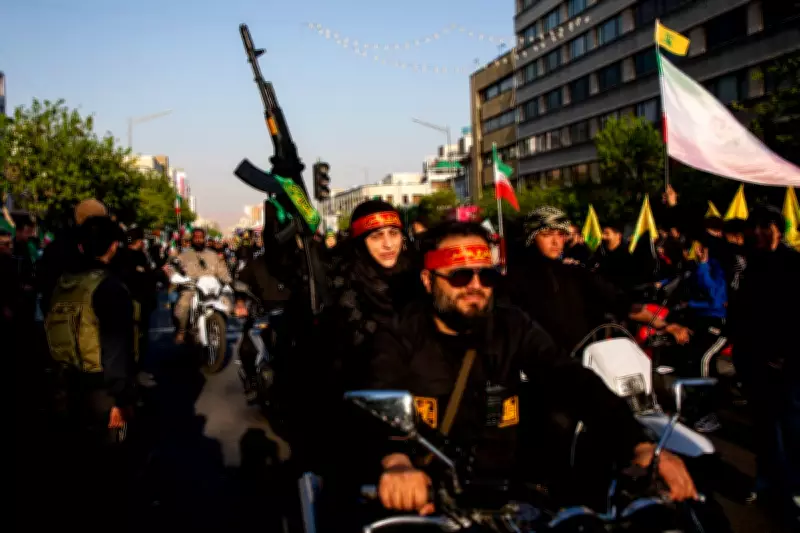
Iranians Face Dread as US Ceasefire Nears End Amid Blackout and Crackdown
As the fragile ceasefire between the United States and Iran rolls into its final day, ordinary citizens trapped inside the country are grappling with a profound sense of dread and uncertainty. With Washington and Tehran locked in a diplomatic stalemate and the Strait of Hormuz remaining closed, Iranians have endured fifty consecutive days of a comprehensive internet blackout, severing connections to the outside world and intensifying an already brutal government crackdown on dissent.
Life Under Surveillance and Fear
Rare testimonies collected by The Independent, shared at great personal risk under the threat of surveillance by the Islamic Revolutionary Guard Corps (IRGC), paint a vivid picture of everyday life. Zahra, a mother in Iran, described waking in the early hours of 8 April, just before the ceasefire announcement, to the hum of electricity—a temporary relief that quickly turned to fear. "What is going to happen to us now in their hands?" she recounted, referring to the Islamic Republic's authorities. "It felt like that fear quickly erased the joy."
Iranians have developed innovative but perilous methods to stay connected, using Starlink connections and numerous VPNs to purchase tiny amounts of data at extortionate prices. Zahra explained that even minimal online activity triggers warnings from the IRGC Intelligence Organization, leaving citizens in a constant state of anxiety. "All of us received messages saying that you are under surveillance because you have gone online," she said.

Mixed Reactions to the Ceasefire
When a Pakistan-brokered fourteen-day ceasefire was announced, reactions across Iran were deeply divided. While some, like Zahra's seventy-three-year-old mother, celebrated the break from constant shelling, others felt overwhelming terror at an unchanged future. Zahra's sister experienced such severe physical distress that she struggled to compose herself. Even among supporters of the Islamic Republic, sentiments are mixed; one individual with close ties to the IRGC expressed happiness, while over a hundred members of their extended family remained frightened.
Omid, a young man living in Tehran, echoed this ambivalence. "On the one hand, the ceasefire removed the immediate threat of military strikes and bombings, which brought a sense of safety," he said. "On the other hand, the current regime in Iran has not made any meaningful change, not even a minimal one that would benefit the Iranian people."
Economic Devastation and Daily Struggles
The internet blackout has exacerbated Iran's severe economic crisis, with layoffs widespread and basic goods becoming unaffordable for many. Iran's most widely read newspaper reported losses exceeding $1.3 billion, while state media estimates reconstruction costs could surpass $270 billion. Grocery shopping has become a significant challenge, as Zahra noted: "When they say shopping works, they are completely lying. Shopping depends largely on searching with Google."
Reza, who prepared for a blackout following former President Donald Trump's threats to destroy Iran's energy infrastructure, expressed concern that any agreement might further restrict freedoms. "Most of the people around me feel down and discouraged; they are worried that the war might end without bringing any meaningful improvement to their lives," he told The Independent.
Human Rights and Future Negotiations
Beyond discussions on nuclear weapons and the Strait of Hormuz, Reza emphasized the need for human rights, civil liberties, and free communication to be included in any negotiations. However, he is discouraged by the "maximalist demands" from both sides. Amir, a medical professional, fears the regime could become even more oppressive post-conflict. "Internet would be gone, as it is, and there would be less freedom of everything," he warned. "We will suffocate."
Education has shifted fully online in some areas, relying on domestic internet for remote learning, but bombardments near schools have caused widespread fear. A member of the Iranian diaspora reported that streets have "come alive again" since the ceasefire, but family in Iran remain deeply anxious about the future.

Regional Tensions and Uncertain Prospects
Iran has insisted that Lebanon be part of any long-term ceasefire agreement, though Israeli Prime Minister Benjamin Netanyahu has vowed to defeat Hezbollah for threats to Israel's borders. Omid noted that part of the population awaits news to avoid renewed war, while others mourn civilian casualties and infrastructure destruction. Some still harbor hope that conflict might resume and lead to the collapse of the current ruling system.
As the ceasefire deadline looms, Iranians continue to navigate a landscape of surveillance, economic hardship, and political instability, with their testimonies offering a stark glimpse into a nation on edge.