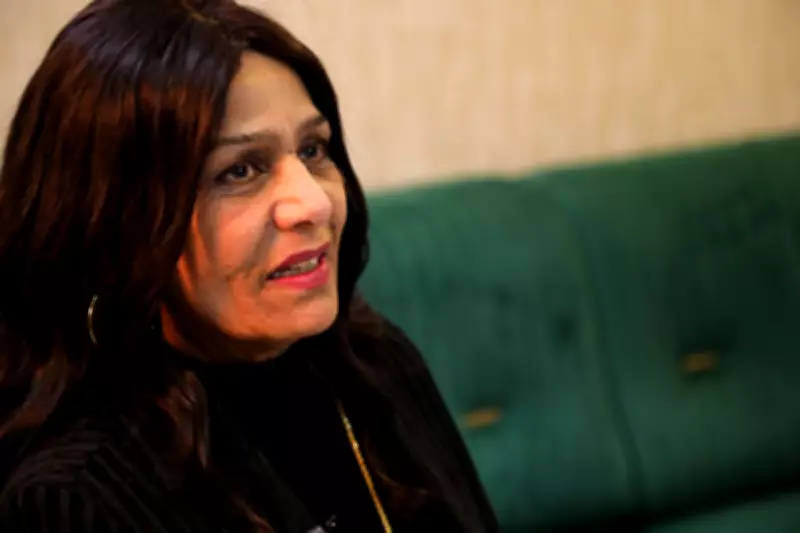
Iraqi Women Gather to Mourn Sajida Obaid, Singer Who Offered Taste of Freedom
Seven days after the passing of legendary Iraqi vocalist Sajida Obaid, women cloaked in traditional black veils and abayas gathered at her family residence in the northern city of Irbil. Their faces were streaked with tears as they mourned an artist whose voice had provided them with temporary liberation. The air was thick with sorrow and the scent of bitter black coffee, the customary beverage of Iraqi mourning rituals, which circulated quietly among the attendees.
Outside the home, men congregated beneath a canvas tent erected in the street. A traditional band played the daf drum as some of the men discreetly wiped their eyes. In Iraqi culture, the seventh day following a death represents a significant milestone—a final collective gathering before grief gradually transitions into memory.
A Voice That Provided Sanctuary
Sajida Obaid died on April 4 at age 68 following a battle with lung cancer. Her passing received limited attention amid the ongoing Iran war that had spilled into neighboring Iraq. Yet for her devoted followers, particularly women, her death felt profoundly personal. They mourned the loss of an artist whose performances had granted them, for precious hours at a time, something resembling true freedom.

In Iraq, where women navigate public life under constant scrutiny regarding their attire, movements, and behavior, Obaid pioneered an innovative solution. She organized exclusive parties for women only, with every staff member—from DJs and waiters to security personnel and organizers—being female. To ensure privacy and protection, phones were prohibited to prevent photography. Within these secured environments, women who would never consider dancing before male audiences felt liberated to dress as they pleased and move without inhibition.
Personal Testimonies of Liberation
Virgin Jaji, 68, was among those transformed by Obaid's events. While many in the Arab world begin their mornings with the melodic songs of Lebanese singer Fayrouz, Jaji had listened to Obaid daily for years—in her car, at home, even during gym sessions. "Even my parrot only dances to Sajida Obaid's music," she remarked.
"In her women's parties we danced like we had no cares in the world," Jaji continued, her eyes reddened from crying. "We felt free. Truly free."
Mina Mohammed, 40, shared a similar sentiment. "The first time I heard about a women-only party by Sajida, I borrowed money from friends just to be in that hall. Her voice will always take me back to the best moments of my life."
Rapid Ascent to National Prominence
Obaid was born in Baghdad in 1957 into a Roma family, known in Iraq as "Kawliya"—a community historically associated with music and performance yet often marginalized within society. She began singing at age 12, performing at events to help support her family financially.
By her teenage years, she had already established a reputation. Her voice possessed both warmth and authority, rooted in the rhythmic Kawliya dance traditions and the more delicate Iraqi mawal style. During the 1980s, her talent attracted attention from Iraq's most powerful—and dangerous—figures. Security guards of Saddam Hussein would occasionally extract her mid-performance from weddings to sing at events for the dictator's family.
This represented the complex reality of achieving national stardom during a dictatorship. Despite these constraints, Obaid toured internationally, performed at global festivals, and sometimes delivered as many as seven shows weekly.
Creating Spaces Amid Shrinking Freedoms
According to her brother and manager, Aayed Awda, the women-only events held particular significance for Obaid. "Those parties were something the women themselves requested, including women from the most conservative families, because they desired a place where they could dress freely, move freely, be themselves," he explained. "Sajida believed deeply in helping women and providing them with that space."

Some of Obaid's songs challenged social boundaries, such as "Inkasarat al-Sheesha" ("the shisha broke"), which addresses a woman confronting her family after losing her virginity. "What will I tell my mother?" the lyrics inquire—a weighty question in Iraqi society that Obaid delivered with unapologetic vocal power.
Many Iraqi women perceive that hard-won rights are gradually eroding. Last year, the Iraqi Parliament approved amendments to personal status laws that critics argue effectively legalize child marriage and diminish women's rights regarding divorce and inheritance.
"Iraq feels like it's moving backward, and the space for women's freedom is shrinking," observed Mina Mohammed, the fan who borrowed money to attend Obaid's events. She hopes the carefree moments those parties provided might "be carried forward, even in small ways, like women-only DJ nights featuring her music."
A Quiet Final Chapter
During her final months, the artist who had performed across five continents lived quietly in Irbil with her elder brother's family. Childless and twice divorced, she rarely ventured out, spending her days surrounded by loved ones and playing with children in the household.
"She was gentle and warm, and she never once caused harm to anyone," recalled her niece Sahar Sabti, 38, who shared the home. "She took care of everyone around her."
Approximately four months before her death, doctors diagnosed lung cancer. Despite her illness, Obaid insisted on traveling to Canada for a concert. Upon returning home for her first chemotherapy session, however, her body succumbed to the disease.
She was hospitalized in Irbil for over two weeks before being sent home with oxygen support. After one final hospital admission, she did not return.
Her brother reflected on their four-decade professional partnership and their sibling disagreements about makeup shades, dress designs, and party themes. "We disagreed on everything," Awda admitted, his voice faltering. "And I miss every single one of those arguments."
Legacy of Joy and Unity
On that seventh day of mourning, as the outdoor drums fell silent and women inside dried their tears, they spoke of Obaid as though she had merely stepped out momentarily.
"For me and my friends, dancing and Sajida are the same word," said Leila Botrus, 55. "She brought people together everywhere she went through joy, through music."
Outside in the tent, the band played its final evening melody. Coffee in cups grew cold, yet the women remained together a little longer. In that room filled with women sitting closely, it seemed Sajida Obaid had bequeathed precisely what she had always offered them: a sanctuary of their own.