Israel's military announced late Monday that its air force had struck sites belonging to Hezbollah in Lebanon, including in the eastern Bekaa Valley, as Prime Minister Benjamin Netanyahu vowed to intensify operations against the Lebanese militant group. The warning came amid reports that Hezbollah has been deploying fiber optic drones—a weapon widely used in the Ukraine conflict—against Israeli forces in southern Lebanon and northern Israel in recent weeks.
Netanyahu's Warning
In a video posted on social media, Netanyahu stated: 'We will hit them. It’s true that they are shooting drones at us, fiber optic drones. We have a special team working on that and we will solve that too. What this requires of us now is to increase the blows, to increase the intensity. We will smite them hip and thigh.' Following his remarks, Lebanon's state-run National News Agency reported that some residents began leaving Beirut's southern suburbs, where Hezbollah maintains a significant presence. The agency also noted several airstrikes hit the eastern town of Mashghara in the Bekaa region on Monday night.
Hezbollah's Response
Hezbollah claimed responsibility for eight attacks earlier in the day, including a drone strike on Israeli troops in Misgav Am, northern Israel. The daily exchanges between Israel and Hezbollah have persisted despite a U.S.-brokered ceasefire that took effect on April 17. A U.S. State Department official, speaking on condition of anonymity, said Hezbollah has ignored repeated requests to cease fire, including a recent ultimatum. The official added that Israel would not be expected to passively endure attacks on its forces and civilians.

Since the ceasefire began, Hezbollah has launched over a thousand drones and more than 700 rockets, aiming to disrupt ongoing negotiations between Lebanon and Israel. 'The status quo is untenable,' the official said.
Direct Talks and Disarmament
Last month, Lebanon and Israel initiated their first direct talks in over three decades, with meetings held in Washington. Military officials from both countries are scheduled to meet again on Friday at the Pentagon to discuss the ceasefire. Israel and the United States are pushing for Hezbollah's disarmament. The State Department official noted that the direct talks and potential U.S. support for Lebanon threaten Hezbollah's power and narrative of resistance against Israel. 'A successful ceasefire led by the government of Lebanon would strip Hezbollah of their power and their narrative,' the official said.
Earlier Monday, an Israeli airstrike on the southern village of Kfar Rumman killed four people and wounded three, according to the Lebanese NNA. Additional Israeli drone strikes on other southern areas, including a road near Kfar Rumman's municipality, resulted in three deaths. The Israeli military reported striking over 70 Hezbollah infrastructure sites throughout the day.
Background and Casualties
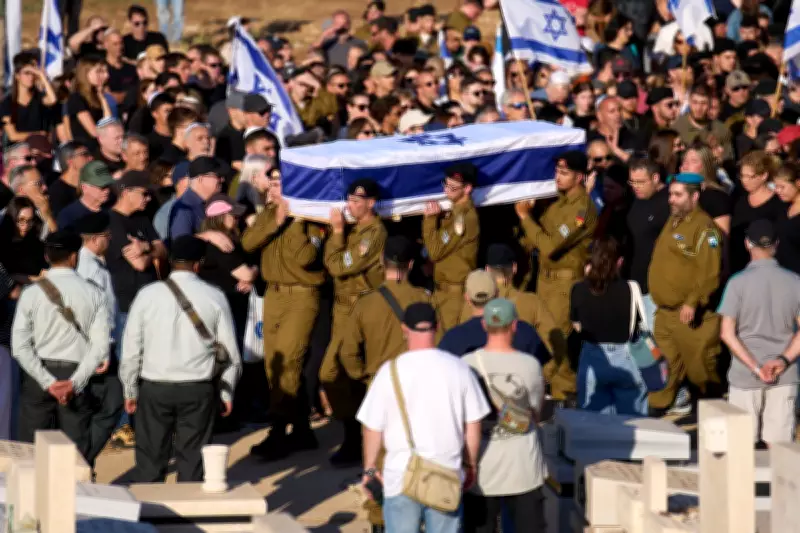
The latest Israel-Hezbollah war began on March 2, when Hezbollah fired rockets into northern Israel, two days after the U.S. and Israel launched attacks on Iran. According to the Lebanese Health Ministry, more than 3,000 people have been killed in Lebanon during the recent fighting. Netanyahu's office confirmed that 22 Israeli soldiers and a defense contractor have been killed in or near southern Lebanon, while two civilians have died in northern Israel.