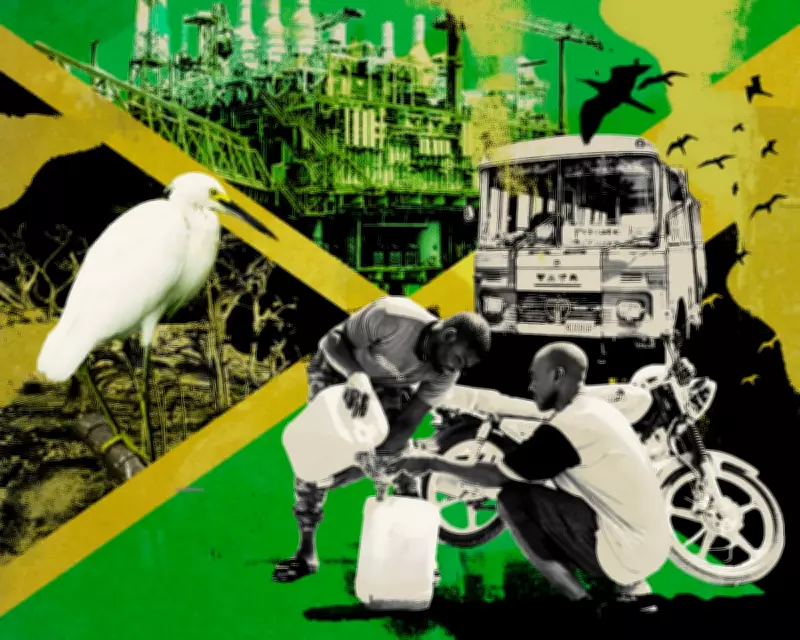
Jamaica is on the verge of a significant shift in its energy policy as recent tests indicate the possible presence of crude oil beneath its southern seabed. The Caribbean nation, which currently imports all its fuel at an annual cost of up to US$2 billion, faces a critical choice between energy independence and its environmental commitments.
The Discovery and Its Implications
Earlier this year, hydrocarbon samples from the seabed off Jamaica's south coast suggested the presence of crude oil. United Oil & Gas, a UK-based company, holds an exclusive exploration licence for the Walton-Morant basin, a vast 22,400 sq km block. While surface oil seeps have been documented across the island, commercial production has never been achieved. Energy Minister Daryl Vaz described the results as "very positive" but remained cautiously optimistic.
Economic Pressures vs Environmental Promises
Jamaica imports all its fuel, costing $1.5-2 billion annually, a heavy burden on an economy where tourism generated $4.3 billion in 2024. The country is still recovering from the Covid-19 pandemic and Hurricane Melissa, which caused extensive damage. The US-Israeli war on Iran has further strained the economy. These pressures have intensified the debate over whether Jamaica can afford to forgo potential oil revenues.

Environmental Concerns
Environmental groups are alarmed by the prospect of oil drilling. Theresa Rodriguez-Moodie, head of the Jamaica Environment Trust, called it a contradiction given Jamaica's vulnerability to climate change. The Walton-Morant basin lies near productive fishing areas and protected wetlands, including Portland Bight and Black River, which are Ramsar-listed sites. An oil spill could be catastrophic for these ecosystems.
Jamaica ratified the Paris Agreement in 2017 and has called for a fossil fuel non-proliferation treaty. It also signed the Escazú Agreement, guaranteeing the right to a healthy environment. Nicole Leotaud of the Caribbean Natural Resources Institute stressed the need for transparent public consultation on such decisions.
Energy Security and Development Needs
Renewable energy sources like solar, hydropower, and wind account for only about 13% of Jamaica's electricity. The government aims to reach 50% by 2030, but this requires significant investment. Courtney Lindsay of ODI Global argued that Jamaica cannot ignore the potential of oil reserves, as it faces pressing needs in education, healthcare, and welfare. "We are talking about a bread-and-butter issue," he said.
Radhika Bansal of Rystad Energy noted that even if oil is confirmed, commercial production is unlikely before the mid-2030s. This timeline leaves room for debate on how Jamaica balances its green pledges with economic realities.
The Regional Context
Jamaica is not alone in its pursuit of fossil fuels. About half of Latin American and Caribbean countries are exploring for oil following Brazil's deep-water discoveries. Guyana and Suriname have already become oil producers. This regional race highlights the tension between economic development and the global push for a green energy transition.
As Jamaica weighs its options, the decision will have far-reaching implications for its environment, economy, and international standing on climate action.