JD Vance's Budapest Claims on EU and Hungary Scrutinised
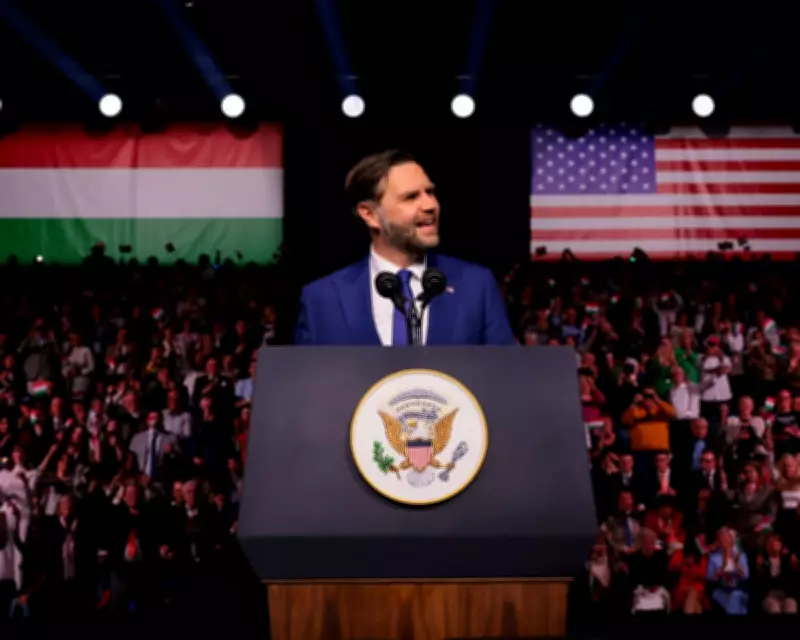
During a high-profile visit to Budapest on Tuesday, US Vice-President JD Vance delivered a speech laden with accusations against the European Union, targeting what he termed "bureaucrats in Brussels." Standing alongside Hungarian Prime Minister Viktor Orbán, Vance claimed the EU was engaged in election interference and economic destruction in Hungary, just days before a pivotal national election. His remarks, however, clash with verifiable data and EU legal frameworks, prompting a detailed fact-check of his assertions.
Allegations of Election Meddling and Digital Censorship
Vance asserted that the EU was responsible for "one of the worst examples of election interference" he had witnessed, specifically accusing Brussels of imposing "digital censorship" by directing social media companies on what information to provide Hungarian voters. He offered no evidence to support this claim. In reality, the EU operates under the Digital Services Act, which involves investigations into platforms like Meta, TikTok, and X for various concerns, but these are legally defined processes that do not equate to dictating voter information. Notably, EU leaders have deliberately avoided comments that could be seen as influencing the Hungarian election, contrasting sharply with Vance's campaign trail appearance.
Economic Impact and EU Funds
Vance further alleged that the EU has attempted to "destroy the economy of Hungary," a statement that overlooks Hungary's significant economic gains since joining the EU in 2004. According to the US International Trade Administration, Hungary benefits from strategic access to EU markets, attracting major companies such as Coca-Cola and Microsoft. Moreover, Hungary has been a net recipient of EU funds, with over 80% of public investment sourced from European allocations aimed at aiding poorer member states. While approximately €18 billion in EU funds have been frozen due to concerns over judicial independence, LGBTQ+ rights, and other issues, this reflects standard EU conditions applied to all members, not targeted malice.

Energy Independence and Consumer Costs
The vice-president also claimed the EU made Hungary "less energy-independent" and drove up costs for consumers. In truth, energy bills have risen across Europe due to geopolitical shocks, including Russia's invasion of Ukraine and the US-Iran conflict. Hungary's government has blamed EU sanctions on Russian fossil fuels, but the EU argues that Russia has historically been an unreliable supplier, citing gas cut-offs in 2006, 2009, and 2014. Ironically, Hungary enjoys some of Europe's lowest electricity prices, thanks to a surge in solar energy production, a point often overlooked in debates.
Motivations Behind EU Actions
Perhaps the most inflammatory claim from Vance was that EU actions are motivated by hatred for Orbán, rather than policy or law. While EU leaders have expressed frustration with Orbán, particularly after Hungary revoked support for a €90 billion Ukraine loan and leaked audio suggested pro-Russia stances, the EU has often granted Hungary special treatment, such as exemptions on Russian oil imports. Critics argue the EU has been too lenient, allowing what some describe as an "electoral autocracy" to develop within its borders.
In summary, Vance's statements in Budapest contain significant inaccuracies, misrepresenting EU laws and ignoring Hungary's economic benefits from EU membership. The facts reveal a more nuanced picture, where Hungary faces standard regulatory scrutiny while reaping substantial financial and market advantages from its EU ties.