Kim Jong Un and Daughter Ju Ae Display Unity at Military Parade Amid Nuclear Posturing
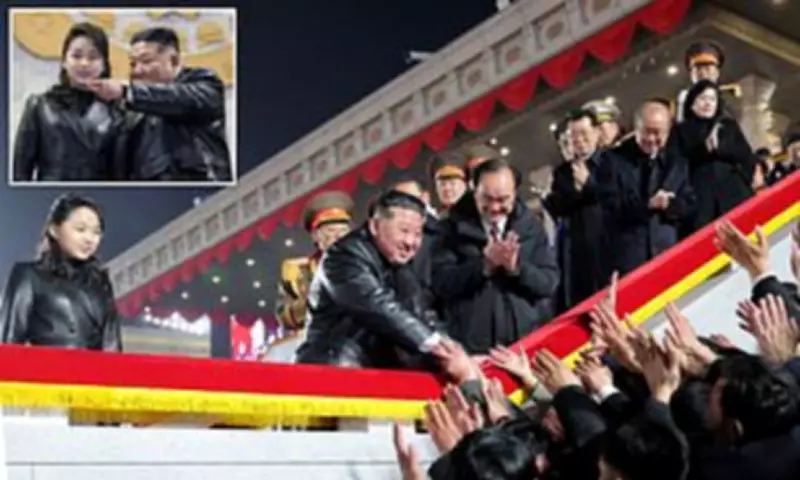
North Korean leader Kim Jong Un and his heir-apparent daughter, Kim Ju Ae, were photographed in matching black leather jackets as they chatted and sang along with performers at a military parade in Pyongyang. The event marked the conclusion of the 9th Congress of the Workers' Party of Korea, held at Kim Il-sung Square, where the pair stood side by side, with Ju Ae, believed to be between 12 and 14 years old, waving to crowds alongside her father.
Rising Profile of Kim Ju Ae
Ju Ae's prominent appearance at the parade is the latest indication of her growing public profile, which South Korean intelligence officials earlier this month suggested signals her effective anointment as Kim's likely successor. During the seven-day congress, which ended on Wednesday, Kim shared center stage with his daughter, highlighting her increasing visibility in North Korea's political landscape.
Kim's Stance on Diplomacy and Nuclear Status
At the congress, Kim Jong Un outlined policy goals for the next five years, using the platform to stake out a firm position on international relations. State media reported that Kim stated North Korea could "get along" with Washington if the United States recognised Pyongyang's nuclear status. However, he ruled out reconciliation with South Korea, which he described as "deceptive," and warned that his nuclear-armed state could "completely destroy" the South if its security were threatened.

Kim's rhetoric reflects a broader effort to assert a more forceful regional role, backed by his nuclear arsenal and ties with Moscow and Beijing. Experts note that while the language is unlikely to signal imminent conflict, it underscores North Korea's commitment to maintaining its nuclear capabilities as a deterrent.
Military Developments and Parade Details
The official Korean Central News Agency reported that Kim called for developing new weapons systems to bolster North Korea's military, including intercontinental ballistic missiles (ICBMs) that could be launched from underwater and an expanded arsenal of tactical nuclear weapons, such as artillery and short-range missiles targeting South Korea. Interestingly, the parade omitted Kim's largest weapons, including ICBMs potentially capable of reaching the U.S. mainland, fueling speculation that he was seeking to avoid antagonising Washington ahead of potential dialogue.
During the nighttime military parade, Kim and Ju Ae wore matching leather coats, constantly chatting, pointing at parade formations, and singing along with performers. The girl watched as her father and senior military officials saluted fighter jets flying over the brightly illuminated square, named after Kim's state-founding grandfather, Kim Il-sung.
Regional and International Implications
Kim has sharpened his rhetoric toward Seoul since 2024, discarding the long-standing goal of peaceful reunification and declaring South Korea a permanent enemy. He derided liberal South Korean President Lee Jae Myung's calls for engagement as deception, accusing successive governments in Seoul of seeking Pyongyang's collapse. Kim stated there is "absolutely nothing to discuss" with an enemy state and that North Korea would "permanently exclude" the South from the notion of a shared nation.
Analysts expected Kim to take a more measured approach toward Washington to preserve the possibility of future dialogue, with the long-term aim of securing U.S. sanctions relief and tacit recognition as a nuclear state. Kim told the congress that his government was maintaining the "toughest stance" against Washington but added there was "no reason we cannot get along" if the U.S. withdrew its "hostile policy" toward North Korea, a term often used to describe U.S.-led pressure and sanctions over Kim's nuclear ambitions.
Future Prospects and Strategic Moves
Kim has recently prioritised Russia in his foreign policy, sending thousands of troops and large amounts of military equipment to support Moscow's war in Ukraine, possibly in exchange for aid and military technology. Experts suggest that keeping options open makes sense as the war in Ukraine could wind down, potentially making North Korea less valuable to Moscow.

At the congress, Kim set new goals to advance his nuclear forces in the next five years, calling for faster production of nuclear warheads and a broader range of delivery systems. This includes developing artificial intelligence-equipped attack drones, stronger electronic warfare capabilities, more advanced reconnaissance satellites, and weapons to strike enemy satellites. He also emphasised increasing the deployment of nuclear-capable artillery systems against South Korea each year while speeding up efforts to "fortify" the border.
South Korea's Unification Ministry expressed regret that the North continues to define inter-Korean relations as hostile, stating that Seoul will "patiently" pursue efforts to stabilise peace. The prospects of U.S.-North Korea relations, as Kim noted, "depends entirely on the U.S. attitude," with North Korea ready for either peaceful coexistence or permanent confrontation.