

North Korea has conducted another provocative weapons test, launching multiple ballistic missiles toward the sea on Sunday morning. This latest activity marks a continuation of the country's aggressive military expansion efforts this year, raising significant regional tensions.
Immediate Regional Responses and Surveillance
South Korea's Joint Chiefs of Staff confirmed that the launches originated from the North's eastern Sinpo area. In response, South Korea has immediately bolstered its surveillance posture and is actively exchanging critical information with key allies, the United States and Japan. The swift coordination underscores the high alert status in the region following the incident.
Emergency Security Council Meeting in South Korea
South Korea's presidential office announced that its National Security Council plans to convene an emergency meeting to discuss the implications of these launches. This urgent gathering highlights the seriousness with which Seoul views North Korea's ongoing weapons testing and its potential threats to stability.

Japan's Strong Protest and International Violations
Japan's Defense Ministry also detected the launches, reporting that the missiles are believed to have landed in the waters off North Korea's east coast. Tokyo has issued a strong protest to Pyongyang, condemning the actions as a direct threat to regional and international peace. Japanese officials emphasized that Sunday's launches blatantly violate United Nations Security Council resolutions, which explicitly ban any ballistic activities by North Korea.
Context of Recent North Korean Military Activities
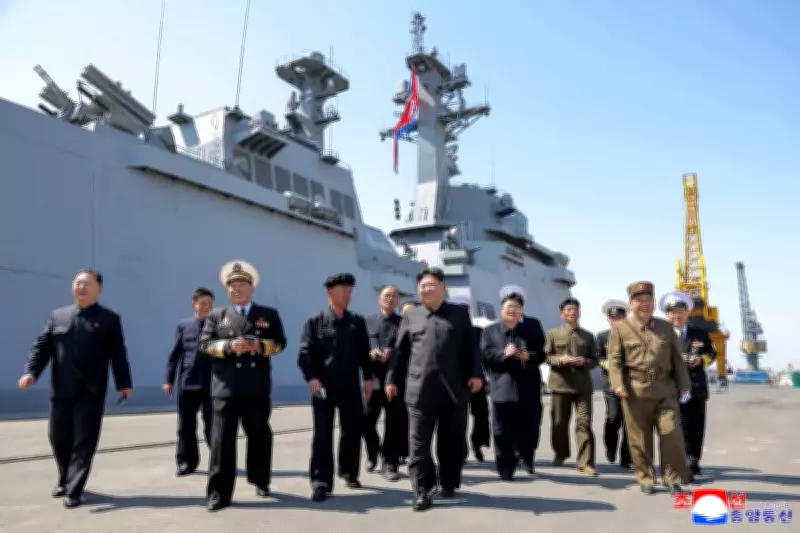
This latest test follows a pattern of intensified military actions by North Korea. Just last week, leader Kim Jong Un personally supervised missile tests from the country's destroyer. After those tests, Kim reiterated his government's commitment to the "limitless expansion" of its nuclear forces and issued new, unspecified tasks aimed at sharpening the country's nuclear attack and rapid-response capabilities.
International Concerns Over Nuclear Expansion
Adding to the global unease, International Atomic Energy Agency Director General Rafael Grossi stated last week that his agency has confirmed "a rapid increase" in activities at nuclear facilities in North Korea. This development signals a worrying acceleration in Pyongyang's nuclear ambitions, further complicating international diplomatic efforts.
The consecutive weapons tests and nuclear facility activities underscore North Korea's persistent defiance of international norms, posing ongoing challenges to security in East Asia and beyond.






