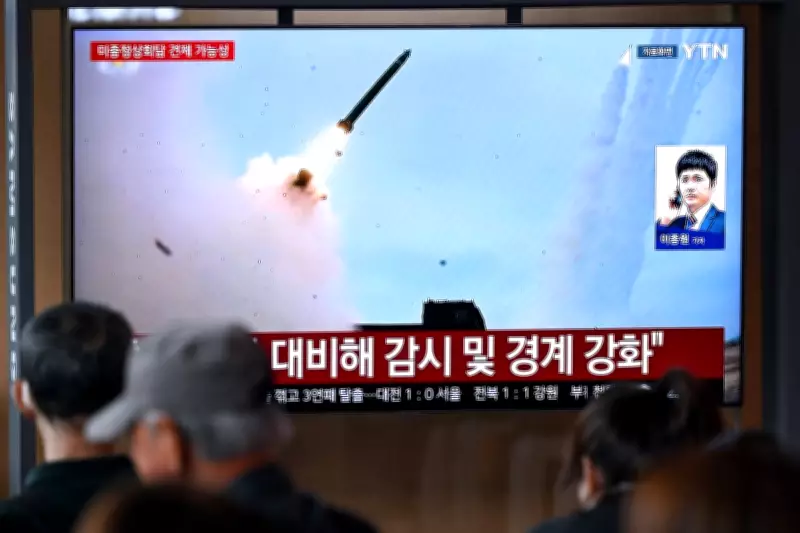
North Korea has conducted another series of ballistic missile launches, firing multiple projectiles toward the sea from its eastern Sinpo area on Sunday. This marks the fourth such launch this month and the seventh in the current year, intensifying regional security concerns.
Regional Responses and Surveillance Measures
South Korea's Joint Chiefs of Staff swiftly confirmed the launches, announcing enhanced surveillance operations and close coordination with the United States and Japan. In response, South Korea's National Security Council is scheduled to hold an emergency meeting to assess the situation and formulate a strategic response.
Japan's Defense Ministry also detected the missile launches, issuing a statement that condemns these actions as violations of United Nations Security Council resolutions. The ministry emphasized the threat posed to regional stability and called for international adherence to non-proliferation agreements.

Context and Expert Analysis
The recent missile tests align with statements from North Korean leader Kim Jong Un, who has recently emphasized the limitless expansion of the country's nuclear forces. Additionally, the International Atomic Energy Agency (IAEA) has reported a rapid increase in activities at North Korean nuclear facilities, suggesting an accelerated weapons development program.
Experts in international relations and defense suggest that these missile launches serve multiple strategic purposes:
- Demonstrating self-defense capabilities to deter perceived external threats.
- Exerting pressure on the United States and South Korea to engage in future diplomatic dialogues.
- Showcasing technological advancements in ballistic missile systems to bolster domestic and international perceptions of military strength.
The consistent pattern of launches this month indicates a calculated effort by North Korea to assert its military prowess amid ongoing geopolitical tensions. Analysts warn that without diplomatic intervention, these actions could lead to further escalation in the region, potentially destabilizing security frameworks established through international agreements.