Nostradamus 'Predicted Iran Conflict' with Chilling Warnings of Global Escalation
Nostradamus 'Predicted Iran War' with Terrifying Global Warnings

Nostradamus 'Predicted Iran Conflict' with Chilling Warnings of Global Escalation

A prominent YouTuber has made the startling claim that the 16th-century French mystic Nostradamus accurately predicted the modern military conflict involving Iran. Furthermore, the analyst argues that several of the seer's cryptic prophecies may contain terrifying hints about even more devastating events yet to unfold on the global stage.

Decoding Ancient Prophecies for Modern Conflicts

YouTuber Donovan Dread presented this compelling theory in a detailed video analysis examining the writings of Nostradamus, the renowned French astrologer and physician. His famous 1555 publication, Les Prophéties, contains hundreds of enigmatic four-line poems known as quatrains that have fascinated scholars and enthusiasts for centuries.

These predictions have always been subject to intense debate, with believers maintaining they foresaw significant historical events including the rise of dictators and major disasters. Critics, however, consistently argue that the verses are deliberately vague enough to be interpreted in numerous contradictory ways.

Dread contends that several specific passages appear to directly reference Iran and recent military tensions in the region. More alarmingly, he suggests these ancient texts may contain warnings about a broader global conflict that could engulf multiple continents.

The 'Iran Prophecy' and Geographic Clues

In his analysis, Dread highlights what he describes as one of the most striking passages in Nostradamus' extensive writings. He directs attention to a particular verse that references ancient geographic names historically connected to modern-day Iran.

The quatrain reads: "The great Saturn tiger of Hercania, gift presented to those of the ocean. A fleet chief will set out from Carmania. One who will take land at the Tyran Fosia."

Dread provides crucial historical context, explaining that Hyrcania—sometimes spelled "Hercania" in older texts—was an ancient region located near the Caspian Sea in northern Iran. Meanwhile, Carmania referred to a significant area along Iran's southern coastline during classical antiquity.

"These are words that mean nothing to a casual reader," Dread states in his video presentation. "But to anyone who possesses knowledge of ancient geography, every single word in this verse functions as a signpost pointing directly toward Iran."

The Strategic Strait of Hormuz Connection

The YouTuber further connects the reference to Carmania with the modern-day Strait of Hormuz, the critically important narrow shipping channel situated between Iran and Oman. Much of the military focus in the current conflict has centered on this region, with its potential closure having already contributed significantly to rising global oil prices.

He elaborates: "That coastline he specifically named was Carmania. This corresponds precisely to the southern shore of modern-day Iran, the exact stretch of land that controls access to the Strait of Hormuz. Through this narrow passage flows approximately twenty percent of the world's daily oil supply."

Dread interprets the mention of a "fleet chief" setting out from this area as potentially symbolizing a military response or coordinated attack originating from the region. The reference to presenting a "gift to those of the ocean" has been interpreted by some scholars as possibly representing a weapon or strategic attack directed against a major naval power.

Predictions of Leadership Changes and Military Technology

Another verse highlighted in Dread's analysis references the capture of a Persian ruler: "In 1727, in October, the king of Persia shall be captured by those of Egypt."

While the specific date doesn't align with contemporary events, Dread notes that many Nostradamus scholars believe the prophet's timelines may have been symbolic or coded rather than literal. "What matters more than the precise date is the substantive content," he argues. "The king of Persia shall be captured."

He reminds viewers that Iran was historically known as Persia until the twentieth century and suggests this passage could be interpreted as referring to the death or overthrow of a powerful leader. This interpretation gains particular resonance given the death of Iran's Supreme Leader Ali Khamenei during the opening phases of the current conflict.

Additional quatrains appear to describe advanced military technology that would have been unimaginable in the sixteenth century. One passage reads: "A burning torch will be seen in the sky at night near the end and the beginning of Rome. Famine, steel, the relief provided late. Persia turns to invade Macedonia."

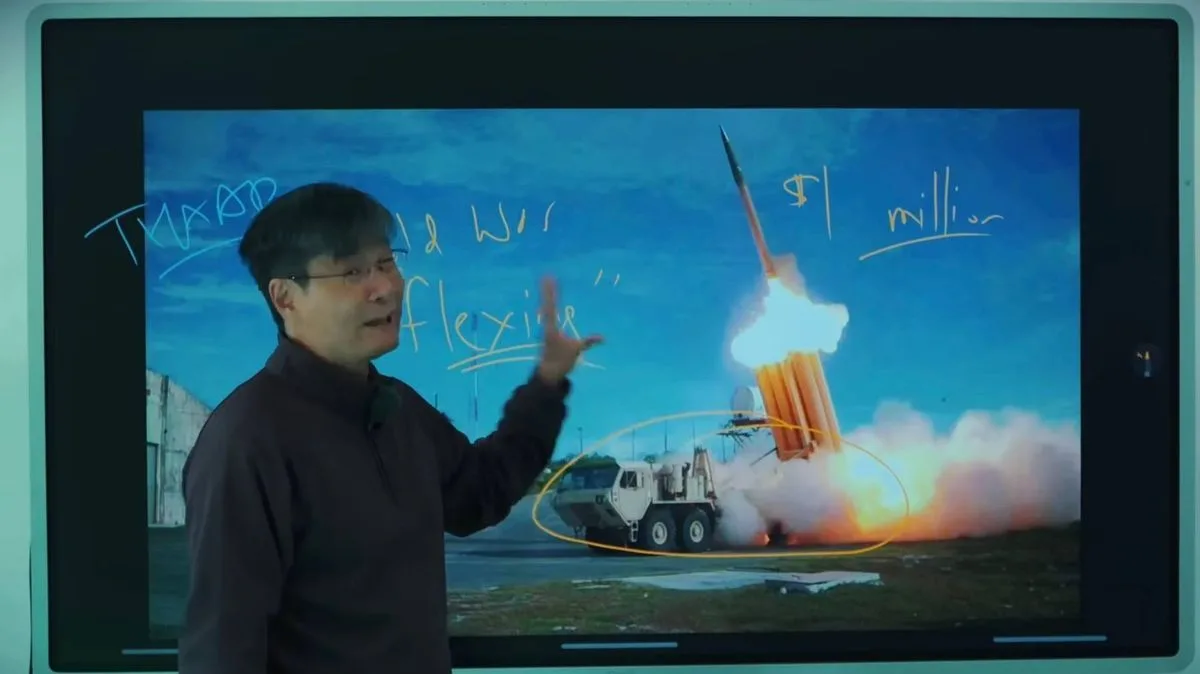
Dread suggests this imagery remarkably resembles modern missile warfare. "If you were a sixteenth-century physician attempting to describe a missile—whether a cruise missile, ballistic missile, or hypersonic weapon streaking across the night sky with trailing fire—what terminology would you employ?" he questions. "A burning torch would be seen in the sky at night."

Potential European Involvement and Global Escalation

The final line of that same quatrain has generated considerable debate among Nostradamus enthusiasts: "Persia turns to invade Macedonia."

Dread explains that the reference to Macedonia could broadly describe parts of southeastern Europe or the Balkan region. This raises the disturbing possibility that a conflict with Iran could potentially spread into European territory, potentially drawing NATO allies into a wider confrontation.

In the concluding segment of his analysis, Dread examines other passages in Nostradamus' writings that suggest the conflict may not remain confined to the Middle East. He claims several quatrains describe a broader war involving multiple global powers with devastating consequences.

"Nostradamus describes naval battles in the Persian Gulf where ships are melted and destroyed," Dread explains. "He describes economic collapse triggered by the catastrophic disruption of vital trade routes. He describes a conflict that spreads inexorably from the Middle East into Europe itself."

The YouTuber further warns that the texts appear to depict a war escalating through miscalculation rather than deliberate grand strategy. "A regional war that transforms into a world war not through careful planning but through miscalculation, retaliation, and the cascading failures of international diplomacy."

The Enduring Debate Over Prophetic Interpretation

Despite these dramatic interpretations, Dread readily acknowledges the long-running scholarly debate surrounding Nostradamus' predictions. "The entire field of Nostradamus interpretation is fundamentally built upon ambiguity," he concedes.

Nevertheless, he maintains that the apparent similarities between these centuries-old verses and contemporary events remain remarkably striking and worthy of serious consideration. "Coincidence represents a comforting explanation. It's clean, it's rational, and it allows us to sleep peacefully at night. Nostradamus appears to have warned us about Iran. The real question isn't whether we should have listened previously. The real question concerns what else he might have warned us about that we continue to ignore."