New Zealand Minister Faces Intense Criticism Over 'Butter Chicken Tsunami' Comment
A New Zealand government minister has sparked widespread condemnation for what opponents are calling an "outright racist" remark about Indian immigrants, coming just as Wellington prepares to sign a landmark free-trade agreement with India valued at $1.8 billion.
Controversial Remarks Amid Trade Negotiations
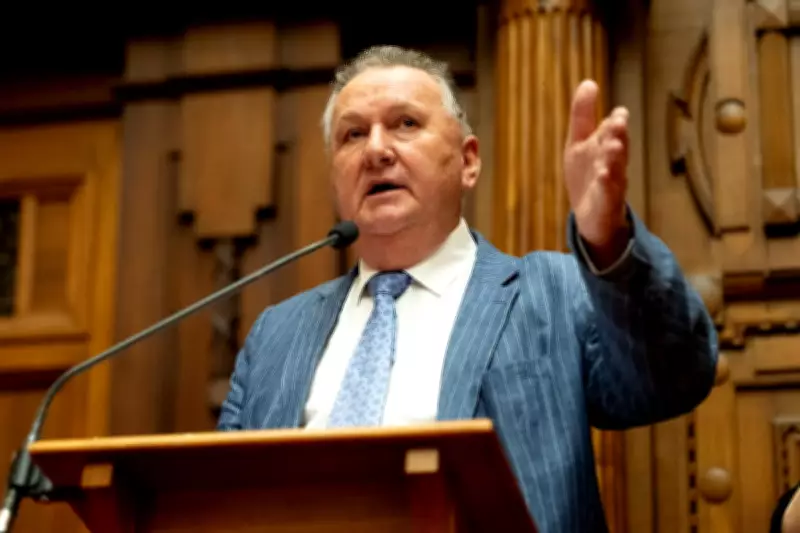
Shane Jones, deputy leader of the right-wing, populist NZ First Party and minister for regional development, made the inflammatory comments during an interview with Reality Check Radio. Referring to the potential immigration consequences of the trade deal, Mr Jones stated: "I don't care how much criticism we get, I am just never going to agree with a butter chicken tsunami coming to New Zealand."
The minister was using the popular Indian dish as a metaphor to express concerns about what he described as a potential flood of immigrants following the trade agreement. His comments have been widely interpreted as targeting the Indian community specifically.

Historic Trade Agreement Details
The controversial remarks come as New Zealand and India prepare to finalise what officials are calling a "once in a generation" trade deal. The comprehensive agreement will eliminate or reduce tariffs on 95 percent of New Zealand's exports to India, with more than half of products receiving duty-free access immediately upon implementation.
In a reciprocal arrangement, all Indian goods will gain duty-free access to New Zealand markets. Additionally, New Zealand has committed to investing $20 billion in India over the next fifteen years as part of the broader economic partnership.
This agreement follows similar trade deals signed by the United Kingdom and European Union with India last year, positioning New Zealand to benefit from access to the world's fastest-growing major economy and most populous nation.
Political Fallout and Official Responses
Prime Minister Christopher Luxon has described Mr Jones's comments as "unhelpful" and a "gross misrepresentation" of the trade agreement's actual provisions. Speaking on Monday, Mr Luxon addressed concerns about immigration projections, stating: "I'm just saying the immigration story that they are scaremongering around is absolutely false."
While the prime minister defended the trade deal's economic benefits, he stopped short of directly condemning Mr Jones's specific remarks about Indian immigrants. Mr Luxon had previously praised the agreement as "wide-ranging and significant," emphasising that "India is the world's most populous country and is the fastest-growing big economy, and that creates opportunities for jobs for Kiwis, exports and growth."
Diaspora Reaction and Accusations of Racism
The comments have provoked strong reactions from New Zealand's Indian community, which constitutes approximately 6 percent of the country's population. Shanti Patel, president of the Auckland Indian Association, expressed deep concern to public broadcaster RNZ, stating: "It's incredibly worrying for everybody."
New Zealand lawmaker Priyanca Radhakrishnan was more direct in her criticism, labelling Mr Jones's remarks as "outright racism." She asserted: "It's unacceptable and politicians shouldn't be making statements like he has."
Immigration Projections and Political Context
According to estimates from New Zealand officials, the trade agreement could potentially facilitate the entry of more than 20,000 Indian migrants into the country. This projection has become a focal point of political debate, with Mr Jones's comments reflecting broader concerns within some political circles about immigration levels.
The trade deal holds significant political importance for the governing National Party, as it fulfills an election promise to finalise a free-trade agreement with India during their first term in office. However, the controversy surrounding Mr Jones's remarks threatens to overshadow the economic benefits of the agreement and has raised questions about political discourse surrounding immigration in New Zealand.

As diplomatic preparations continue for the formal signing of the agreement next week, the government faces mounting pressure to address concerns about inflammatory rhetoric while maintaining focus on the substantial economic opportunities presented by strengthened trade relations with India.