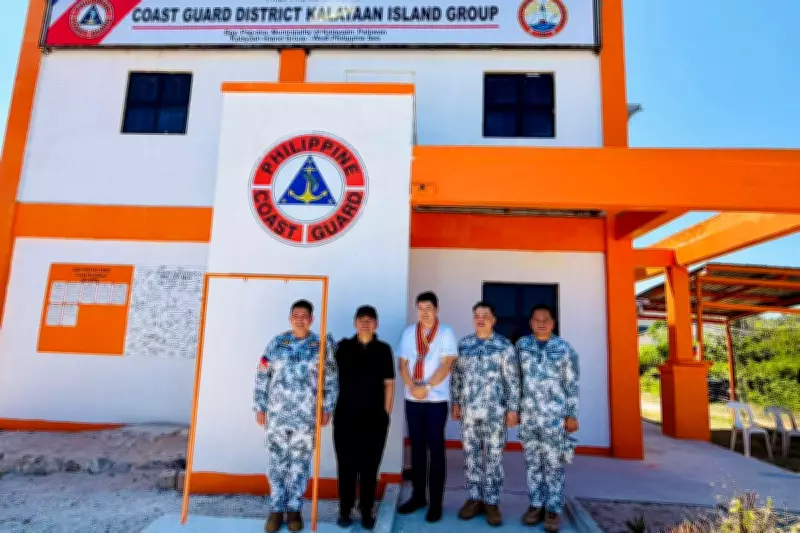
Philippines Inaugurates Strategic Coast Guard Base in Disputed Waters
The Philippines has officially opened a significant coast guard base on Thitu Island in the South China Sea, a move described as a "steadfast sentinel of our sovereignty" in a region heavily contested by China. The unveiling occurred on Thursday, coinciding with the country's Day of Valor commemoration, with key officials including Transport Secretary Giovanni Lopez and coast guard commander Adm. Ronnie Gil Gavan in attendance.
Geopolitical Tensions and Regional Claims
Thitu Island, known locally as Pag-asa, has been occupied by Filipino forces and civilians for decades but is also claimed by China, Vietnam, and Taiwan. Chinese coast guard and government-linked vessels frequently patrol the surrounding waters, leading to periodic confrontations with Philippine forces. China asserts sovereignty over nearly the entire South China Sea, a vital global trade route, despite a 2016 arbitration ruling that invalidated its expansive claims under international law. Beijing has consistently rejected this ruling and continues to enforce its presence in the area.
Operational Capabilities and Strategic Significance
The new coast guard district command will be led by a commodore and supported by personnel, patrol ships, and aircraft. Its missions include law enforcement, environmental monitoring, and search-and-rescue operations. The Philippines plans to establish smaller outposts on other occupied features in the region. Secretary Lopez emphasized that this base represents a permanent commitment to defending national interests, protecting fishermen, and upholding sovereignty.

Local Impact and Infrastructure Development
Thitu Island is home to approximately 400 Filipino villagers and has seen substantial infrastructure improvements, including internet connectivity, a cemented runway, and enhanced power and water supplies. However, it remains modest compared to nearby Chinese-built installations like Subi Reef, which features a military-grade runway. Local officials, such as Vice Mayor MP Albayda, report that villagers regularly observe Chinese vessels around the island, making the new coast guard presence a significant morale booster.
Historical Context and Future Implications
The Philippines has maintained control over Thitu and eight other features in the Spratly Islands since the 1970s, encouraging settlement with incentives like free rice. The opening of this base underscores Manila's ongoing efforts to assert its claims in the face of Chinese expansion, which has transformed several reefs into fortified islands over the past decade. This development is likely to influence regional dynamics, as both nations continue to navigate their disputed maritime boundaries.