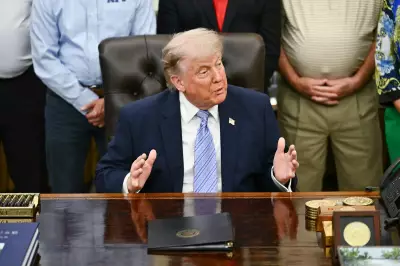
The centre left is not dead. A progressive new counter-Trumpian movement is on the way, as social democrats finally confront the failures of globalisation to create equality or deliver for workers. If Donald Trump represents the backlash against the liberal rules-based order, then we may now be witnessing a backlash to that backlash. In a recent speech, Spanish Prime Minister Pedro Sanchez articulated this sentiment, stating, "They scream and shout not because they are winning, but because they know their time is running out," referring to those undermining international law and normalising the use of force. While the Trump administration and its allies seek to reshape the world in their image, alternative visions of the international order are beginning to emerge.
A New Vision for Globalisation
Canadian Prime Minister Mark Carney, in his notable Davos speech in January, exposed the vulnerabilities of a world in "rupture." He argued that middle powers must act together because "if we're not at the table, we're on the menu." The path forward is not to abandon globalisation but to remake it: preserving openness while upholding a rules-based order and avoiding over-reliance on any single country. French President Emmanuel Macron's push for EU "strategic sovereignty" reflects a similar European instinct: openness with guardrails, a strategic liberalism hardened against a contested geopolitical environment.
Barcelona Summit: A Progressive Response
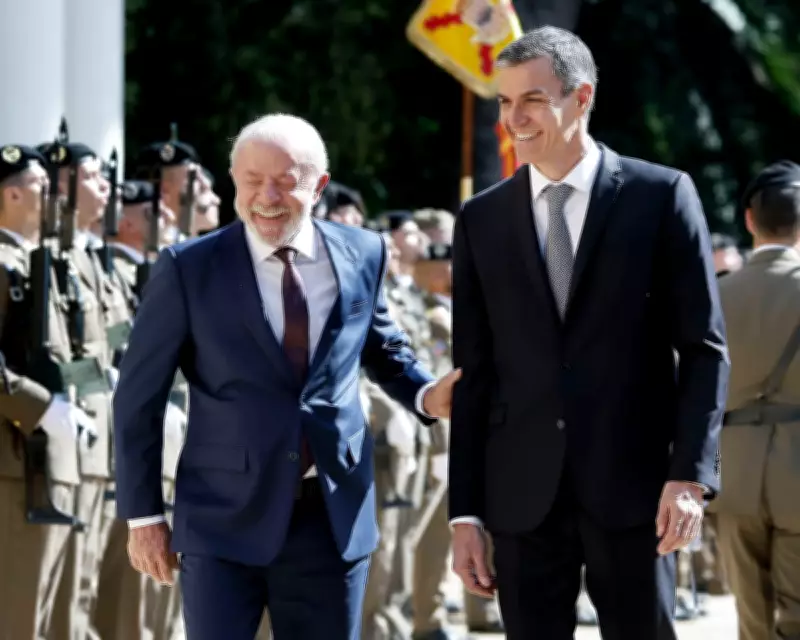
Another response to Trumpism and the revival of nationalist great-power politics is also taking shape. A gathering of global progressives in Barcelona last month, co-hosted by Sanchez and Brazilian President Luiz Inacio Lula da Silva, brought together centre-left leaders to develop a progressive internationalism fit for the 21st century. This initiative begins with a different reading of the same backlash: recognition that while globalisation generated growth, it failed to deliver for large parts of the population, leaving wages stagnant, inequalities entrenched, and entire regions feeling left behind. The Barcelona summit aimed to fill a void, providing the raison d'etre the centre-left has sought since the 2008 global financial crisis. In the years after the bailout of the financial sector, it became clear that championing untrammelled globalisation, third way-style, has not improved the lives of the working classes, the centre-left's core constituency.

Key Pillars of Progressive Internationalism
It has taken nearly two decades and a surge in far-right support for the centre-left to develop a response matching this diagnosis. First, it seeks to redistribute the gains of globalisation. Calls to tax billionaires, reform global finance, and expand development investment take centre stage. Second, it aims to reshape the conditions under which globalisation operates. Strengthening multilateral institutions by reforming the UN, regulating big tech power, and ensuring globalisation operates within democratic and social constraints are as important as sharing its benefits. Third, it reasserts peace as a central pillar of international cooperation. In a world increasingly defined by conflict, progressive internationalism emphasises diplomacy, de-escalation, and the primacy of international law, particularly regarding markets, digital platforms, and political systems. If democracy and the rule of law erode anywhere, it threatens stability everywhere.

Reviving North-South Dialogue
With over 40 countries from Europe, Africa, and the Americas involved, this movement revives the logic of north-south dialogue that characterised the Cold War era. It is turbocharged by Sanchez's charismatic leadership and renewed progressive energy from the US, notably from a new generation of politicians like Zohran Mamdani. Sanchez emerges as a leader to rally around, even if backed by a fragile coalition government at home. Like Willy Brandt and Olof Palme before him, Sanchez seeks to bridge divides between the global north and south, translating southern demands into terms western governments can act on. Brandt, a former German chancellor, and Palme, twice Swedish premier, were leading figures in European social democracy. In the 1970s and 80s, they were standard bearers for a fairer international order. The landmark Brandt Report in 1980 called for wealth transfers and structural reforms to support developing countries. Respected by the left but divisive to conservatives, Palme advocated foreign policy emphasising disarmament, solidarity with anti-colonial movements, and dialogue over confrontation. Together, they legitimised "north-south dialogue" as a central pillar of progressive foreign policy.
Challenges and Divergences
The new progressive internationalism echoes this approach but recognises that redistribution, peace, and dialogue alone are insufficient. Today's task is also to reclaim and reassert democratic control over the economic, digital, and geopolitical systems that nationalists are challenging. The renewed momentum behind these visions is not accidental; it reflects a political landscape where the transatlantic alignment of national-populist movements is fracturing. Symbolic of this shift is the electoral defeat of Viktor Orban in Hungary, long seen as an intellectual reference for the Trump administration and other right-wing leaders. Progressive internationalism and strategic liberalism both offer paths to rebuild the rules-based order: the former focusing on legitimacy, the latter on managing risk and preserving openness.
Yet the limits of this emerging unity are visible. Many European leaders face realpolitik constraints. Germany's vice-chancellor, SPD leader Lars Klingbeil, prioritises Europe's security challenges, arguing that a strong Germany is a precondition for a strong continent. Sanchez and others have been vocal on Gaza but quieter on Ukraine, with diverging perspectives shaped by geography, history, and domestic politics making unity hard to find. For Keir Starmer, the challenge is to reposition Britain's role in Europe between sovereignty and cooperation, defining a credible international role after Brexit. Some in this coalition seek radical global transformation, others are incrementalists; crises loom larger in some places than others; some bet on America bouncing back, while others focus on decoupling. Sustaining unity despite these differences will be vital as the counter-Trumpian movement gains pace.