UK Ministers Warn Russian Shadow Fleet Sailors Could Claim Asylum If Ships Seized
Ministers have issued a stark warning that sailors from Putin's shadow fleet may be able to claim asylum in Britain if their ships are seized in the English Channel. Foreign Secretary Yvette Cooper and Home Secretary Shabana Mahmood are understood to have raised significant concerns to this effect, according to reports from The Telegraph.
Whitehall sources fear that apprehending Russian tankers could allow sailors brought ashore by British forces to make use of the UK asylum system. Many of these seamen are mercenaries hired by the Kremlin who could argue they face persecution if returned to Russia or their home countries.
Legal Framework and Asylum Risks
Foreign nationals arriving in Britain are eligible to claim asylum if they are at risk of persecution, including due to the political situation in their home country. These rules apply broadly, even to small boat migrants rescued by the RNLI or Border Force in the Channel and brought ashore for processing.

If shadow fleet sailors have their asylum claims rejected, they could appeal under the European Convention on Human Rights (ECHR), a process that can take years. There are also fears that Russia may have placed spies on these tankers, hoping vessels will be intercepted and agents brought onto UK shores.
Political Pressure and Enforcement Challenges
Prime Minister Sir Keir Starmer has faced increasing pressure in recent days to tackle sanctioned Russian naval traffic passing through British waters. He promised last month to 'go after' the ships, with plans for special forces and National Crime Agency officers to board and impound vessels.
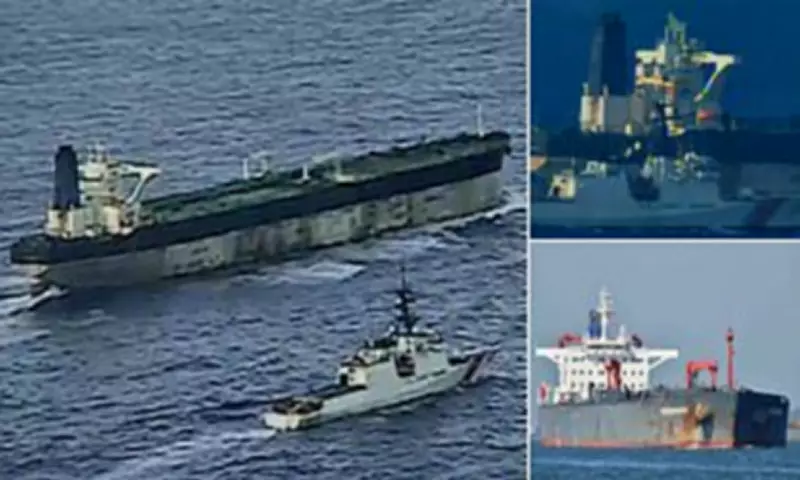
Despite these assurances, a shadow fleet tanker was able to travel through the Channel this week, escorted by a Russian frigate. Three more sanctioned tankers sailed through the British waterway the following day, highlighting enforcement gaps.
The Royal Navy has not yet seized any ships, following legal advice from Attorney General Lord Hermer, who warned such actions could breach international human rights law. Conservative leader Kemi Badenoch criticised the situation, stating: 'A legal system, defended by our lawyer-in-chief Keir Starmer, that allows asylum claims from Russian mercenaries is simply not fit for purpose.'
Seeking Solutions and International Precedents
Ms Cooper and Ms Mahmood are understood to be working on a solution to this legal loophole, aiming to allow the navy to seize ships without letting crews remain in Britain. They first raised concerns in January when the US seized Russian tanker Bella 1 in UK waters.
In that incident, American authorities arrested the captain and first mate, but 26 other sailors were briefly sent to an army reserve centre in Inverness. These men, from Russia, Ukraine, Chile, and Bulgaria, were processed by Border Force before being flown out of the UK.
Officials and government lawyers worry that similar arrivals could find ways to legally remain in Britain under immigration laws. British authorities are examining how France has dealt with the issue when apprehending tankers in the Mediterranean.
Operational and Legal Hurdles
Government insiders said the Ministry of Defence would need to meet a high legal threshold to conduct raids in the Channel. Without this, officials could face legal action at an international maritime tribunal.
Opponents claim Labour has been too slow to act, allowing Russian president Vladimir Putin to transport oil and gas for selling to allies like China and Iran. Defence Secretary John Healey confessed on Thursday there was 'more we can do' to stop the shadow fleet, but argued that Kremlin escorts with warships show Britain has diverted Russian resources from the war in Ukraine.
A Ministry of Defence spokesman stated: 'We will not comment on specific operational planning or give a running commentary as this could compromise our ability to successfully take action against these ships, only benefitting our adversaries.'
Broader Defence Concerns
The issue comes amid broader fears about the state of the Royal Navy. Recently, Iran hit an RAF base in Cyprus in retaliatory strikes, and officials could only deploy a single ship to the Mediterranean for protection, which arrived three weeks late.

Mrs Badenoch accused the prime minister of posturing on the world stage while failing to rearm Britain, branding him 'all mouth and no trousers' on defence. She emphasised: 'At a time of war in Europe and war in the Middle East, at a time when those conflicts are affecting every family across Britain, at a time when Britain's place in the world is in flux, our Government literally doesn't have a plan.'
As the government grapples with these complex legal and operational challenges, the shadow fleet continues to navigate British waters, testing the UK's resolve and legal frameworks in an increasingly tense geopolitical landscape.