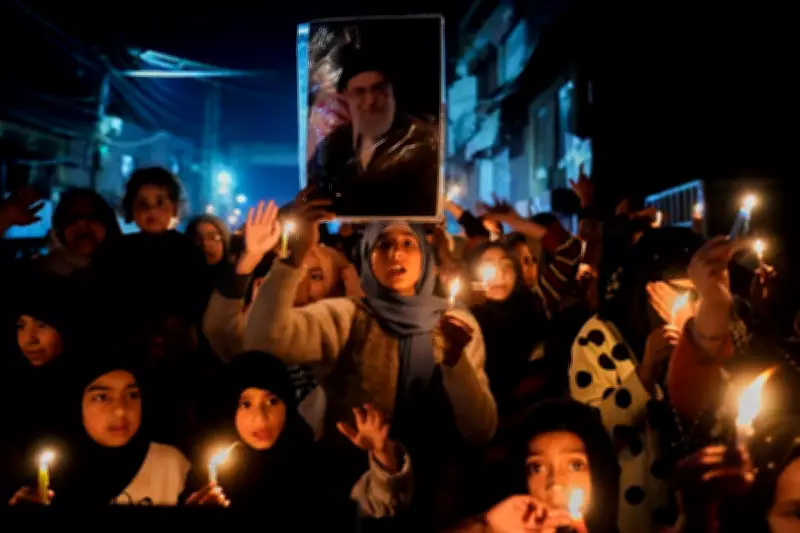
India's Shia Community Mourns Khamenei with Protests and Vigils
India's Shia Muslim community has responded with tearful vigils, condolence meetings, and widespread protests following the assassination of Iran's supreme leader Ayatollah Ali Khamenei. The demonstrations, driven primarily by religious solidarity, have spread across multiple Indian cities as mourners gather to remember the slain leader.
Assassination Sparks Global Reactions
Khamenei, aged 86, was killed on February 28, 2026, during air strikes by Israel and the United States that destroyed his central Tehran compound. This violent end came after decades of failed diplomatic efforts to resolve disputes over Iran's nuclear programme. During his three-decade reign, Khamenei transformed Iran into a powerful anti-US force, extending military influence across the Middle East while suppressing domestic unrest with an iron fist.
Global reactions to his death have been mixed, with some celebrating the end of a rule marked by alleged atrocities against women and crackdowns on dissenting voices. In 2022, Khamenei fully backed security forces confronting protests following the death of Mahsa Amini, who died after being detained by Iran's morality police. More recently, protests had spread across Iran since December 28, 2025, initially responding to soaring inflation before evolving into political demands to end clerical rule.

Religious Mourning Overshadows Eid Celebrations
For India's Shia community, Khamenei's assassination has cast a dark shadow over upcoming Eid celebrations marking the end of Ramadan. Thousands have gathered from Kashmir in the north to Hyderabad in the south to mourn what many consider a spiritual loss.
"I will not celebrate Eid because we would be mourning the death of Ayatollah Ali Khamenei," said Rajab Ali, a 58-year-old electrician. "He was our rahbar (guide). One celebrates Eid when they are happy. How can we celebrate it now? We won't call guests, we won't wear new clothes."
Mourners dressed in traditional black clothing gathered at mosques and public squares, lighting candles and praying. Large portraits of Khamenei adorned walls as men sang memorial songs and women wept quietly. Dr Muhammad Ali, a retired horticulture researcher in Delhi, expressed profound grief: "I felt as if I had been orphaned again. The last time I felt that way was when my parents died. Now it feels as if all Shias have been orphaned."
Strategic and Economic Implications for India
While religious mourning continues, the escalating US-Israeli conflict with Iran presents significant strategic and economic challenges for India. The nation imports approximately 50 percent of its oil through the Strait of Hormuz, averaging 2.6 million barrels daily this year. With 90 percent of total oil imported, India faces serious inflation risks from regional instability.
Economic ties run deep, with about 10 million Indians living and working across the Gulf region, sending record remittances home. A widening conflict could therefore impact India on multiple fronts, even as violence approaches its borders.
A recent incident highlights these tensions: the Iranian warship Iris Dena, returning from participating in a multilateral naval exercise in India, was torpedoed by a US submarine just 44 nautical miles off southern Sri Lanka. Sri Lankan officials reported 87 bodies recovered and 32 people rescued from the approximately 180 aboard. India took over a day to formally acknowledge the incident, drawing criticism from Iran which noted the warship had been "a guest of India's navy."
Neither the Indian Navy nor Prime Minister Narendra Modi's government condemned the US attack, leading critics to call it a "strategic embarrassment" that weakens Delhi's credibility in the Indian Ocean region.
Theological Foundations of the Protests
Dr Muddassir Quamar, an associate professor at Jawaharlal Nehru University, explains that the position of Iran's supreme leader is rooted in the theological concept of Velayat-e-Faqih, or "guardianship of the jurist" in Twelver Shi'ism. This branch, the largest in Shia Islam, believes in twelve divinely appointed Imams as successors to Prophet Muhammad.

"Twelver Shias across the Arab and Islamic world, including in South Asia, consider him as a spiritual and political leader, and look up to the Supreme Leader to lead the Shiite and Islamic world," Quamar says. "The sense of anti-imperialism and anti-Americanism is embedded in the revolutionary ideals of the Islamic Republic, and since the current supreme leader was killed in the US-Israel strike, it has further fueled protests across the world."
Syed Javed Zaheer, a 62-year-old from Bihar, echoes this sentiment: "There are many Muslim countries. But for us, Iran is the only Islamic country."
Regional Spread and Containment Efforts
Protests have spread beyond India, with Pakistan's Shia community—the world's second-largest after Iran—experiencing violent clashes that left at least 26 dead. In Karachi, US Marines fired on protesters who breached consulate walls. Senior Shia clerics in Pakistan announced days of mourning and warned of further protests that analysts say could destabilize major cities.
Shia cleric Sajid Ali Naqvi told Reuters: "Khamenei's death has not weakened the Shi'ites but united them with a new spirit of revolution and independence from the slavery of the US and its allies."
In India, authorities have implemented containment measures. In Srinagar, protesters gathered at Lal Chowk and climbed the clock tower before authorities sealed the area and imposed movement restrictions for three consecutive days. Educational institutions closed until March 7 as a precaution, while mobile internet speeds were throttled. Police and paramilitary forces deployed across cities with barricades at key intersections.
Kashmir's lieutenant governor Manoj Sinha chaired security review meetings appealing for calm, while chief minister Omar Abdullah urged residents to avoid tension-creating actions.
Limited Spread Predicted
Despite the emotional response, analysts predict protests in India will remain localized. "Yes, it is mostly located in areas with significant Shia population. In my view, these are localized and sporadic and unlikely to develop into a bigger organized movement," says Quamar. "It is unlikely to spread further and would settle down, although it would also depend on the situation in Iran and the direction of the ongoing war."
Protests were reported in Ladakh, Lucknow, and various Kashmir districts, but authorities described gatherings as largely peaceful. The grief of mourners remains distinct from the financial and strategic concerns troubling Indian leadership, highlighting the complex intersection of religious devotion, regional politics, and global conflict affecting South Asia.