Spanish Prime Minister Returns to China Amid Geopolitical Tensions
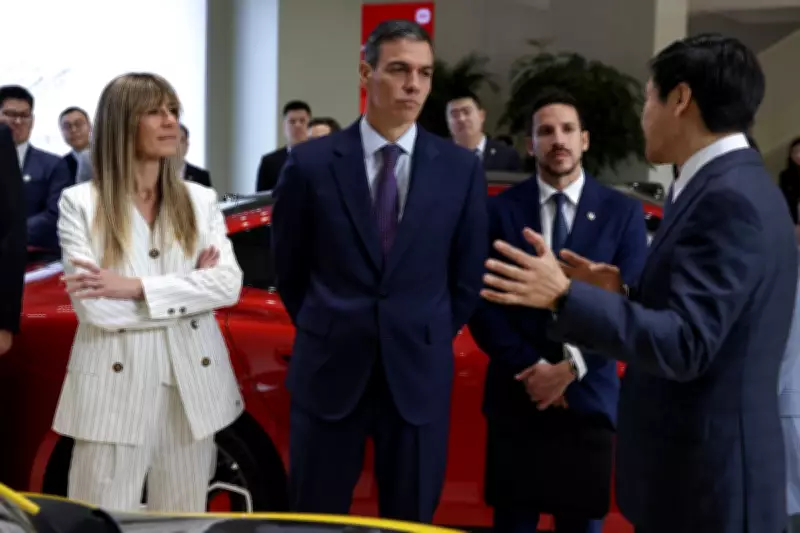
Spanish Prime Minister Pedro Sánchez has embarked on another diplomatic mission to China this week, marking his fourth visit to the world's second-largest economy in as many years. The trip underscores Spain's concerted effort to deepen its political and commercial relationships with Beijing, even as the European nation navigates a complex geopolitical landscape.
Strengthening Ties in a Multipolar World
During a speech at Beijing's prestigious Tsinghua University on Monday, Sánchez urged China to assume a more prominent role on the global stage. He emphasised the need for adherence to international law and called for an end to conflicts in regions including Lebanon, Iran, Gaza, the West Bank, and Ukraine. This appeal sets the tone for his scheduled meetings with Chinese President Xi Jinping, Premier Li Qiang, and top lawmaker Zhao Leji, the third-ranking leader of China's ruling Communist Party.
Navigating Strains with the United States
Sánchez's visit occurs against a backdrop of heightened tensions between Spain and the United States, primarily due to Madrid's vocal criticism of the US-Israeli military actions in Iran. In a significant move, Spain recently declared its airspace closed to US planes involved in the Iran conflict and denied the United States access to jointly operated military bases in southern Spain. These actions have positioned Spain as one of Europe's most outspoken critics of US and Israeli policies in the Middle East.

Eric Sigmon, a Madrid-based political analyst and former US national security adviser, noted the increased importance of these annual meetings. "Given the increased frictions with the US administration, these annual meetings have taken on an increased importance," Sigmon remarked, highlighting the strategic timing of Sánchez's latest trip to China.
Economic Imperatives Driving Engagement
Spain, the eurozone's fourth-largest economy, is actively seeking to diversify its political relations with global powers, including China. Spanish officials have articulated a clear goal: to attract more Chinese investment and boost exports to the Asian giant. Although trade negotiations are typically handled by the European Union on behalf of all 27 member states, Spain is pursuing bilateral avenues to enhance its economic standing.
The southern European nation, which generates over half of its electricity from renewable sources, has a pressing need for Chinese critical raw materials, solar panels, and green technologies. This demand mirrors that of other European countries transitioning away from fossil fuels, making China a crucial partner in Spain's energy transformation.
A More Cordial Relationship Within the EU
Unlike some of its European counterparts, Spain has maintained a less adversarial stance toward China in recent years. While Chinese investment in other large EU economies like France and Germany has declined over the past five years, according to the American Enterprise Institute's China Global Investment Tracker, it has actually grown in Spain since 2019. However, investment figures in Spain remain below those in several other European nations.
Spain's trade relationship with China is notably asymmetrical, with Chinese exports to Spain far exceeding those from the Iberian nation of 49 million people to China's population of over 1.4 billion. Despite this imbalance, Spain is actively working to reposition its trade relations with Beijing.
Broadening Global Partnerships
As a mid-size political power, Spain under Sánchez's leadership is pursuing stronger bilateral ties with major global economies, including China and, increasingly, India, in addition to its traditional relationship with the United States. This strategy was further underscored last November when Spain's King Felipe VI made an official visit to China, the first by a Spanish monarch in 18 years, signalling the nation's commitment to bolstering ties with Beijing.

Sigmon elaborated on the economic motivations behind Spain's outreach: "The economic and commercial part of the relationship is the most important part. Spain needs foreign capital and it needs investment and it likely sees China as a potential source for that." He added that for China, Spain represents "a more friendly and conciliatory partner in Western Europe," though the asymmetry in their relationship may pose challenges for Spain in negotiations over technology and other areas of interest.
Sánchez's visit, spanning from April 13 to 15, is a clear demonstration of Spain's strategic pivot towards deepening engagement with China, even as it navigates the turbulent waters of international diplomacy and regional conflicts.