Spain Emerges as Europe's Moral Conscience Under Sanchez Leadership
Europe has been steadily distancing itself from United States and Israeli military actions in the Middle East, with Spain emerging as the continent's most vocal moral authority under Prime Minister Pedro Sanchez's socialist government. The Spanish leader has positioned his nation as an outlier in Western Europe, taking unequivocal stands where other nations have tempered their criticism.
Moral Rearmament and Diplomatic Isolation
"Europe's challenge is not only to rearm itself to address its security and defence problems, but to also rearm itself morally, so that it can contribute to stable and peaceful development throughout the world," Sanchez declared at a European forum this week. This philosophy has translated into concrete actions that have isolated Spain from traditional Western allies.
When the US and Israel launched joint strikes against Iran in late February, Sanchez condemned the operation as "unjustified and dangerous military intervention that is outside international law," later describing it as "absurd, cruel and illegal." Spain's defence minister Margarita Robles reinforced this position by denying American forces permission to use jointly operated bases or Spanish airspace for attacks against Iran.

Consequences and Retaliation
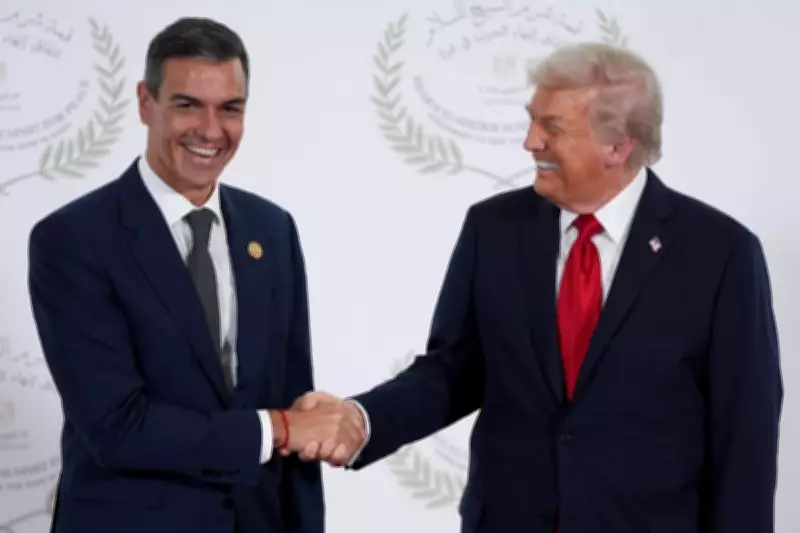
Sanchez's approach has provoked significant backlash from both American and Israeli leadership. Former US President Donald Trump labeled Spain "terrible" and threatened to sever all trade relations over the refusal to permit base usage. Israeli Prime Minister Benjamin Netanyahu announced Spain's expulsion from a US-led Gaza military strategy centre in Kiryat Gat, citing "hypocrisy and hostility" toward Israel.
"Spain has defamed our heroes... the soldiers of the most moral army in the world," Netanyahu stated in a video address. "I do not intend to allow any country to wage a diplomatic war against us without paying an immediate price."
Regional Conflicts and Humanitarian Stances
Spain has also been particularly vocal regarding Israel's military actions in Lebanon, accusing the country of attempting to "inflict the same level of damage and destruction" witnessed in Gaza. Sanchez called for European Union trade suspension with Israel following recent strikes, declaring "there must be no impunity for these criminal acts."
This follows Madrid's permanent withdrawal of its ambassador to Tel Aviv in March after years of escalating tensions. Spain was among the first European nations to recognize Palestinian statehood and has openly accused Israel of genocide in Gaza—claims supported by Amnesty International, Human Rights Watch, and United Nations findings.
Public Sentiment and Historical Context
A Politico European Pulse survey reveals that 51 percent of Spanish citizens believe Washington poses a threat to Europe—the highest proportion among surveyed nations. Forty-three percent oppose the US-Israeli war on Iran, while 94 percent advocate for European self-sufficiency and reduced dependence on major powers.
Experts note Spain's geographical proximity to North Africa and historical experiences, particularly the 2004 Madrid train bombings—Europe's deadliest terrorist attack at the time—have made the nation particularly sensitive to Middle Eastern instability. "What came after the attack was the electoral change of government and Madrid pulling its troops from Iraq," noted foreign policy analyst Vuk Vuksanović.
Diplomatic Maneuvering and Regional Support
Spain recently became the first Western country to reopen its embassy in Tehran following a fragile US-Iran ceasefire. Sanchez remained unimpressed by the agreement, brokered by Pakistan after Trump threatened to eliminate Iranian civilization, writing: "The government of Spain will not applaud those who set the world on fire just because they show up with a bucket."
Iran has reciprocated Spain's gestures, designating the country as "non-hostile" and suggesting it might permit Spanish ships passage through vital shipping routes currently restricting millions of barrels of oil. Meanwhile, Spain has found diplomatic alignment with Ireland, Slovenia, and Norway—nations taking similar critical stances toward US-Israeli actions.

"These are not geopolitical heavyweights, and they are not game changers in terms of Europe's overall posturing," Vuksanović observed. "But they provide Spain with a reputational boost as Europe avoids being dragged into an ill-conceived war while generally avoiding vocal criticism of the US and Israel."
As the Strait of Hormuz remains closed and NATO reluctance continues, Spain's moral positioning under Sanchez represents a significant shift in European foreign policy dynamics, with cultural history and public sentiment driving Madrid's increasingly independent diplomatic course.