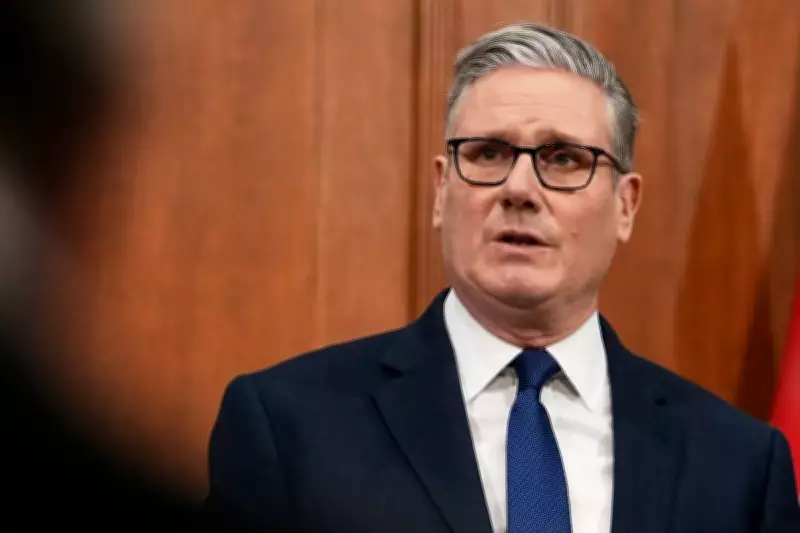
UK Prime Minister Defies Trump's Call for Hormuz Blockade, Pledges to Keep Britain Out of War
Prime Minister Sir Keir Starmer has unequivocally refused to support former US President Donald Trump's proposed blockade of the Strait of Hormuz, declaring that the United Kingdom will not be drawn into the escalating conflict with Iran. In a clear statement of intent, Sir Keir emphasized that his government's focus remains squarely on diplomatic efforts to ensure the vital shipping lane remains open, rather than participating in actions that could exacerbate tensions.
Diplomatic Push to Reopen Critical Shipping Route
Speaking to BBC Radio 5 Live, the Prime Minister detailed the UK's concerted efforts over recent weeks to rally international support for keeping the Strait of Hormuz accessible. "What we've been doing over the last few weeks – and this was part of what I was discussing with the Gulf states last week – is bringing countries together to keep the strait open, not shut," Sir Keir stated. He confirmed that the UK is not backing the blockade, with all diplomatic, political, and operational capabilities, including mine-sweeping resources, directed towards achieving the full reopening of the strait.
The strategic waterway has been effectively closed by Iran in retaliation for the US-Israeli bombing campaign, severely disrupting global oil and gas shipments. Donald Trump announced on his Truth Social platform that the US military would initiate a blockade of all vessels attempting to enter or leave the Strait of Hormuz, claiming that other nations, including the UK, would participate by deploying mine-sweepers. However, Sir Keir firmly rebuffed this assertion, clarifying the UK's independent stance.

Economic Fallout and Global Market Turbulence
The geopolitical standoff has triggered significant economic repercussions worldwide. Brent crude oil prices surged past $100 per barrel, climbing over 7% to $102 in Monday morning trading, reigniting fears of a deepening global energy crisis. Stock markets reacted negatively, with the FTSE 100 Index dropping 0.5% to 10,553.2 points, while Germany's Dax and France's Cac 40 both fell more than 1% as hopes for a peaceful resolution to the Middle East conflict dwindled.
The escalating cost of oil has already driven up fuel prices for motorists and increased operational expenses for businesses across the UK. Households are bracing for potential impacts on domestic energy bills when the price cap expires at the end of June. The Resolution Foundation think tank has warned that the average working-age household could face a financial shortfall of £480 this year due to the war's economic ripple effects.
Prime Minister's Firm Stance on National Interest and Lawfulness
Sir Keir articulated a principled position, underscoring that the UK's actions must be grounded in clear legal authority and well-considered strategy. "My decision has been very clearly that whatever the pressure – and there's been some considerable pressure – we're not getting dragged into the war. The UK is not getting dragged in. That's not in our national interest, because I'm not going to act unless there's a clear, lawful basis and a clear thought-through plan," he asserted.
Expressing deep concern for British citizens, the Prime Minister highlighted the disproportionate burden placed on households uninvolved in the conflict. "I'm very concerned about the impact that this war is having on people back in the United Kingdom who've obviously played no part in the war, but I don't want them paying the price. So that's my primary focus," Sir Keir remarked. When questioned about accountability for the economic strain, he attributed the root cause to Iran's actions, stating that Tehran's restrictions on Gulf traffic violate international law.
Escalating Tensions and Retaliatory Threats
Iran has permitted limited vessel passage through the strait, but Trump's blockade aims to halt this entirely, preventing Tehran from collecting tolls and oil export revenues. The former US president declared, "no-one who pays an illegal toll will have safe passage on the high seas," following the collapse of negotiations between the US and Iran. In response, Iran has vowed to retaliate against any US military blockade of its ports and coastal waters.

Mohammad Bagher Qalibaf, Iran's parliamentary speaker who led the talks, issued a stark warning: "If you fight, we will fight." This defiant stance underscores the high stakes involved, as global leaders navigate a precarious balance between diplomatic engagement and military posturing in one of the world's most volatile regions.