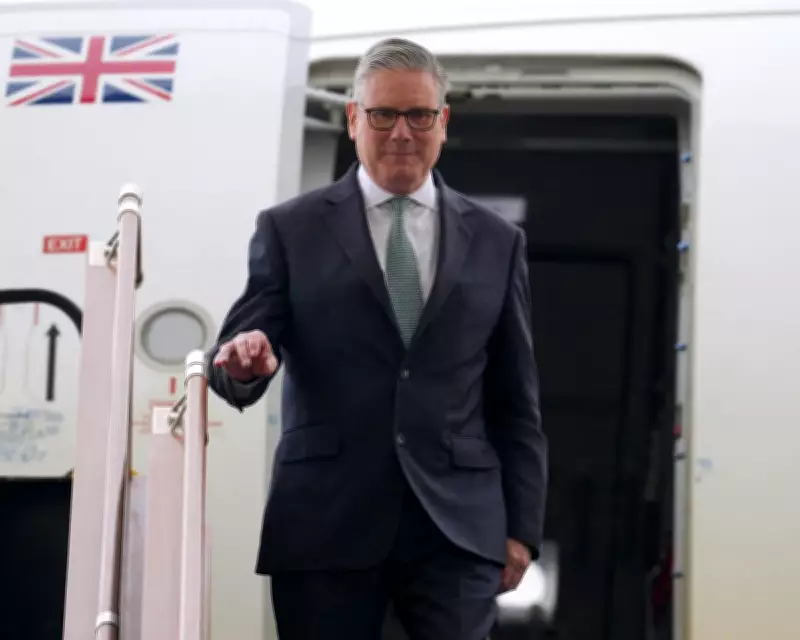
Prime Minister Keir Starmer has issued a firm condemnation of Israel's continued military actions in Lebanon, declaring that such strikes "should not be happening" during his diplomatic tour of the Middle East. Speaking from Bahrain, where he has engaged in high-level talks with regional leaders, Starmer emphasised the urgent need for these attacks to cease immediately.
Starmer's Strong Stance on Lebanon Conflict
In a televised interview with ITV, Starmer expressed his unequivocal disapproval of Israel's intensified bombing campaign in Lebanon, which has tragically resulted in the deaths of more than 250 individuals. "That shouldn't be happening. That should stop. That's my strong view," the Prime Minister stated, highlighting the humanitarian toll of the ongoing hostilities.
A Watershed Moment for UK Security Policy
In a comprehensive article published by the Guardian, Starmer articulated his vision for transforming the Iran conflict into a pivotal turning point for the United Kingdom's future security framework. He argued that the nation's response must involve a fundamental reset, focusing on enhanced resilience through bolstered defence capabilities and strengthened alliances with European partners.

The Prime Minister wrote: "From the outset, I was clear Britain would not be drawn into offensive military action. And we were not." He positioned his strategic choices as being in the best interests of the UK, aimed at fostering long-term stability and security.
Divergence from US Policy and European Realignment
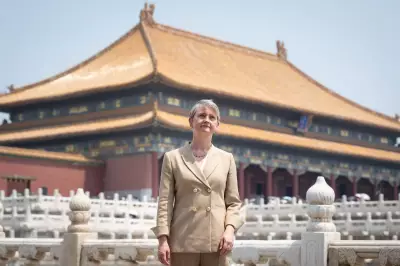
Starmer's remarks on Israel align with similar criticisms voiced by Foreign Secretary Yvette Cooper and Defence Secretary John Healey, signalling a potential widening of the policy gap between the United Kingdom and the United States under President Donald Trump regarding the Iran conflict and its aftermath.
The Prime Minister was explicitly critical of the notion that ending attacks on Lebanon might not be part of the ceasefire agreement, dismissing arguments about technical breaches. "This isn't a technical one of whether it's a breach of the agreement or not," Starmer asserted, calling it "a matter of principles as far as I'm concerned."
Commitment to Free Navigation in the Strait of Hormuz
Alongside his condemnation of the Lebanon strikes, Starmer and his ministerial team have been resolute in their insistence that the Strait of Hormuz must remain free from any tolls or levies. This stance comes in response to President Trump's suggestion of a "joint venture" between the US and Iran to impose such charges.
Starmer clarified the UK's position, stating that "toll-free navigation" and safe passage are non-negotiable principles for international shipping through this critical waterway.
Rebuilding European Alliances for Resilience
The Prime Minister outlined a clear strategy for enhancing the UK's security and economic resilience through closer cooperation with the European Union. "I'm clear in my mind that that means we must be closer to the EU," Starmer explained, "and that's why not just on defence and security but also on trade and energy, I want us to be closer to the EU, to strengthen our economy, to make it more resilient."
He highlighted significant investments in defence capacity as part of this approach, describing them as "the biggest sustained investment since the cold war."
Ministerial Support and Diplomatic Efforts
Defence Secretary John Healey reinforced the government's position during a press conference in Westminster, warning against the implementation of tolls in the Strait of Hormuz. "The introduction of any sort of pay-for-passage tolls would create a potential principle that could be used and abused by others elsewhere," Healey cautioned.
Healey also joined Starmer in calling for the ceasefire to be extended to include Lebanon, stating: "We condemn the escalation in Lebanon. We want the Israel-Lebanon conflict to be brought within the terms of the ceasefire, because we want to see greater stability."

A Long-Term Vision Beyond Immediate Crises
Starmer framed his proposals as part of a broader shift in UK policy thinking, moving away from short-term solutions to systemic challenges. He argued that successive shocks, including Brexit, the Covid-19 pandemic, and the conflict in Ukraine, had previously prompted "sticking plaster" responses.
"This time, it will be different," the Prime Minister declared. "The war in Iran must now become a line in the sand. Because how we emerge from this crisis will define all of us for a generation."
Foreign Secretary Yvette Cooper is scheduled to elaborate on these themes in a speech at Mansion House in London, where she will emphasise that "there must be no return to conflict" following the ceasefire announcement. Her address will underscore the government's commitment to inclusive negotiations, regional stability, and the full reopening of the Strait of Hormuz to commercial shipping.