In a significant development aimed at easing long-standing tensions, Syrian government forces and Druze militiamen have exchanged prisoners captured during violent clashes last summer in the southern Sweida province. This rare move represents a tentative step toward a potential political settlement in the region, which has been marred by conflict and displacement.
Details of the Prisoner Swap
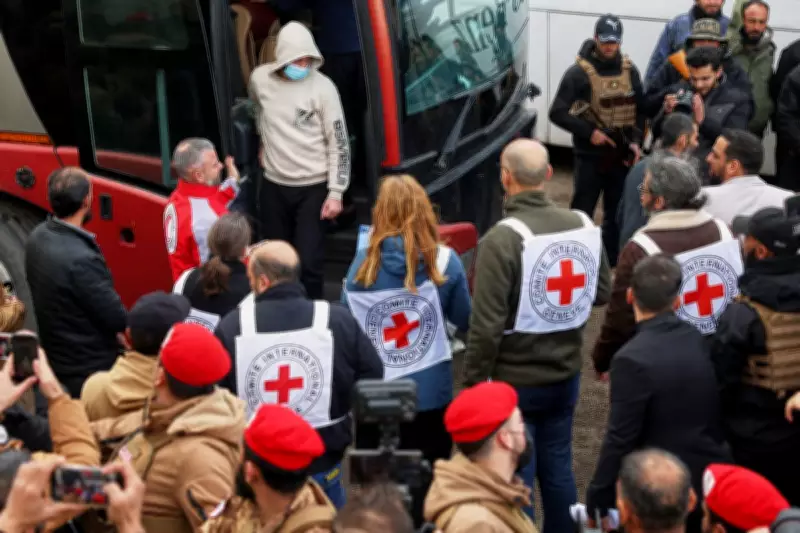
The exchange took place on Thursday at a checkpoint in the al-Matuna area of northern Sweida, with the International Committee of the Red Cross (ICRC) facilitating the process. According to reports, the Syrian government side released 61 prisoners, while local authorities in Druze-controlled parts of Sweida handed over 25 individuals. This operation marks the first major progress in efforts led by the United States and Jordan to broker a political deal between the two sides.
Official Statements and Reactions
Syrian Interior Ministry spokesperson Noureddine al-Baba addressed journalists, stating that the exchange was achieved "through the combined efforts of international and local parties, and it reflects the Syrian state's commitment to all its citizens, from all backgrounds and affiliations and across all provinces." He praised the returning members of the Syrian Arab Army and Interior Ministry officers, though he did not specify whether the captives from Sweida were civilians or fighters.

On the other side, Talal Amer, spokesperson for the National Guard—the de facto military force in Sweida—clarified that the deal was made via the ICRC "and international guarantors without any direct contact with the Damascus government." Amer noted that the prisoners released into Sweida were civilians, while those from the government side were military personnel.
Humanitarian Hopes and Background Context
Stephan Sakalian, head of the ICRC delegation in Syria, expressed optimism, saying, "hopes that this operation will pave the way toward possible further releases and dialogue between all parties on other humanitarian concerns," including addressing the fate of individuals who went missing during the violence.
The clashes in mid-July involved armed groups affiliated with Druze leader Sheikh Hikmat al-Hijri clashing with local Bedouin clans, leading to government intervention that effectively sided with the Bedouins. The conflict resulted in hundreds of civilian deaths, predominantly among the Druze community, and displaced tens of thousands of people from both Druze and Bedouin backgrounds.
Broader Political Implications
Since the clashes, a coalition of militias under al-Hijri has formed, creating a de facto autonomous zone in large parts of Sweida province, with backing from neighboring Israel. This development comes amid ongoing challenges for the new authorities in Damascus, who have struggled to unify the country since former President Bashar Assad was ousted in December 2024 by an Islamist-led insurgency.
A recent deal with the Kurdish-led Syrian Democratic Forces, which control much of northeast Syria, has been a key step toward consolidation, leaving Sweida as the primary area outside government control. The Druze religious sect, originating as a 10th-century offshoot of Ismailism—a branch of Shiite Islam—has a significant presence in Syria, with over half of the global Druze population of roughly 1 million residing there, and others in Lebanon and Israel, including the Golan Heights annexed by Israel in 1967.
This prisoner exchange, while modest in scale, signals a potential thaw in relations and could set the stage for further diplomatic efforts to resolve the simmering tensions in Sweida and beyond.