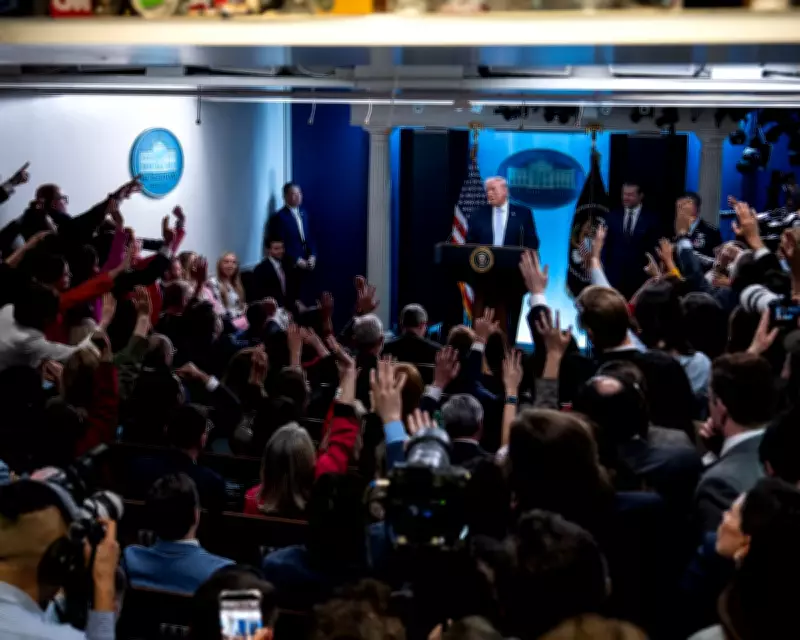
Former President Donald Trump declared it "a big day for World Peace!" following a volatile sequence of threats and a ceasefire announcement with Iran. This statement, posted on his social media platform, came after he vowed to wipe Iran's "whole civilization" off the map, only to announce a temporary halt to hostilities hours later. The administration's handling of the conflict has drawn sharp criticism for treating war as a strategic game.
Threats and Ceasefire: A Calculated Move
Trump's threat of genocide, coupled with significant military action, reportedly brought Iran to the negotiation table. The conflict resulted in thousands of Iranian and 13 American deaths, with schools, homes, hospitals, and mosques obliterated. Financially, the U.S. wasted $40 billion, while Gulf nations faced losses up to $200 billion. Secretary of Defense Pete Hegseth implied that such threats were effective, stating in a press briefing that the approach worked to secure a ceasefire.
Hegseth's Rhetoric and Reality
During the briefing, Hegseth, dressed in his signature muscle-enhancing blue suit, praised Operation Epic Fury for destroying Iranian military assets. He boasted about factories being "razed to the ground" and hinted at further targets like power plants and bridges, which would constitute war crimes if deliberately attacked. Despite his energetic delivery, observers noted he looked unusually wan, perhaps reflecting the toll of war.

Hegseth exalted Trump as both a lion for his courage and a lamb for his mercy, claiming Iran begged for the ceasefire. However, Iran's supreme national security council issued a statement warning that their forces remain ready to respond with full force to any enemy error. Trump later clarified that U.S. troops are poised to act if the ceasefire is violated, promising a response "bigger, and better, and stronger than anyone has ever seen before."
Political Reactions and War Powers
Republican responses were largely muted, with few objecting to Trump's public threats. Former Georgia representative Marjorie Taylor Greene called his remarks "evil and madness" and advocated for his removal via the 25th amendment. Texas representative Nathaniel Moran distanced himself from supporting the destruction of a civilization but voted with his party against invoking the 1973 War Powers Act, which would require congressional approval for war.
Republicans have avoided labeling the conflict a war, preferring terms like "combat operation" to sidestep a formal vote. This political maneuvering allows them to avoid taking a stance that could be unpopular. In the press conference, Hegseth claimed all military objectives were achieved, but analysts note little evidence that Iran's nuclear capacity was eliminated, highlighting the vagueness of the administration's goals.
Human Cost and Missed Opportunities
The conflict has overshadowed the plight of the Iranian people. In January, protests against the regime were brutally suppressed, with thousands killed. Experts suggest a coordinated international push might have toppled the government, but instead, Trump and Hegseth abandoned the resistance, unleashing U.S. military might. An Iranian poet lamented in an anonymous dispatch, "We are left doubly alone," caught between foreign invaders and the regime.
Financial Implications and Future Prospects
Trump's request for supplementary Pentagon funds has dropped from $200 billion to $80-100 billion, framed as saving taxpayers $120 billion. He also touted potential profits from the Gulf region, with allies like Jared Kushner and Steve Witkoff capitalizing on opportunities. Trump mused about a "joint venture" with Iran to manage the Strait of Hormuz, though details remain vague.
The ceasefire is already fragile, threatened by Israel's assaults on Lebanon. Trump urged Israeli Prime Minister Benjamin Netanyahu to scale back attacks, but Netanyahu ignored the suggestion. Trump later complained about Iran allegedly charging fees in the Strait of Hormuz, warning them to stop. Despite these tensions, his focus shifted to legacy projects, like a moon mission and designs for a triumphal arch.

This analysis underscores how the Trump administration's approach to the Iran conflict blends aggressive rhetoric with strategic pauses, treating war as a game with high stakes in lives and money. The ceasefire's stability remains uncertain, with political and financial interests continuing to shape U.S. foreign policy.