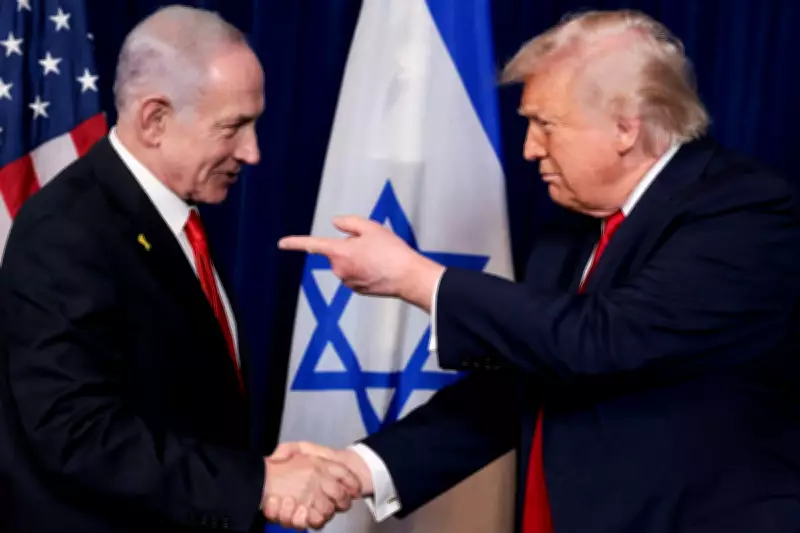
Donald Trump has issued a sweeping ultimatum to Middle Eastern nations, demanding that countries including Qatar, Pakistan, Egypt, Jordan, and Turkey sign peace agreements with Israel under the Abraham Accords framework. This move is part of a broader strategy to end the ongoing conflict with Iran, as negotiations over a nuclear deal continue.
Trump's Truth Social Statement
In a series of posts on Truth Social, Trump claimed that significant progress had been made on a draft agreement with Iran. However, he warned that he would only accept a 'great deal for all or no deal at all,' threatening a return to 'battlefront and shooting' if talks fail. The former president also shared AI-generated images depicting political opponents in prison and a graphic of bombs being dropped on Iranian ships with the word 'Adios' superimposed.
Rubio's Diplomatic Approach
US Secretary of State Marco Rubio affirmed that the United States would give diplomacy 'every chance to succeed' in Iran negotiations. He stated that the US would either secure a good agreement with Iran or address the country 'another way,' noting that a 'pretty solid thing on the table' exists for negotiations. Rubio's comments underscore the administration's dual-track strategy of pursuing diplomacy while maintaining a credible military threat.

Republican Pushback and Iranian Maneuvers
Defence analysts suggest that Trump may be reconsidering his stance on the Iran deal due to significant pushback from Republicans, including Senator Ted Cruz, who expressed 'deep concern' over leaked details of the negotiations. Meanwhile, Iran's Central Bank Chief visited Qatar to discuss the release of $12 billion in frozen funds, a precondition for advancing talks. This development highlights the complex interplay of economic and political factors influencing the negotiations.
The demand for expanded peace agreements with Israel is seen as a major shift in US Middle East policy, potentially reshaping regional alliances. Critics argue that linking the Iran deal to the Abraham Accords could complicate an already fragile negotiation process, while supporters view it as a necessary step toward lasting peace.