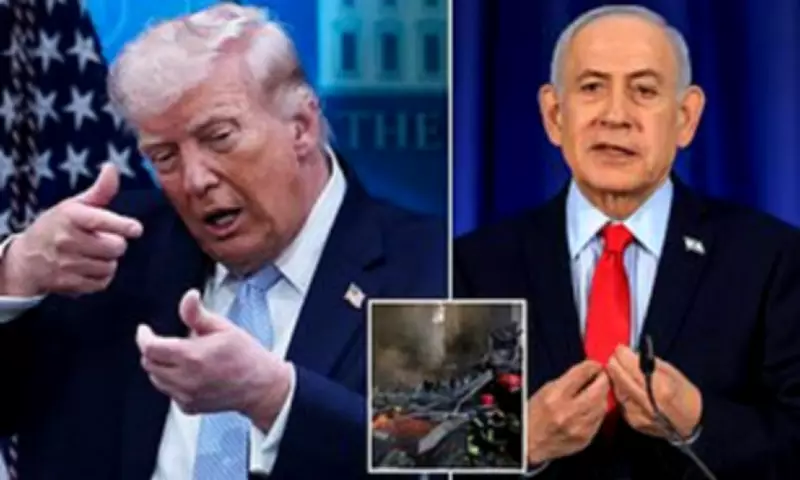
Trump Calls for Israeli Restraint in Lebanon to Protect Iran Negotiations
Former President Donald Trump has explicitly urged Israeli Prime Minister Benjamin Netanyahu to scale back military operations in Lebanon, citing concerns that ongoing strikes could jeopardise critical peace discussions with Iran. Trump confirmed on Thursday that he advised Netanyahu to adopt a "more low-key" approach, as Vice President JD Vance and Special Envoy Steve Witkoff prepare to lead high-stakes negotiations in Islamabad this weekend.
Fragile Ceasefire and Escalating Tensions
US officials are deeply apprehensive that Israel's campaign against Hezbollah in Lebanon might undermine the already delicate three-day-old ceasefire agreement between Washington and Tehran. Netanyahu, however, has consistently asserted that Israel's actions in Lebanon are separate from the US-Iran talks. Despite this, he announced on Thursday authorisation for direct negotiations with Lebanon "as soon as possible," aiming to disarm Iranian-backed Hezbollah militants and establish formal relations between the neighbouring nations.
A US official has verified that discussions between Israel and Lebanon to end hostilities with Hezbollah will commence next week at the State Department in Washington. Ambassador to Lebanon Michel Issa will lead the US delegation, while Israel's Ambassador to the US, Yechiel Leiter, will head the Israeli side. Lebanese authorities, as reported by The Wall Street Journal, are pushing for an immediate ceasefire ahead of these talks.

Strategic Concerns Over the Strait of Hormuz
Trump's primary focus remains Iran's activities around the Strait of Hormuz, a vital global oil chokepoint. He has publicly expressed fury over reports that Iran might impose tolls on vessels traversing the strait, warning via Truth Social posts that such actions must cease immediately. The White House supports reopening the strait as part of the ceasefire deal but opposes Iran's military, which controls the waterway, from generating revenue through shipping fees.
US officials have indicated that Trump fears the Israel-Lebanon conflict could grant Iran additional leverage during negotiations. Complicating matters, semi-official Iranian news agencies have suggested that forces have mined the Strait of Hormuz, which Tehran has previously closed. Trump has retaliated with threats of intensified US military strikes if Iran fails to honour the agreement.
Human Cost and Military Escalation
The humanitarian toll is severe, with Lebanon's health ministry reporting over 300 fatalities and more than 1,100 injuries from Israeli strikes on central Beirut and other areas on Wednesday. Israel asserts these targets were Hezbollah facilities, as the group has engaged in the conflict supporting Tehran. Early Friday, Israel's military stated it struck approximately ten rocket launchers in Lebanon that had fired into northern Israel, and claimed the killing of Ali Yusuf Harshi, an aide to Hezbollah leader Naim Kassem.
Since the US-Iran ceasefire announcement, Israel has rapidly escalated attacks against Lebanon, resulting in an estimated 254 deaths from airstrikes. Iran contends that Lebanon was included in the ceasefire deal and now threatens to abandon peace talks and maintain the Strait of Hormuz's closure unless Israel halts its operations.
High-Stakes Diplomatic Mission
Vice President JD Vance, accompanied by Special Envoy Steve Witkoff and Trump's son-in-law Jared Kushner, departs on Friday to lead mediated talks with Iran in Islamabad. This mission represents a rare instance of high-level US engagement with the Iranian government since the 1979 Islamic Revolution, with the most recent direct contact occurring in 2013 under President Barack Obama.
White House spokeswoman Anna Kelly emphasised that Vance, Witkoff, Kushner, and Secretary of State Marco Rubio have consistently collaborated on these discussions, expressing Trump's optimism for a lasting deal within the two-week ceasefire window. However, the White House has disclosed minimal details regarding the talks' format or specific expectations.

Vance's Expanding Role and Diplomatic Challenges
This assignment marks a pivotal moment for Vance, who has transitioned from a background figure in the Trump administration to a key player in addressing complex international crises. With limited diplomatic experience, Vance dismissed speculation that Iran requested his involvement, stating he sought to participate believing he could contribute positively.
The negotiations' success is uncertain, given decades of hostilities, Hezbollah's entrenched presence, and unresolved border disputes between Israel and Lebanon. Additional complications include questions over Iran's enriched uranium stockpile, the timeline for resuming normal strait traffic, and future regional security arrangements.
As Vance's delegation engages, the international community watches closely, aware that the outcome could significantly influence Middle East stability and global energy security.