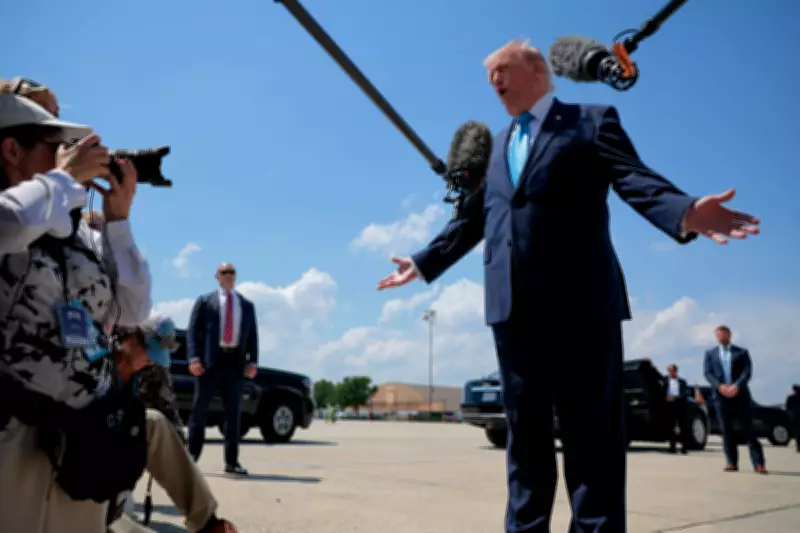
Donald Trump announced on Wednesday his intention to speak directly with Taiwan’s President Lai Ching-te, a move that breaks longstanding diplomatic norms and risks inflaming relations with China. Speaking to reporters at Joint Base Andrews in Maryland before boarding Air Force One, the US president said, “I’ll speak to him. I speak to everybody … We’ll work on that, the Taiwan problem.”
Breaking Diplomatic Precedent
Since Washington shifted diplomatic recognition from Taipei to Beijing in 1979, no sitting US president has spoken directly with a Taiwanese leader. However, Trump broke precedent in December 2016 as president-elect when he spoke with then-Taiwan President Tsai Ing-wen, sparking a formal complaint from China. Trump’s transition team later downplayed the significance of that call.
Taiwan’s foreign ministry responded on Thursday, indicating that Lai would welcome the opportunity to speak with Trump, according to Reuters. China has consistently opposed any official contact between the US and Taiwan, viewing the island as part of its territory, and has not ruled out using force to bring it under Beijing’s control.

Mixed Signals and Strategic Uncertainty
Trump’s latest comments come just a week after he met with Chinese President Xi Jinping in Beijing, initially raising speculation that his earlier mention of speaking to Lai was a verbal slip. However, the repetition suggests a deliberate policy shift. A call has not yet been scheduled, according to a person familiar with the matter, and the White House did not comment on timing or content.
Trump has approved more arms sales to Taiwan than any previous US president, yet he has also described future sales as a “very good negotiating chip.” After his Beijing trip, Trump said he had not decided whether to proceed with a major $14 billion weapons package for Taiwan, adding to uncertainty about US support. In response, Beijing is reportedly withholding approval for a Pentagon official’s visit to China until Trump clarifies his stance on the sale, according to the Financial Times.
Taiwan’s Perspective and Strategic Importance
Lai, whom Beijing labels a separatist, stated earlier on Wednesday that if he speaks with Trump, he will emphasize Taiwan’s commitment to the status quo across the Taiwan Strait, blaming China’s military buildup for undermining peace. “No country has the right to annex Taiwan. The people of Taiwan pursue a democratic and free way of life, and democracy and freedom should not be regarded as provocation,” Lai said.
Taiwan, with a population of 23 million, is the fourth-largest US trading partner, largely due to exports of advanced semiconductors that power the global economy. Under US law, Washington is obliged to provide Taiwan with self-defense means, and bipartisan lawmakers have urged continued arms sales. Any direct US-Taiwan conversation would typically anger China, but Trump’s characterization of the issue as the “Taiwan problem” echoes Beijing’s phrasing, sending mixed signals to Taipei.