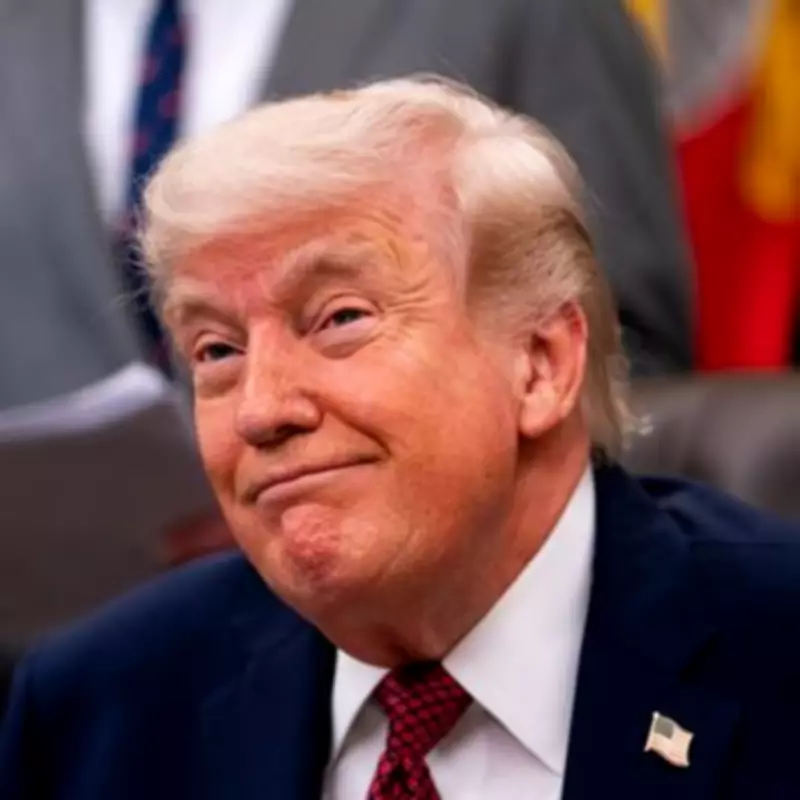
Former US President Donald Trump has released a perplexing update on the Iran war, asserting that the country's nuclear sites have been "obliterated," a statement that appears to clash with his previous justifications for the conflict. In a recent TruthSocial post, Trump lashed out at media outlets, accusing them of downplaying military achievements while repeating claims from last year's strikes.
Contradictory Claims on Nuclear Threat
Trump's latest remarks have sparked confusion, as they seem to undermine one of his core war objectives. In March, he stated that Iran was merely "two to four weeks" away from developing a nuclear weapon, using this as a primary rationale for the ongoing Middle East war. However, in his recent post, he referenced "Operation Midnight Hammer," a joint US-Israel operation in June of last year that targeted nuclear facilities in Iran.
"Operation Midnight Hammer was a complete and total obliteration of the Nuclear Dust sites in Iran," Trump declared. "Therefore, digging it out will be a long and difficult process. Fake News CNN, and other corrupt Media Networks and Platforms, fail to give our great aviators the credit they deserve - Always trying to demean and belittle - LOSERS!!!"

Analyst Skepticism and Inconsistent Explanations
Analysts have expressed doubts about the effectiveness of the strikes, with many agreeing that while Iran's uranium enrichment production faced significant setbacks, the nuclear capabilities were not entirely destroyed. This inconsistency highlights the Trump administration's shifting narratives for the war, which have included stopping missile capabilities, preventing nuclear weapon development, regime change, and seizing oil resources.
The war, which has proven unpopular in the US, has seen multiple justifications from Trump, adding to the public's bewilderment. A ceasefire was implemented a couple of weeks ago, but no permanent resolution has been reached, leaving the conflict in a state of limbo.
Stalled Peace Talks and Global Economic Impact
Efforts to negotiate an end to the war have faltered, with the US walking away after just one day of talks in Pakistan. A second round of peace talks is scheduled to be hosted by Pakistan, but there is little optimism for a swift conclusion. The prolonged conflict has had severe repercussions on the global economy, causing oil prices to spike worldwide.
The Strait of Hormuz, a critical oil shipping lane, has experienced closures and blockades from both Iran and the US, exacerbating economic instability. In a surprising development, Pakistan could be drawn into the conflict against Iran due to a defence pact with Saudi Arabia, which has been targeted by Tehran's proxies.
Uncertain Future and Ongoing Tensions
Trump has repeatedly predicted an imminent end to the war, only for hostilities to persist. This pattern of contradictory statements and unresolved negotiations underscores the complexity and volatility of the situation. As peace talks remain inconclusive, the international community watches closely, concerned about further escalation and its broader implications.
The conflicting updates from Trump not only confuse the public but also raise questions about the strategic coherence of the war effort. With no clear path forward, the Iran war continues to pose significant challenges to regional stability and global markets.