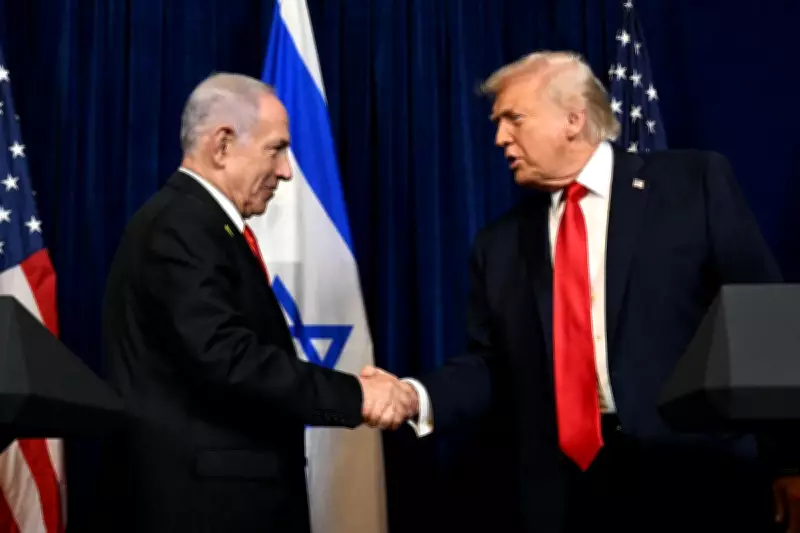
Attempting to forge a sustainable peace agreement involving the United States, Israel, Lebanon, and Iran is already an extraordinarily challenging endeavor, despite its necessity to prevent global catastrophe. However, Donald Trump's abrupt decision to impose an additional prerequisite—that numerous Muslim-majority nations must also sign the Abraham Accords, establishing diplomatic ties with Israel, as a mandatory condition for any Iran deal—is both perilous and counterproductive.
Unnecessary Conditions Amidst Crisis
This demand is particularly concerning given that the targeted countries have been unwillingly drawn into this conflict. Pakistan, which has already categorically rejected the proposal, alongside Saudi Arabia and Qatar—both hosting US military bases and consequently subjected to Iranian missile attacks—are among those named. It is no exaggeration to state that the lives of millions, the stability of the global economy, and regional and international security hinge on an Iran peace deal.
The financial repercussions of this senseless war, which has spanned 13 nations, claimed over 6,000 lives, and caused the most severe disruption to global energy supplies in history through the blockade of the Strait of Hormuz, are already being felt worldwide. Despite widespread increases in living costs and market volatility, the International Energy Agency warns that the full impact will not materialize until year-end. Just last week, Yvette Cooper echoed United Nations concerns, cautioning that the world is "sleepwalking into a global food crisis." Tens of millions face hunger if the Strait of Hormuz remains closed by Iran (and partially by the US), preventing fertilizer from reaching farmers. The full butterfly effect of this conflict remains unknown, and it is a risk we cannot afford to take.

Domestic Pressures Driving Foreign Policy
The war in Iran is deeply unpopular within the United States. A recent New York Times/Siena poll revealed that two-thirds of voters believe Trump's decision to go to war with Iran was mistaken. This has significantly eroded Trump's approval rating, dropping to a second-term low of 37 percent, just months ahead of critical midterm elections. Trump, who campaigned as a peacemaker, frequently boasts of resolving "eight wars," and openly covets a Nobel Peace Prize, urgently needs a diplomatic victory.
Securing an Iran deal—which he would frame as a triumph regardless of concessions—alongside expanding the Abraham Accords would undoubtedly bolster his reputation among his support base. The problem is that this approach is not only unfeasible but also invites further delays and potential conflict.
The Abraham Accords: A Complicated Legacy
On Monday, Trump posted on Truth Social that during discussions on an Iran truce, he informed leaders of Saudi Arabia, the UAE, Qatar, Pakistan, Turkey, Egypt, Jordan, and Bahrain that signing the Abraham Accords should be "mandatory" and "at a minimum" a prerequisite. The UAE and Bahrain, which have never been at war with Israel, normalized relations six years ago, unlocking lucrative diplomatic, tourism, security, arms, and trade deals worth billions of dollars, according to Israeli statistics.
Former President Joe Biden had hoped to persuade Saudi Arabia to follow suit by the end of 2023. However, those aspirations were shattered by Hamas's deadly October 7, 2023 attacks on Israel, which killed over 1,200 Israelis and foreign nationals, and Israel's subsequent devastating bombardment of Gaza, which has killed more than 70,000 Palestinians and displaced nearly two million. UN experts have described Israel's actions in Gaza as amounting to genocide—a charge Israel denies—and warned of an escalating campaign of ethnic cleansing and annexation in the occupied West Bank, which Israel also denies. Riyadh and other nations have consistently made recognition of Israel conditional on the establishment of a Palestinian state with East Jerusalem as its capital.

Prime Minister Benjamin Netanyahu's far-right government has made it abundantly clear that a Palestinian state is off the table. Senior cabinet members, including National Security Minister Itamar Ben Gvir, are actively pursuing de facto annexation of the West Bank. The war on Gaza and the assault on the West Bank have already strained the existing Abraham Accords to breaking point; the UAE, for instance, faces significant domestic pressure to withdraw. By linking a complex Iran-Israel-US-Lebanon deal to the expansion of these already fragile accords among half a dozen additional countries, Trump is introducing an impossible and dangerous layer of complexity that could scuttle any chance of resolving the current conflicts and even ignite new ones.
Stakes Beyond Measure
The Iran truce is already fraught with existential disagreements, including control of the Strait of Hormuz, the future of Iran's nuclear program, and its leadership. Previous negotiations were nearly derailed by Israel's ongoing assault on Lebanon and its war with Hezbollah, which was ostensibly addressed by a fragile and largely ineffective truce. Concerns now include Israel's potential permanent expansion into Lebanese sovereign territory and the risk of civil conflict within fractured Lebanon. Tensions escalated further on Tuesday after heated exchanges between the US and Iran, with Tehran accusing Washington of violating the existing ceasefire through strikes in Iran's southern Hormozgan province.
Injecting sudden, impossible demands into this volatile mix only increases the likelihood of further war. Everything is at stake.