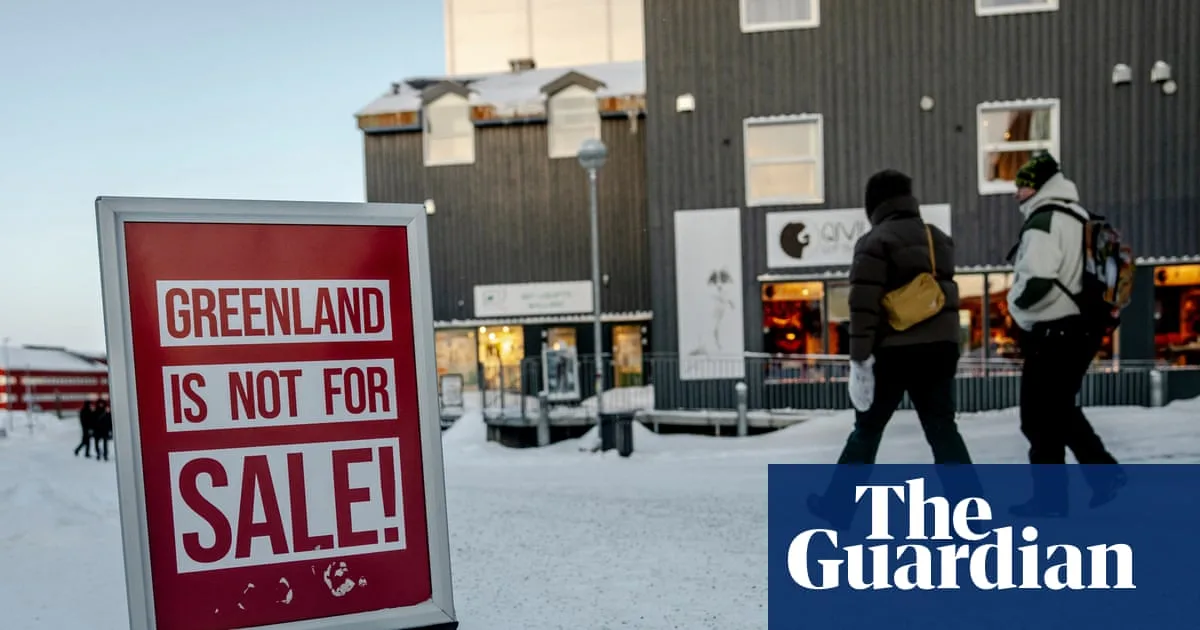
European leaders are moving away from appeasement of Donald Trump as the US president escalates his threats over Greenland, with an emergency EU summit on Thursday seen as a potential turning point. Trump has demanded that Denmark sell the territory, linking his actions to being snubbed for the Nobel peace prize, and has imposed trade threats on eight European countries that deployed troops to the Arctic.
In a rambling speech at Davos on Wednesday, Trump stepped up his claim to Greenland but ruled out military force, instead calling for “immediate negotiations”. However, he insisted that only the US could secure the island, raising fears that the Nato mutual defence clause could be undermined if the US is prepared to coerce an ally.
The Belgian prime minister, Bart De Wever, described the crisis as surreal, saying: “A Nato country is threatening another Nato country with military invasion.” Trump has threatened punitive tariffs on eight European countries from 1 February, rising to 25% from 1 June, if he does not get Greenland.

In response, the EU has prepared retaliatory tariffs on €93bn of US goods, and MEPs have suspended ratification of an EU-US trade deal. French President Emmanuel Macron wants to deploy the EU’s anti-coercion instrument, a powerful trade weapon that could block US companies from the single market. However, divisions remain, with Germany and Italy emphasising dialogue over confrontation.
Gordon Brown described the crisis as Europe’s “moment of truth”, but the chance of leaders chickening out remains high. The EU is more likely to first turn to the €93bn package of countermeasures, which could snap into place on 7 February. Whether the bloc can unite to use its toughest economic weapons remains to be seen.