Former US Diplomat Claims Trump's Venezuela Triumph Sparked Costly Iran Misjudgment
A respected former US diplomat has asserted that Donald Trump is now "reaping the bitter fruit" of mistakenly believing the capture of Venezuela's president, Nicolás Maduro, provided a viable blueprint for toppling Iran's regime. John Feeley, a former Marine helicopter pilot who served as US ambassador to Panama, contends that Trump was "flush with the victory from Venezuela" when he authorised the ill-fated attack on Iran in February.
Operation Absolute Resolve: A Stunning Military Success with Unforeseen Consequences
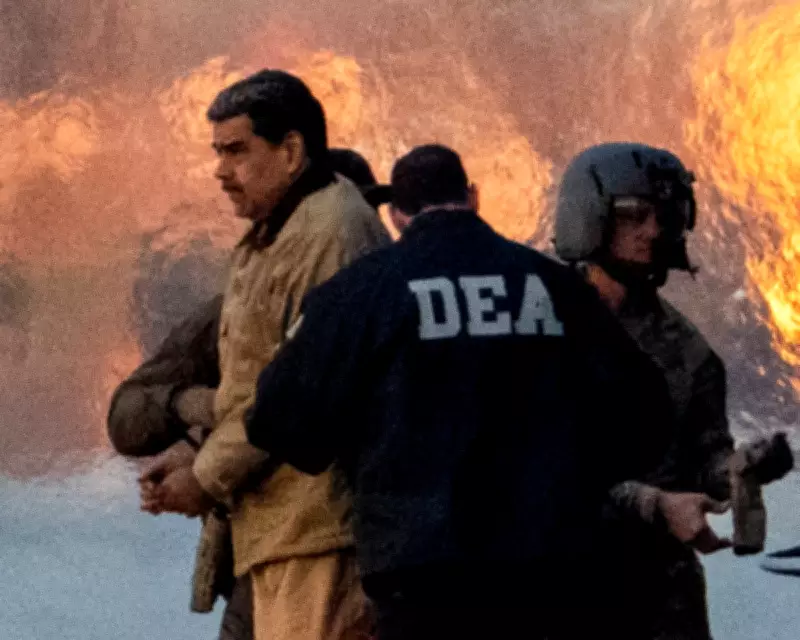
Maduro was seized during a special forces mission on 3 January, with his authoritarian regime quickly capitulating to US demands under the leadership of his replacement, Delcy Rodríguez. The operation, dubbed Operation Absolute Resolve, resulted in more than 100 Cuban and Venezuelan troop fatalities without a single US military casualty. Trump hailed it as "one of the most stunning, effective, and powerful displays of American military might and competence in American history," proclaiming it as proof the US possessed "the strongest and most fearsome military on the planet."
Feeley acknowledged that Maduro's capture demonstrated the Trump administration's willingness "to use force to get rid of somebody they don't like." However, he and other former senior US diplomats believe it also fostered a dangerous false confidence, leading the president to assume that removing Iran's supreme leader, Ali Khamenei, and his regime would be as straightforward as overthrowing the South American autocrat.

The Dangerous Assumption: Iran is Not Venezuela
"We are now literally reaping the bitter fruit of a decision made in large part to go into Iran based on the unbelievable good luck that he had in Venezuela," Feeley stated, clarifying that his comments were not a criticism of the elite forces involved. Reflecting on the night-time raid involving Delta Force commandos and the Night Stalkers aviation unit, he noted, "As somebody who flew in those units ... I can't tell you how many things could have gone horribly wrong."
Feeley, who left the foreign service during Trump's first term, suggested the Venezuela assault led Trump to anticipate a similarly "marvellous little two-week, three-ribbon war" in Iran. "I think it's very true that the success of the Venezuela episode led him to give the green light ... and begin the Iran episode," he said, expressing concerns that a parallel miscalculation might soon be attempted in Cuba, which Trump recently vowed to "take."
Expert Analysis: Regime Longevity and Structural Resilience
Thomas Shannon, a former US ambassador to Brazil and a Venezuela specialist responsible for Latin America policy under George W. Bush, concurred that Trump's Venezuela intervention precipitated a grave Middle East miscalculation. "He actually thought Iran was going to be the same thing. I mean, [Trump] knew that they couldn't sweep in and arrest the supreme leader. But he thought they could go in and kill him and that they could kill any number of other leaders, both civil and military, and that that display would have the same impact the raid on Caracas had," Shannon explained.
Shannon believed Trump had hoped to replace Iran's ayatollah with a compliant, Rodríguez-style figure, but no such leader has emerged. "In many ways, Venezuela becomes the wrong example. But it's the one that the president has in mind when he decides to join the Israelis in the 28 February attack. The problem is that the circumstances are quite different and the Iranians are different. And they have a resilience and a kind of internal capacity and structures to endure these kinds of assaults without having to surrender or to pretend to surrender," he added.

The Irony of Venezuelan Capitulation and Future Risks
Feeley highlighted a profound irony: by yielding to Trump's January attack, the US president's longtime foes in Caracas inadvertently lured the US into a damaging misjudgment over 7,000 miles away in Tehran. "Obviously, hard power is hard power and there's nothing that they could do to prevent Trump doing what he did [in Venezuela]," Feeley said. "But their ultimate revenge is that they kind of laid down and made it look easy – and so [Trump] thought: 'Oh, I'll try that in an ancient Persian empire, a millennial civilisation. Threaten to blow the whole civilisation up.' And we are where we are."
Feeley warned that the administration might repeat this error in Cuba, mistakenly viewing it as analogous to Venezuela. "I think these guys will make the very jejune and naive mistake of thinking that Cuba is going to be just like Venezuela, in the same way they misunderstood that Iran was going to be just like Venezuela," he cautioned. "These are 70-year regimes, 50-year regimes in the case of Iran. They're decentralised, the ranks are trained, they've been indoctrinated ... That's a very different scenario than Venezuela, which was a criminal mafia that had only really consolidated its position in the last decade. But I think this administration is shortsighted enough ... to still foolishly believe: 'We'll just go in there.'"