The Middle East remains on a knife-edge as US President Donald Trump considers launching further military action against Iran, following Tehran's rejection of the latest American peace proposals. Iranian military leaders claim to have deployed 10,000 deadly drones to local 'Artesh' troops from the regular army, preparing for a potential response to an American-Israeli attack. Intelligence sources believe this massive drone stockpile was positioned some time ago to counter foreign ground forces if they were to enter Iran.
Iran's AI 'Grey Zone' Warfare Capabilities
Intelligence assessments have also raised the alert level regarding Iran's progress in developing artificial intelligence for asymmetrical or 'grey zone' warfare. A report seen by the Daily Mirror warns that Britain could be specifically targeted. It states: 'For the United Kingdom, the threat is likely to manifest through attempts to disrupt public services, target universities, compromise research networks, intimidate diaspora communities, and probe firms linked to defence, energy, finance and telecommunications. The UK's close alignment with Washington makes it an attractive target for retaliation, espionage and coercive signalling.'
The report further notes: 'Iranian AI-enabled cyber activity could be used not merely to steal information, but to create political pressure, embarrass institutions, disrupt essential services or undermine confidence in government competence during a wider Middle Eastern crisis.'

Escalating Military Tensions
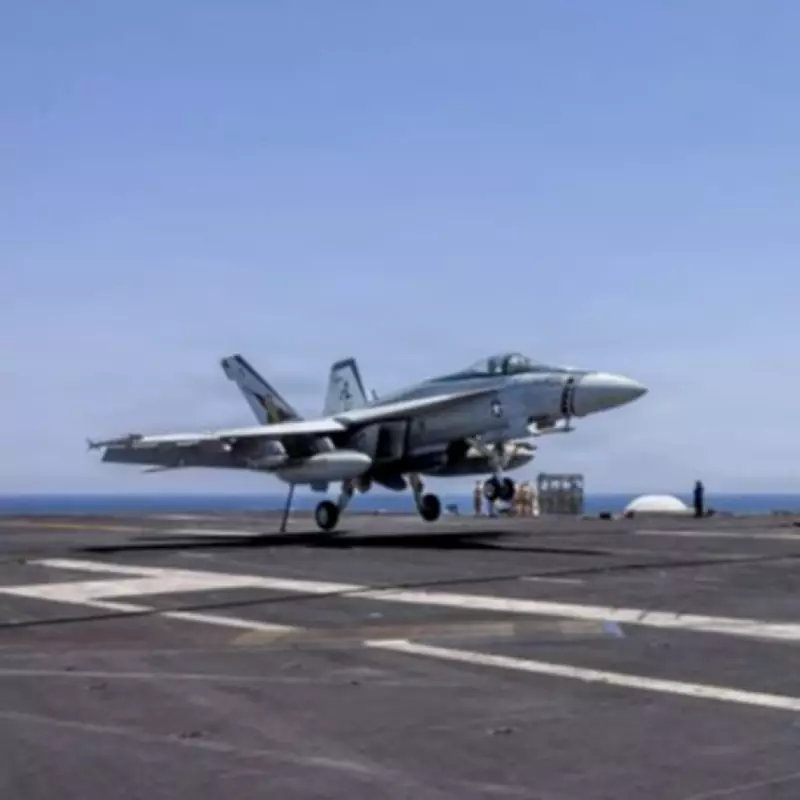
On the war front, alarming reports suggest Trump is considering restarting hostilities after claiming the current ceasefire is on 'life support,' hinting that Iran could come under attack again. The Daily Mirror has learned that six US military Stratotanker air-refuelling and airlift planes have been seen landing in Israel over the past two days, indicating preparations for military action. This follows Trump's dismissal of Iran's response to an American settlement plan as 'garbage,' after Tehran insisted that Lebanese Hezbollah be included in the deal and that the nuclear issue be deferred.
Strait of Hormuz Crisis
The latest alert coincides with a race against time to free the Strait of Hormuz waterway. The United Nations warns that millions could face mass starvation if the chokehold on the strait is not lifted. Jorge Moreira da Silva, executive director of the UN Office for Project Services, cautioned that 45 million people could face 'hunger and starvation.' He based this assessment on the fact that much of the world's fertiliser components, including ammonia and sulphur, pass through the Strait of Hormuz.
Da Silva stated: 'We have a few weeks ahead of us to prevent what will likely be a massive humanitarian crisis. We may witness a crisis that will force 45 million more people into hunger and starvation.' He emphasised that the 'planting season can't wait' much longer, as African nations urgently need fertiliser, and Asia will also be affected.
Iran's Negotiating Position
The US-based Institute for the Study of War said in its latest assessment: 'Iranian leaders are trying to dictate the terms for ending the war, which illustrates that the Iranian regime perceives that it has the upper hand in the conflict at this time. Iran's proposed terms would require the United States to give up its leverage over Iran before any negotiations could take place, which would likely make it more challenging to extract nuclear concessions from Iran.' The institute's experts also believe that Lebanese Hezbollah have been supplied with additional drones to be used if the war with Israel officially resumes.