UK Government Forced to Freeze Chagos Islands Sovereignty Transfer
The United Kingdom has been compelled to shelve its planned agreement to transfer sovereignty of the Chagos Islands to Mauritius due to staunch opposition from the United States, according to former Foreign Office permanent secretary Lord Simon McDonald. The senior civil servant stated that the government had "no choice" but to place the controversial treaty in what he described as the "deep freeze" following hostile remarks from US President Donald Trump.
Parliamentary Timeline Collapses Amid US Resistance
Legislation to cede sovereignty of the Indian Ocean archipelago will not appear in the upcoming King's Speech, which outlines the government's legislative agenda for the next parliamentary session. This development comes after President Trump publicly denounced the proposed handover as "an act of great stupidity," creating significant diplomatic friction between the two traditional allies.
Officials confirm that while the plan has not been entirely abandoned, the parliamentary window has effectively closed. With Parliament scheduled for dissolution in the coming weeks, there remains insufficient time to pass the necessary legislation. A government source characterized the situation as "deeply frustrating" following years of intensive diplomatic engagement.

Legal Complexities and International Pressure
Lord McDonald, who served as the Foreign Office's top mandarin from 2015 to 2020, defended the government's handling of the delicate situation during an interview with BBC Radio 4's Today programme. He explained that the UK faced competing objectives: compliance with international law and reinforcement of the crucial relationship with the United States.
"When the President of the United States is openly hostile, the government has to rethink," Lord McDonald stated. "This agreement, this treaty will go into the deep freeze for the time being."
The former civil servant noted that ministers had been constrained by a 2019 International Court of Justice advisory opinion recommending that the archipelago be returned to Mauritius. He expressed concern about a growing international trend to disregard international law, particularly noting the significance of the United States adopting an ambivalent stance similar to that traditionally associated with Russia and China.
Strategic Military Base at Center of Dispute
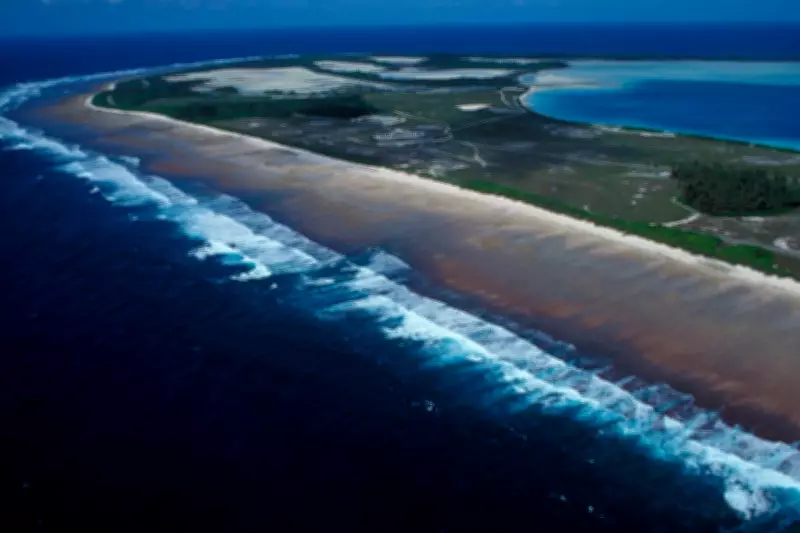
Under the proposed agreement, the UK would have leased back the British-US military base on Diego Garcia for 99 years following the sovereignty transfer. This strategic installation has served as a critical asset for both nations' military operations in the Indian Ocean region for decades.
The ratification process stalled dramatically after President Trump's public criticism, which coincided with deteriorating relations between the US leader and Prime Minister Sir Keir Starmer over conflicting positions on Greenland and the Iran war. Trump subsequently described the arrangement as a "big mistake," despite previous US agreement to the terms.
Historical Context and Political Reactions
The Chagos Islands dispute represents a lingering colonial-era issue spanning more than half a century. Indigenous Chagossians were forcibly removed from the territory by 1973 to accommodate the Diego Garcia military base, creating a longstanding humanitarian controversy.
Conservative leader Kemi Badenoch welcomed the delay, suggesting the agreement should find its "rightful place – on the ash heap of history." She criticized the Prime Minister for pursuing what she characterized as an unnecessary surrender of British sovereign territory accompanied by substantial financial commitments.
A government spokesperson emphasized that protecting the long-term operational future of Diego Garcia remains the primary objective, describing the base as "a critical strategic asset for both the UK and the United States." While acknowledging the current impasse, officials indicated they would continue working with both American and Mauritian counterparts to develop a solution that safeguards the military installation's functionality against potential legal challenges.

Lord McDonald concluded that resolving this complex geopolitical issue would now require even more time than originally anticipated, noting that the UK's traditional commitment to upholding international law had created difficult diplomatic balancing act in this contentious sovereignty dispute.