Ukraine Ceasefire Back in Focus Amid Mounting Casualties and Fading US Security Guarantees
Divisions between Washington and European capitals over the Iran conflict have intensified concerns about the United States' commitment to a potential peace deal for Ukraine. As a ceasefire was declared in the Middle East, Ukrainian President Volodymyr Zelenskyy sought to redirect global attention to the ongoing war in his country, posting on social media that Ukraine has consistently advocated for a ceasefire in the conflict "being waged by Russia here, in Europe."
Stalled Negotiations and Geopolitical Tensions
Efforts to end the war in Ukraine have largely stalled since the Iran war began, with trilateral talks involving Kyiv, Moscow, and Washington frozen since February 2026 after yielding minimal progress. The conflict persists, marked by air attacks on Ukrainian cities and intense battlefield engagements as Russia launches a spring offensive.
A possible visit to Kyiv this month by White House envoy Steve Witkoff and Donald Trump's son-in-law, Jared Kushner, could potentially revive negotiations. However, the Iran war has exposed deeper rifts between Washington and its European allies than at any point since Russia's full-scale invasion in early 2022, raising doubts in Europe about the depth of US dedication to any peace agreement.

One European official, speaking anonymously, noted, "You can see Trump's team is running out of patience in Ukraine and wants a quick solution." Trump has recently described Ukraine as 'not our war' and openly questioned his continued support for NATO, further eroding confidence.
Key Issues and Military Dynamics
For any tangible peace deal to materialize, two critical issues must be addressed: the fate of Ukrainian-held territory in eastern Ukraine and the question of US security guarantees. The European official warned that recent US rhetoric risks convincing Moscow that Washington is not serious about long-term support for Ukraine.
Two European officials expressed growing concern that Trump, eager for a geopolitical victory before the midterm elections, might pressure Kyiv to cede territory in the Donbas region, which remains a central Russian demand in talks.
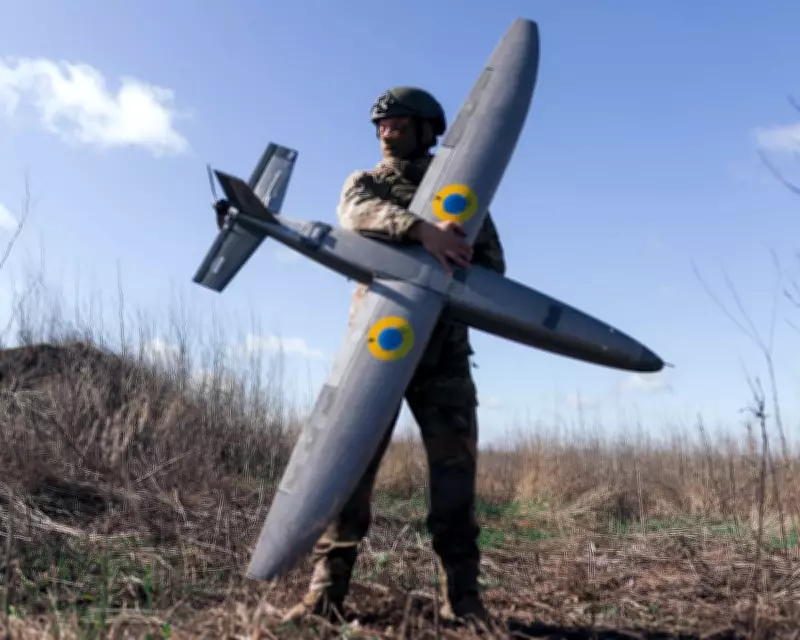
As warmer weather sets in, Russia has initiated a spring offensive, according to military analysts and Ukrainian officials. Kyiv anticipates renewed pressure on fortified eastern cities like Slovyansk and Kramatorsk, but expectations of a Russian breakthrough remain low. Moscow's forces continue to struggle against Ukraine's dense network of drone defences.
Rob Lee, a senior fellow at the Foreign Policy Research Institute, stated, "The battlefield situation is better for Ukraine right now than it was in 2025." Both sides have turned large stretches of terrain into "kill zones" saturated with drones, where any movement is quickly detected and targeted.
Ukrainian Resilience and Ongoing Challenges
Russian forces advanced at roughly half the pace in early 2026 compared to a year earlier, according to the Institute for the Study of War. Lee added that while Ukraine faces serious manpower shortages, it has significantly scaled up its mid-range drone capabilities, targeting Russian air defences and command posts deep inside Russia.
Earlier this year, Ukraine mounted a counteroffensive in the southern Zaporizhzhia region, recapturing about 100 square miles of territory. Lee suggested, "I wouldn't be surprised if we see additional Ukrainian offensives this year."
However, for millions of Ukrainians, this offers little relief. Russia fired more drones at Ukraine in March than in any month since the full-scale invasion began. Recent strikes have resulted in civilian casualties, including a serviceman and his teenage daughter killed in western Ukraine.
Strategic Calculations and Human Toll
Vladimir Putin has signalled his willingness to maintain constant pressure to wear Ukraine down over time if it refuses to leave Donbas. A person familiar with Kremlin thinking said, "From the start of the war, Putin has believed time is on his side. The talks had already lost momentum and were going nowhere."

Ukraine, meanwhile, seeks to demonstrate its resilience. One source close to the Zelenskyy administration said, "We are still positive that our partner, the US, will help us. But we also need to show we are still in this fight." Zelenskyy has claimed that over 35,000 Russian troops were killed or wounded in March alone, though these figures cannot be independently verified.
Ukraine has also increased strikes on Russian energy infrastructure, targeting ports and oil terminals to undermine Moscow's financial gains from higher oil prices. These attacks have temporarily halted up to 40% of export capacity, exposing weaknesses in Russia's air defences.
Heavy Costs and Uncertain Future
Ukraine is paying a heavy price as well. While Kyiv does not publish casualty figures, officials estimate losses at about a third of Russia's, potentially amounting to 10,000 killed or wounded monthly. Recruitment challenges persist, with draft dodging and incidents of violence at recruitment centres highlighting internal strains.
Financially, Ukraine risks running out of funds to sustain its defence within months, exacerbated by Hungary's veto of a €90 billion EU aid package. Despite the high costs for both sides, a European official predicted that without a diplomatic breakthrough, the war is expected to continue into next year, noting, "Both sides still have enough resources to keep going."