Historic US-Iran Summit Commences Amid Global Tensions
The international community holds its breath as American and Iranian officials prepare for their highest-level direct negotiations since the 1979 Islamic Revolution. This dramatic diplomatic encounter represents a critical juncture in global affairs, with the potential to either forge lasting peace or plunge the Middle East into deeper conflict.
Controversial Negotiators Take Center Stage
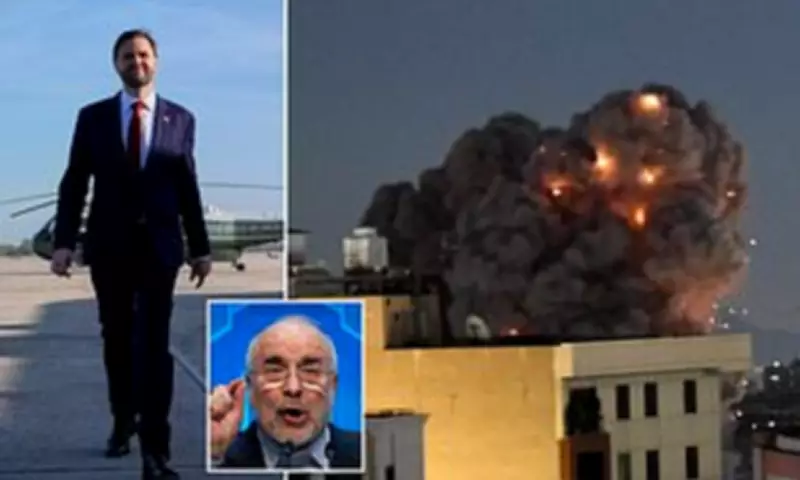
Vice President JD Vance leads the American delegation to Islamabad, accompanied by Middle East envoy Steve Witkoff and Jared Kushner. They face Tehran's formidable negotiator, Mohammad Bagher Ghalibaf, the speaker of the Iranian parliament whose brutal reputation precedes him. Ghalibaf earned the notorious nickname 'rooftop killer' during the late 1990s protests, where he allegedly ordered students thrown from buildings and oversaw violent crackdowns on demonstrators.
The decision to send Vance rather than traditional diplomatic channels has sparked significant debate. Global affairs analyst Jonathan Wachtel, formerly a senior policy advisor at the US mission to the UN, criticized the move as a strategic error. 'Elevating talks to vice presidential level unnecessarily raises stakes and rewards this murderous regime's attempt to dictate negotiation teams,' Wachtel argued.

A White House official vehemently denied reports that Iran requested Vance's participation, calling such claims 'a clearly coordinated propaganda campaign' designed to undermine negotiations before they begin.
Political Stakes and Public Perception
Despite Vance's historical skepticism toward foreign intervention and initial reservations about targeting Iran, sources reveal he has spent weeks quietly working toward securing a permanent diplomatic agreement. This diplomatic push comes at a crucial political moment for the Vice President.
A recent Daily Mail/JL Partners poll of 1,000 registered voters indicates Vance maintains a solid approval rating, with nearly 50 percent approving of his performance. However, the survey reveals a concerning 'readiness gap' - only 39 percent of Americans believe he is prepared to serve as Commander-in-Chief, while 48 percent express doubts about his readiness for that role.
Fragile Ceasefire Hangs in Balance
Following six weeks of devastating aerial exchanges that decimated Iranian infrastructure and sent global energy prices soaring, both nations attempt to transform a precarious 14-day 'pause' into enduring peace. Vance expressed cautious optimism before departing for Pakistan, stating the President provided 'pretty clear guidelines' and predicting positive outcomes.
'If Iranians negotiate in good faith with open hands, that's one matter,' Vance remarked. 'If they attempt manipulation, they'll find our negotiating team unreceptive.'
Former US diplomat Brett Bruen warns that the Trump administration's previous diplomatic approaches cast long shadows over current negotiations. 'Details haven't proven a strong suit for Team Trump,' Bruen observes. 'They overlooked specifics in earlier purported peace agreements, but details matter profoundly when engaged in actual warfare.'
Negotiation Complexities and Sticking Points
The summit's foundation already shows cracks under contradictory positions. White House Press Secretary Karoline Leavitt revealed that Iran's 10-point counter-proposal was rejected and revised to align with the White House's original 15-point plan. Iranian negotiators have indicated willingness to surrender enriched uranium, though verification remains uncertain.
Mark Wallace, former US ambassador to the UN, cautions against Western assumptions about Iranian intentions. 'We dangerously overlay our value system over a regime fundamentally hostile to both America and Israel,' Wallace explained, highlighting potential blind spots in negotiations.
For hawkish observers, any current deal represents a missed opportunity to permanently neutralize threats. Len Khodorkovsky, former senior advisor to the US envoy for Iran, argues that 'negotiating with this regime proves inherently untrustworthy. Easing pressure allows adversaries to regroup, potentially producing suboptimal agreements that guarantee future conflicts.'

Critical Issues and Global Implications
Tehran's delegation arrived in Islamabad demanding American troop withdrawals from the Middle East and non-interference in the Strait of Hormuz. Wachtel warns that conceding control over the strategic waterway would create global catastrophe. 'Allowing IRGC to police, tax, or intimidate Hormuz traffic proves utterly unacceptable,' he emphasized.
As Saturday morning's deadline approaches, Islamabad's atmosphere grows 'electric with tension.' Hundreds of security personnel flood streets while Pakistani Prime Minister Shehbaz Sharif attempts an improbable peacemaking role. Even if symbolic agreements emerge, diplomats remain skeptical about durability.
'Nobody in those rooms knows if or how long any deal might last,' Bruen notes. 'This makes diplomacy exceptionally difficult. Tehran resists major compromises once perceiving strengthened wartime positions.'
Consequences of Failure
Should negotiations collapse, the two-week truce expires, likely triggering renewed hostilities. President Trump has warned that resumed conflict could lead to scenarios where 'a whole civilization will die.' The stakes became horrifically clear during Operation Epic Fury on February 28, when US and Israeli coordinated strikes across Iran killed Supreme Leader Ali Khamenei and targeted nuclear facilities.
US Central Command confirms 13 American service members killed and over 380 wounded. Iranian casualties remain heavily disputed, with Human Rights Activists in Iran estimating military fatalities between 1,200 and 3,000.
As the world watches this diplomatic high-wire act, the Islamabad summit represents either a breakthrough toward stability or a prelude to escalated conflict with unimaginable regional and global consequences.