US-Iran Ceasefire Talks Collapse in Islamabad, Raising Fears of Renewed Conflict
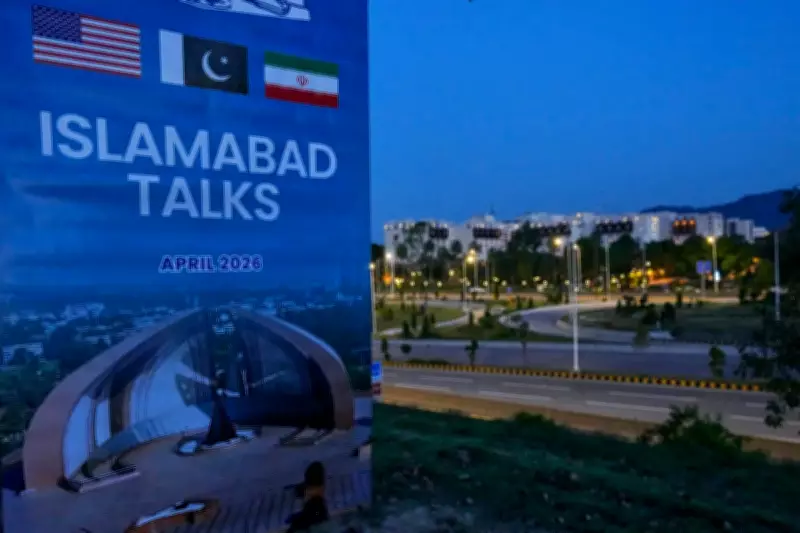
High-stakes ceasefire negotiations between the United States and Iran concluded in the early hours of Sunday without reaching any agreement, raising serious questions about what will happen when the current two-week truce expires on April 22nd. The talks, held in the Pakistani capital of Islamabad, ended after twenty-one hours of intense face-to-face discussions, with both sides blaming each other for the failure.
Deep Divisions and Mutual Blame
As the discussions wrapped up, there was no immediate word on whether negotiations would resume. President Donald Trump issued new threats against Iran, while Vice President JD Vance, who led the American delegation, stated that Iran had failed to provide assurances that it would not seek to develop nuclear weapons. Iran's chief negotiator, Parliament Speaker Mohammad Bagher Qalibaf, countered by saying the United States must decide whether it can gain Iran's trust.
This setback does not automatically mean the war will resume, but it starkly illustrates how entrenched both sides remain following an inconclusive forty-day conflict that inflicted heavy damage on Iran, sent shockwaves across the Middle East, and severely disrupted the global economy. Negotiators are now returning to their respective capitals to reconsider their next strategic moves.

Conflicting Demands and Core Disputes
The fundamental disagreement centers on vastly different visions for ending the war. When the United States and Israel launched the conflict on February 28th, they pledged to eliminate Iran's nuclear and missile programs, along with its support for armed proxy groups across the region.
The American side presented a fifteen-point plan, which, according to Pakistani officials briefed on the talks, includes those same demands and also calls for the reopening of the strategically vital Strait of Hormuz. Iran's closure of this waterway, through which one-fifth of the world's oil flows, had previously sent oil prices soaring and global markets into a tailspin.
In response, Iran put forward its own ten-point proposal. This plan demands Iranian control over the Strait of Hormuz, a complete end to the war, a halt to attacks on its proxy forces—including the powerful Hezbollah militant group in Lebanon—and substantial compensation for the extensive damage wrought by the conflict.
The Sticking Point: Nuclear Ambitions and Regional Control
Neither side appeared to budge from its ceasefire terms during the marathon talks. Vice President Vance emphasized the need for an "affirmative commitment" from Iran that it will not seek nuclear weapons or the tools to quickly achieve them. Iran has long denied seeking nuclear weapons but insists on maintaining a civilian nuclear program that includes uranium enrichment, a key step toward weapon development. Experts note Iran's current enriched uranium stockpile is just a short technical step from weapons-grade material.
Other Iranian officials signaled that control of the Strait of Hormuz remains a critical sticking point. Mohammad Reza Aref, First Vice President of Iran, stated in a social media post that controlling the strait is part of the "rights of the people."
Perceptions of Victory and a Strategic Deadlock
A significant obstacle appears to be the perception on both sides that they emerged victorious from the war and that time is on their side. Vance claimed the lack of an agreement is "bad news for Iran much more than it's bad for the United States of America." In a new social media post on Sunday, President Trump declared the U.S. Navy would impose a blockade controlling all access in and out of the Strait of Hormuz.
Meanwhile, Qalibaf asserted Iran would not "stop striving to secure the achievements" of the war. Analysts warn these conflicting visions do not bode well for peace. Danny Citrinowicz, a senior researcher at Israel's Institute for National Security Studies, noted on social media that Iran's perception of victory "is not the mindset of a regime preparing to compromise," creating a "growing strategic deadlock."

Path Forward and Regional Diplomacy
Pakistan's Foreign Minister, Ishaq Dar, stated his country will attempt to facilitate a new round of dialogue between Iran and the United States in the coming days. There was no immediate reaction from either Washington or Tehran to this offer.
Ali Vaez, Iran Project Director at the International Crisis Group, suggested that while the Islamabad talks underscore wide gaps, an immediate collapse into war is not the likeliest scenario. He foresees "a volatile period of pressure, signaling, and last-minute attempts to prevent a wider conflagration." Vaez proposed that "the path forward, if there is one, lies in a limited, reciprocal deal that buys time and lowers the temperature."
The failure of these critical talks leaves the region in a precarious state, with the expiration of the ceasefire looming and both powers seemingly unwilling to back down from their core demands, setting the stage for a tense and uncertain period ahead.