US Navy to Enforce Blockade on Iranian Ports After Ceasefire Talks Fail
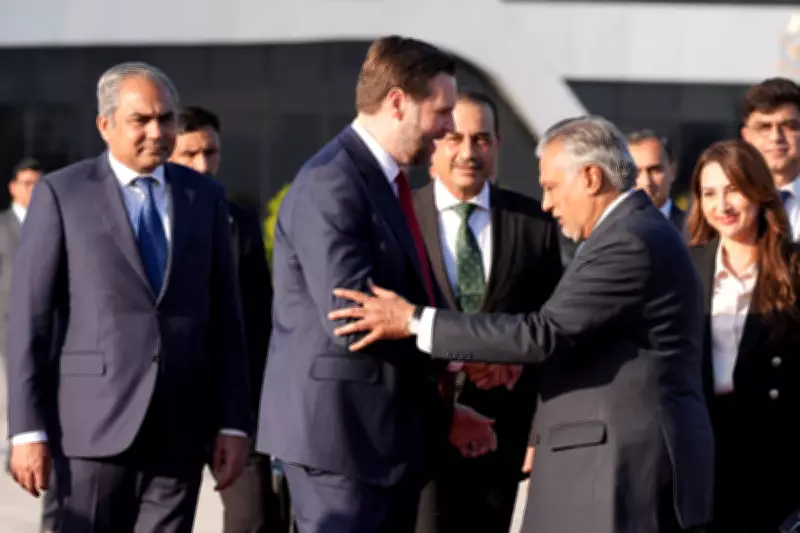
President Donald Trump has declared that the United States Navy will swiftly initiate a blockade of ships entering or departing the Strait of Hormuz. This decisive move comes after high-stakes ceasefire talks between the United States and Iran in Islamabad, Pakistan, concluded without reaching any agreement. The discussions, which spanned over twenty-one hours, ended in deadlock, leaving the fragile two-week ceasefire in a state of uncertainty.
Central Command Details Imminent Blockade
U.S. Central Command (CENTCOM) has officially announced that the blockade of all Iranian ports will commence on Monday at 10 a.m. Eastern Daylight Time, which corresponds to 5:30 p.m. in Iran. In a formal statement, CENTCOM emphasized that the blockade will be "enforced impartially against vessels of all nations" accessing Iranian ports and coastal regions. However, the command clarified that ships traveling between non-Iranian ports will still be permitted to transit the critical Strait of Hormuz, a vital global oil shipping lane.
This military action follows a war that has now entered its seventh week, resulting in thousands of casualties and significant disruptions to global markets. The blockade is poised to further exacerbate regional tensions and economic instability.

Iranian Officials Condemn US Actions
Iranian Foreign Minister Abbas Araghchi took to social media platform X to accuse the United States of undermining productive negotiations. He stated that Iran had engaged in talks with "good faith" but encountered "maximalism, shifting goalposts, and blockade" just as an agreement seemed within reach. Araghchi echoed earlier threats from Iranian officials, warning, "Good will begets good will. Enmity begets enmity."
Further defiance came from Parliament Speaker Mohammad Bagher Qalibaf, who asserted that Trump's threats "have no effect on the Iranian people." In a social media post directed at Trump, Qalibaf declared, "If you fight, we will fight." He described the Pakistan talks as intensive and challenging, claiming Iranian negotiators demonstrated goodwill through strong initiatives, though he provided no specific details on these measures or any progress made.
Expert Analysis Warns of Economic and Strategic Risks
Middle East security expert Andreas Krieg, a senior lecturer at King's College London, criticized Trump's blockade plan as unrealistic. Krieg argued that Iran possesses a higher threshold for enduring economic pain compared to the United States and its allies. "The Iranians, whatever happens, can sustain this for far longer than the world economy, far longer than the Gulf states, far longer than the Americans," he stated, suggesting Trump lacks viable military options and may need to make concessions.
Energy analysts have raised alarms about potential oil price spikes. Michael Lynch, a distinguished fellow at the Energy Policy Research Foundation, estimated that the threatened blockade could increase oil prices by $5 to $10 when markets open on Monday. He noted that the blockade would remove approximately 2 million barrels of oil per day from the market, compounding existing supply disruptions from the war. However, Lynch speculated the blockade might be short-lived if rising oil prices pressure Trump to reconsider.
Kevin Book, managing director of research at ClearView Energy Partners, cautioned that the impact on oil prices depends heavily on the blockade's scope and implementation, as well as potential Iranian or Houthi reprisals against alternative shipping routes.
Regional and International Reactions
In Lebanon, the Red Cross reported that an Israeli drone strike hit one of its units, killing a paramedic and lightly wounding another. This incident brings the total number of medical workers killed in Israeli strikes since the war began to at least 87, according to Lebanon's health ministry. Meanwhile, Lebanese Prime Minister Nawaf Salam reiterated his government's commitment to ending the war through negotiations, set to begin in Washington on Tuesday.

United Nations peacekeeping forces in southern Lebanon (UNIFIL) accused Israeli troops of ramming their vehicles with a tank, obstructing access to positions and hindering monitoring efforts. Three UN peacekeepers have been killed in the past month amid ongoing hostilities.
On the diplomatic front, Egypt's Foreign Minister Badr Abdelatty spoke with US envoy Steve Witkoff and Pakistani diplomat Mohammad Ishaq Dar, stressing the importance of dialogue and peaceful solutions. Pakistan, Egypt, and Turkey have been mediating between the US and Iran since the conflict's inception.
Broader Conflict Dynamics and Costs
A US official, speaking anonymously, revealed that Iran could not agree to all American red lines during the talks. These included demands for Iran to end uranium enrichment, dismantle major facilities, cease funding for groups like Hamas and Hezbollah, and ensure the Strait of Hormuz remains open. The US views the blockade as a demonstration of Iran's limited leverage.
Israeli Prime Minister Benjamin Netanyahu visited southern Lebanon, claiming Israel has "changed the face of the Middle East" and is establishing a buffer zone to prevent Hezbollah attacks. Israel's Finance Ministry estimated the war has cost at least $11.5 billion, with significant expenditures on defense and economic damages.
Iran's Revolutionary Guard Navy warned that military vessels approaching the Strait of Hormuz will face a "firm and forceful response," asserting control over the waterway. Concurrently, Saudi Arabia summoned Iraq's ambassador over drone attacks allegedly launched from Iraqi territories, highlighting the conflict's expanding regional footprint.