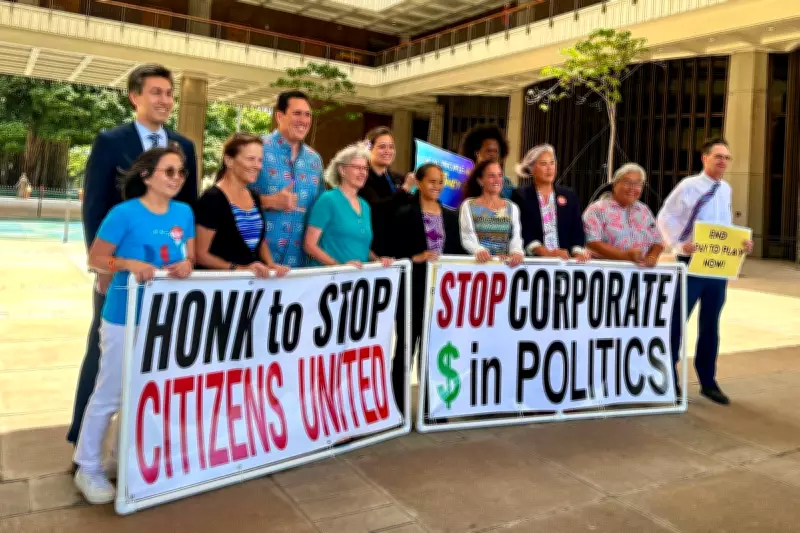
Two US states are pioneering a novel approach to curb corporate influence in politics by redefining the legal powers of corporations, potentially challenging the landmark Supreme Court ruling in Citizens United v. Federal Election Commission.
Background on Citizens United
The 2010 Supreme Court decision effectively lifted bans on corporate and union spending in elections, as long as funds are not donated directly to campaigns. This has led to a surge in outside political spending, with OpenSecrets tracking over $4 billion in federal elections in 2024—nearly 12 times the amount in 2008. Dark money groups, which do not disclose donors, accounted for a record $1.9 billion, according to the Brennan Center for Justice.
Hawaii's Legislative Move
Hawaii lawmakers have sent a bill to Governor Josh Green that would redefine corporations to prohibit election-related spending. State Senator Karl Rhoads, a Democrat who introduced the legislation, stated, "This is an instance where a small state has a chance to make big waves on the national scene." The governor has until June 30 to decide on a veto. The state attorney general's office opposed the bill, citing potential legal challenges.

Montana's Ballot Initiative
In Montana, volunteers are gathering signatures for "The Montana Plan," a ballot initiative that would similarly redefine corporate powers. The state Supreme Court allowed the effort to proceed despite objections from the Republican attorney general. Jeff Mangan, a former state commissioner leading the initiative, noted, "It really resonates with citizens."
Legal and Political Implications
Supporters, including Tom Moore of the Center for American Progress, argue this approach is grounded in foundational corporate law and could provide a path to undo Citizens United. However, critics like former FEC Commissioner Bradley Smith contend that lower courts are unlikely to uphold measures that circumvent Supreme Court rulings. Loyola Law School professor Justin Levitt remarked, "The one thing I am absolutely sure of is if it gets the signatures and is passed by the Montana public and is approved by the Montana courts, that the Supreme Court will want a crack at it."
Similar legislation has been introduced in at least 14 other states but has not advanced significantly. The outcome in Hawaii and Montana could set a precedent for how states address corporate political spending.