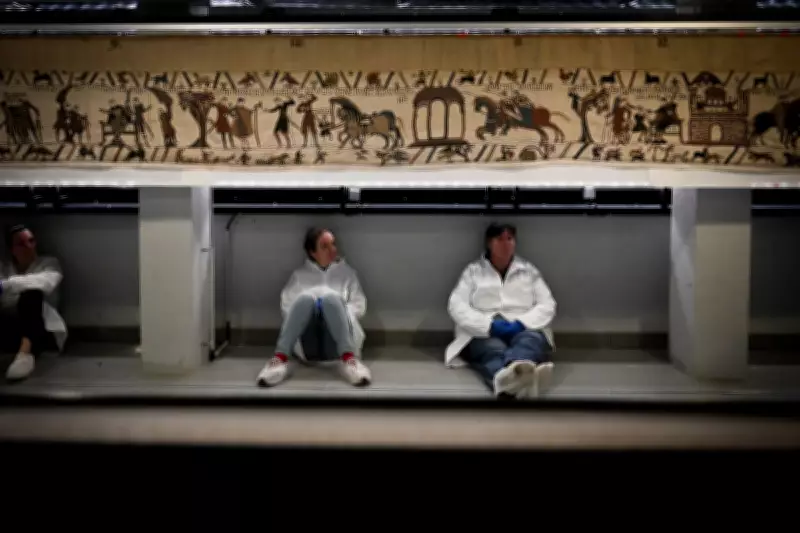
As the British Museum announces ticket prices for its 'once in a lifetime' Bayeux Tapestry exhibition, historian Dr Dave Musgrove argues that transporting the fragile artefact to London will help guarantee its survival, not endanger it.
Exhibition Details and Ticket Prices
A small forest of silver birch has appeared outside the main entrance of the British Museum, heralding the arrival of the Bayeux Tapestry. This autumn, the 11th-century masterpiece will be displayed in the UK for the first time in nearly a thousand years. The museum has announced that the exhibition will open on 10 September, with tickets priced between £25 and £33 per person for a 40-minute viewing slot. Tickets go on sale on 1 July, and entry is free for under-16s. The show is expected to draw huge crowds, with queues around Bloomsbury until it closes in July 2027.
Concerns Over Safety
Some critics have questioned whether moving the tapestry from its home in Bayeux, Normandy—where entry normally costs £7—is worth the risk. An online campaign against the loan has gathered over 77,000 signatures, with artist David Hockney calling it 'madness'. He previously expressed fears that the 'beautiful as well as historically important' masterpiece could be irreparably damaged if brought to London as part of a 'vanity project'. However, Musgrove argues that the focus on risk is misplaced. Instead, he emphasises the benefits of the massive media interest, which will help secure the tapestry's long-term survival.

Mitigating Risks
Conservation experts from both sides of the Channel have worked closely to ensure the safe transport of the 68-metre-long cloth. It will travel from its current secret location in France to London in a lorry equipped with a specially-made vibration-damping mechanism, designed to protect the threads from road vibrations. Two dry runs have already been conducted, demonstrating that vibrations can be reduced to less than two millimetres per second. The ideal average speed and route will also be established. At the British Museum, the tapestry will be displayed flat to reduce stress on its fabrics, housed in a secure, airtight cabinet with controlled humidity and temperature, monitored 24/7.
Historical Context and Future Benefits
Previous loan requests in the 20th century—in 1931, 1953, 1966, 1972, and 1980—all failed, often due to concerns about moving the tapestry. The Channel Tunnel now offers a safer transport option compared to the ship journey planned in 1953. The government has insured the tapestry for an estimated £800 million while on loan. Musgrove believes the exhibition will generate long-term interest, ensuring a steady stream of visitors to Bayeux in the future, thereby funding its care up to the millennial anniversary of the Norman Conquest in 2066 and beyond.