Nigel Farage is now the 'trigger' for a second independence referendum – the latest in a long line of supposed catalysts for a fresh vote. You might dimly recall that Brexit was said to be another reason for Scots to vote on breaking up Britain, and then it was Boris Johnson. Perhaps Scotland being knocked out of the World Cup will be the next trigger – though frankly it's something of a lucky dip.
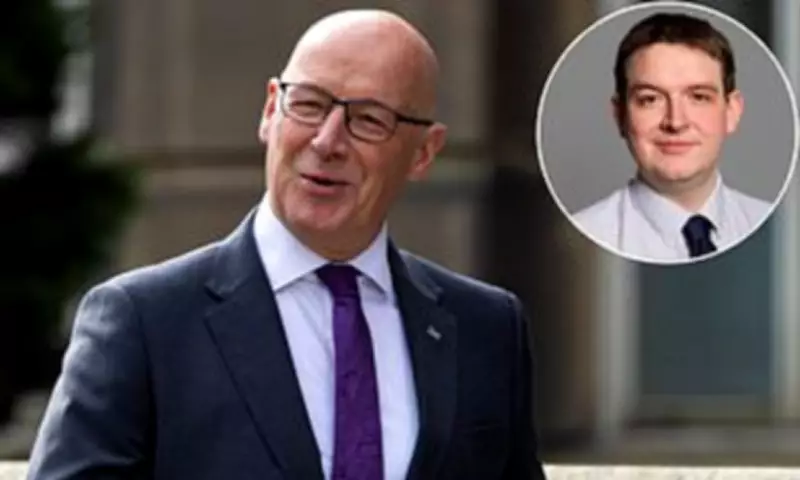
Now John Swinney wants to ensure Scots are 'Farage-proofed', providing an exit route if the Reform UK leader becomes Prime Minister. That means 'having the power before 2029 to decide our own constitutional future without Farage being able to block us'. Mind you, there's no chance of a UK Government allowing another referendum in the next few years either – so the 'block' is already there.
Delusional doesn't cover it, but there's also a good helping of denial, given that Reform UK won nearly 400,000 votes in Scotland. Yet Mr Swinney says he won't soil his hands dealing with Lord Malcolm Offord – Reform's leader in Scotland, and has shut his party out of talks he's planned with all of the other parties.

Swinney's Exclusionary Tactics
This smacks of sour grapes – a bit like a primary school birthday gathering where the invite list is based on the latest classroom grievance. While he's busy throwing toys out of his pram, Mr Swinney will have to deal with Lord Offord at First Minister's Questions, after Reform UK tied with Labour in second place. It's an extraordinary result for Reform, which didn't even field any constituency candidates back in 2021.
Mr Swinney is meant to be First Minister for the whole of Scotland but has nothing but contempt for a large chunk of the electorate, mirroring Nicola Sturgeon's loathing of Brexit supporters – many of whom were also SNP voters. Government by exclusion hardly fits with Mr Swinney's declared ambition to build bridges with opponents, which he must do to get anything done, as leader of another minority government.
Naturally, he's happy enough to deal with the eco-Marxists of the Greens who sadly managed to boost their contingent, meaning we should be prepared for yet more of their lunacy over the next five years. As adherents of his work, the Greens will know all too well Karl Marx's observation that history repeats itself first as tragedy, second as farce.
The Bute House Agreement and Its Aftermath
That maxim may hold true if the SNP join forces with the Greens, as they did in the last parliament's doomed Bute House Agreement, which ultimately did for hapless Humza Yousaf when he put the kibosh on the deal. Well, we've had the histrionics and the rhetoric but it's time that Mr Swinney had a dose of reality: independence is as dead as a doornail.
He's spent a lot of time since his party failed to secure a majority banging the drum for a second independence referendum, which he'd previously said would hinge on the SNP gaining outright control of Holyrood. It was all too predictable that the goalposts would be moved when that result failed to materialise, with a host of senior figures, including supposed leader-in-waiting Stephen Flynn, backing up their boss on the call for another referendum.
During the election campaign, Mr Swinney raised the nightmarish prospect of running as a candidate for Prime Minister of Scotland after a vote for independence. He even suggested the whole process could be wrapped up within 18 months. Voters had no time for his weapons-grade hubris, meaning the SNP fell well short of the target of 65 seats which we were told would be needed to keep the separatist dream alive.
Electoral Reality Check
It's been on life support for a while – and the electorate pulled the plug on May 7. Mr Swinney was sent back to Bute House but without the springboard he had claimed was necessary to re-run the 2014 vote. A majority would have led to increasingly frenzied SNP and Green calls for the UK Government to give the green light to another divisive referendum, and no one would have trusted beleaguered Sir Keir Starmer (or his successor) to withstand the pressure.

That said, talk of a 'pro-independence majority' means the subject isn't going away, and Mr Swinney says he'll press ahead with a pointless Referendum Bill. But he will be trapped in the same Groundhog Day impasse which bedevilled his predecessor. Far from sending a resounding message of support, the voters have kept the SNP stuck in a doom-loop where its goal of dismantling the UK is as far away as ever.
Devolution and Nationalist Projects
There has also been a lot of excited talk about nationalist parties ruling the roost in Scotland, Wales and Northern Ireland, working together to sow the seeds of disharmony. That's devolution for you, but none of these individual separatist projects is going anywhere. Plaid Cymru triumphed in Wales, ending a century of Labour hegemony, but says it won't progress the case for Welsh independence in the next parliament as it wants to focus on competent government. In the meantime, it has proposed spending around £500,000 on a national commission to develop a White Paper on an independent Wales.
All of this might sound horribly familiar to Scots (apart from the bit about competent government), given that the SNP dragooned the civil service into pumping out independence propaganda. A lot of time will be wasted on these parties' obsessions, to the detriment of the countries they're supposed to be running.
In Scotland, party leaders should reflect that only about half of the electorate (53.2 per cent) bothered to vote – a damning verdict on Holyrood. Mr Swinney is also chained to one of the worst manifestos ever produced – a catalogue of silly, costly gimmicks, bereft of any cogent ideas – which he'll now have to enact.
Fiscal Reckoning Ahead
He may choose to bin his pledges, from 'free' schoolbags to price controls on essential foods (well, it's worked before), but next time Scots may not be so forgiving. After all, the SNP's share of the vote fell by 9.5 percentage points in constituencies compared with 2021, and by 13.2 percentage points in the regional vote. Meanwhile, a fiscal reckoning is on the horizon in the form of a £5billion black hole in the nation's finances. Welfare spending is out of control and soaring towards £9billion per year, and Scotland remains the highest taxed part of the UK. Economic growth is seemingly nowhere on the agenda, particularly if the anti-capitalist Greens strike a deal with the SNP.
These issues were largely not discussed during a gruelling, lacklustre campaign which patently failed to capture the public imagination. Democracy is a messy business, but millions of Scots will take heart that the SNP's eternal crusade to tear their country out of the Union is stuck in a dead-end – with no hope of moving out of first gear.