An election in which only half the electorate could be bothered to vote, and then only to shrug their collective shoulders and settle for another five years of a minority SNP government. You can always tell an election was a damp squib when the talk afterwards is about the losers rather than the winners.
Labour and Conservatives Struggle
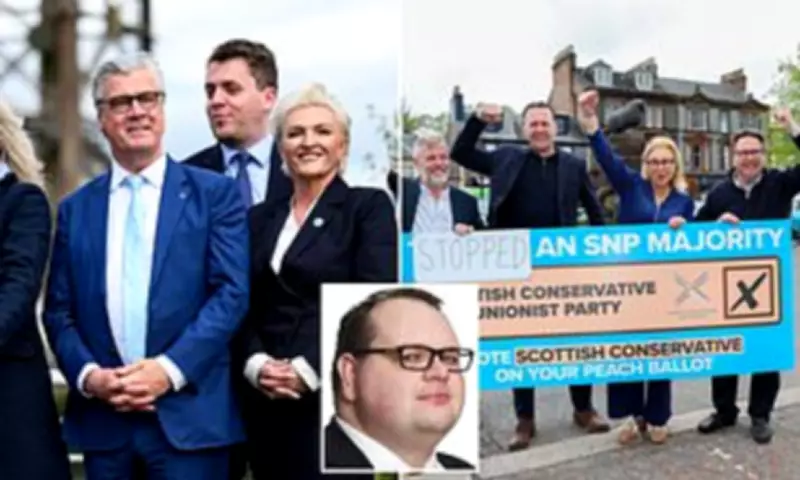
Labour limped home with its worst result since the Scottish parliament was established, a cruel irony. The Conservatives misplaced almost two-thirds of their MSPs, but leader Russell Findlay insists his ‘dynamic dozen’ will stand up to the SNP. They are not the first group of 12 to promise miracles, but convincing the SNP to get back to the day job would truly put healing the lame into perspective.
Reform's Breakthrough
The elephant in the room is Reform, which tied Labour for second place. This was an unqualified triumph for Malcolm Offord’s party, which has gone overnight from one MSP to 17. It would be churlish not to acknowledge that Offord defied the odds to turn his party from a punchline for the political classes to a force they must now reckon with.

Even so, the numbers tell the unvarnished truth: in around half-a-dozen seats, the Reform vote was larger than the SNP’s majority. The new Reform MSPs will have to learn quickly when the Scottish parliament returns. This includes Aberdeen Deeside and North Kincardine, where the Nationalist margin of victory was 1,200 votes and the Reform tally was 6,000. Had just one in three of those votes gone to Liam Kerr, Deeside would have a Tory MSP and Stephen Flynn’s bid to swap Westminster for Holyrood would have ended in failure. If Flynn eventually replaces John Swinney as SNP leader, which he would reportedly like to, he will be able to do so only because Reform handed him a constituency seat.
Reform as Main Centre-Right Opposition
While the recriminations will continue, the fact is that Reform is now the main centre-right opposition to the SNP. It is to Offord and his party that conservative-minded voters and the business community could turn for the championing of free enterprise, small government, low taxation, and the policies that promote prosperity.
No one is likely to mistake Offord for a socialist, but though his party’s Right-wing bona fides might not be in doubt, there are question marks over its ability. Most of Reform’s MSPs have never held frontline political office. Most have no experience of parliamentary service. Many are neophytes to public speaking, political strategy, policy development, and media relations. Some are going to learn about these things the hard way.
Challenges Ahead for Offord
Offord has experience of the Lords, but that is a wholly different creature to Holyrood. The Upper House is a gentleman’s debating society compared to Holyrood – and all the better for it – but Offord will need a thick skin for the bile and belligerence that is coming his way. There has been a foretaste of that already with the First Minister’s decision to exclude Reform from post-election party talks. This will achieve nothing, of course, other than making Swinney sound like a hysteric.
The only people who think Reform is a far-Right party, as opposed to a standard-issue European populist outfit, are the political hypochondriacs of the government and media classes who reckon anyone without at least three ‘refugees welcome’ bumper stickers is a Nazi. Every attack from these mouth-breathing loons will only bring the public into contact with Offord’s achingly mainstream views, underscoring that it is the political class which is out there on the fringes.
What Reform Must Deliver
One of the major unknowns is what Offord will do with his new platform. One thing he can’t be is a continuation of politics-as-usual. The 380,000 Scots who voted Reform wanted a break from the cosy consensus of the past. They will be looking to Offord for leadership on education, health, crime, and the economy. They will want to hear new ideas and passion behind them.
A fine balance will be required between the authenticity its supporters expect and the conciliatory tone that will allay any fears about its intentions. Here is an opportunity to cut through the noise and show the voters what Reform is all about.

Does Reform know what it’s all about? The party is very good at articulating what it is against, but there is considerably less clarity around what it is for. Unfortunately, there isn’t a surfeit of time for the new MSPs to meditate on these questions. The problems that afflict Scotland are many and considerable and, in most cases, urgent. They must be met with serious minds and credible solutions.
Economic Realism Needed
Top of the list is the economy. Scotland is not prosperous enough because it is not productive enough. Government needs to create an environment where entrepreneurship can thrive, and that can only happen when entrepreneurs are valued. These are the people who take risks, pursue opportunities, and invest in ideas. Along the way, if they are successful, they create jobs, generate wealth, and stimulate chain reactions of economic activity.
It is far from an exact science, but those who know best how to do it are those who do it day in, day out. Parliament should be listening to them. Frankly, it should be pleading for the chance to hear their thoughts. And their perspective should shape policy. They should not be regarded as human ATMs, to be withdrawn from every time the social engineers in St Andrew’s House alight on another scheme to try to force economic outcomes to reflect their own collectivist doctrines. Nor should they be denounced as greedy or threatened with the confiscation of yet more of their wealth if they point out that such schemes are doomed to fail.
Many MSPs don’t want to hear this. Demagoguing against ‘the super rich’ – a lamentably minuscule population in Scotland – is how they win votes. Besides, in a parliament where so many members hail from the public and third sectors, and so few from the private sector, it should be no surprise that legislation and policy favour the takers over the makers.
From economic realism flows much else, be it the facing up to difficult truths about a budget with a £5 billion black hole; or the need to ramp up efficiency and standards in education, healthcare, and the bureaucracy; or the financial illiteracy of one public sector pay sop after another even as performance and outcomes lag far behind. If Reform can shake Holyrood out of its tax-and-spend daydream, more power to their elbows, though at just 17 in number that is a lot to ask.
Can Reform Deliver Change?
Some lifelong Tories who switched to Reform did so out of frustration that their old party was unable to rein in the excesses of the SNP, and they are likely to find Reform is no more effective in this regard. There is only so much you can do from the opposition benches. Reform deserves an opportunity to show us, if it has one, what a fresh approach to opposition looks like.
Even those of us sceptical of its chances should be willing to give the party a fair hearing. But it must deliver, and what it delivers must mark a noticeable improvement on the Ruth Davidson and Douglas Ross years, when the Scottish Tories held the SNP’s feet to the fire. If the only change they can see is the rosettes going from blue to turquoise, voters will wonder what was the point of making any change at all.