Slovenia's Election: A Referendum on Roma Rights and Polarised Politics
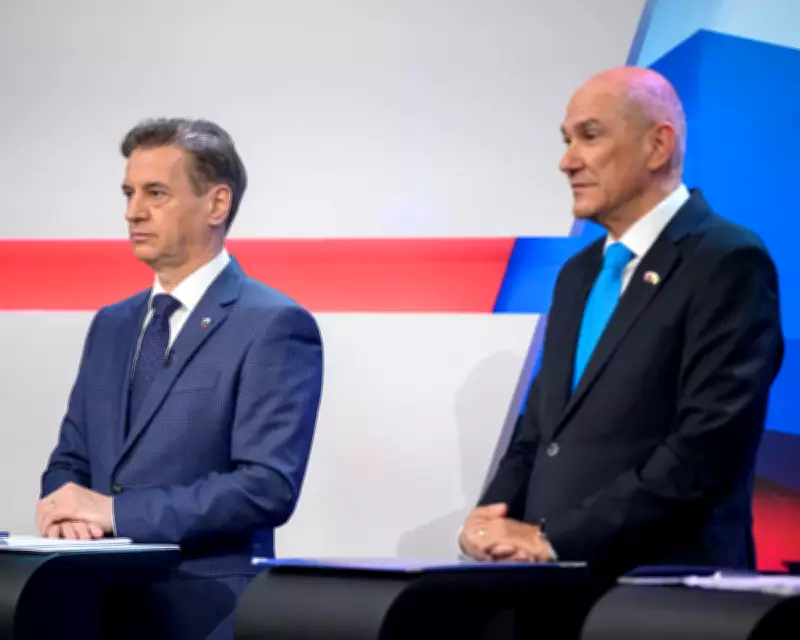
Slovenia is set to vote in a crucial parliamentary election this Sunday, with the campaign dominated by claims of anti-Romany rhetoric and a deeply polarised political landscape. The frontrunners, centre-left Prime Minister Robert Golob of the Freedom Movement party and rightwing populist Janez Janša of the Slovenian Democratic party, are locked in a tight contest that has raised alarms over the treatment of the country's marginalised Roma minority.
Campaigners Warn of Surge in Anti-Romany Sentiment
As Slovenia prepares to go to the polls, campaigners have highlighted a significant increase in anti-Romany rhetoric during the election period. Many fear the outcome could further erode the rights of the Roma community, which numbers approximately 12,000 out of Slovenia's 2.1 million population. Zvonko Golobič, head of the Association for the Development of the Roma Community in Črnomelj, expressed the community's dilemma, stating, "We Roma are facing two evils here in the election. So the question is: who is less evil?"
The Roma population in Slovenia faces severe vulnerabilities, including a life expectancy 22 years lower than the national average and infant mortality rates over four times higher, according to Amnesty International's 2020 report. Many communities lack access to clean drinking water, electricity, sanitation, and basic infrastructure, exacerbating their marginalisation.

Controversial Laws and Security Measures
In November, the government passed the so-called "Šutar law," named after Aleš Šutar, who was killed in an altercation linked to members of the Romany community. This legislation grants police powers to enter homes in designated "high-risk" areas without warrants, effectively turning some Romany neighbourhoods into "security zones." While Prime Minister Golob insists the measures target crime rather than any ethnic group, critics argue they disproportionately affect the Roma community.
Esther Major, Amnesty International's deputy director for research in Europe, condemned the law, saying, "While not explicitly aimed at the Roma population, the vitriolic rhetoric used by the government to justify these measures raises serious fears that they would be deployed arbitrarily and discriminatorily against the Roma population." Haris Tahirović, president of an umbrella group representing Romany communities, accused Golob of using the law to scapegoat Roma for political gain ahead of the election.
Political Stances and Future Threats
Janez Janša, a three-time former prime minister and ally of Hungary's Viktor Orbán, has proposed even harsher measures if elected. He has suggested pushing for stricter sentences for Roma and potentially expanding the number of "high-risk" areas, which could lead to more Romany settlements facing security crackdowns. Additionally, Janša has vowed to cut funding for civil society, a move that could weaken the Roma community's ability to organise and advocate for their rights.
Campaigners warn that Janša's previous term, marked by attacks on media and migrants, indicates a more radical approach that could leave the Roma community worse off. Golobič, who is running as a candidate for the We, Socialists! party, noted, "He would be even more radical. The stakes are high."
Election Dynamics and Broader Implications
Polls indicate a narrow lead for Janša's party, but neither candidate is expected to secure a majority in Slovenia's 90-seat parliament. The campaign has been heated, with leaked audio and video recordings alleging government corruption published on an anonymous website. Golob has denied these claims, while an investigation has raised questions about Janša's alleged meetings with individuals linked to the Israeli spy company Black Cube, which he has also denied.
Commentators have described this election as a critical juncture for Slovenia. Robert Botteri, an editor at the magazine Mladina, told Reuters, "These are perhaps the most important elections ever in Slovenia because they will decide if Slovenia remains a democratic welfare state or it aligns with illiberal democracies." The outcome will not only shape the country's political direction but also determine the future of its most vulnerable communities.