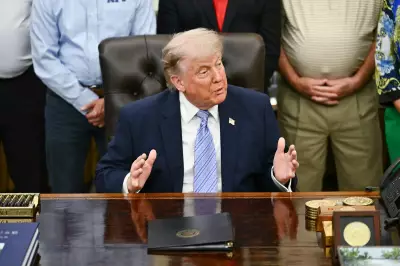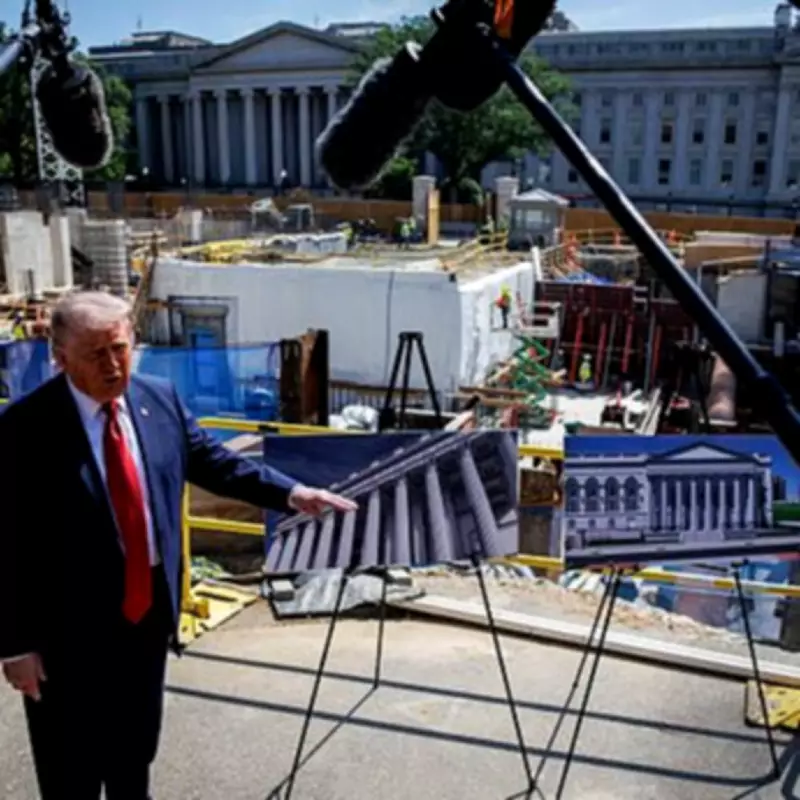
United States President Donald Trump has sparked fresh speculation about his intentions to remain in the White House after showcasing plans for a lavish billion-dollar ballroom that doubles as a fortified bunker. During a media tour on Tuesday, May 19, Trump revealed the construction includes a military hospital, meeting rooms, and advanced security features.
Trump's Vision for the White House Ballroom
Trump told reporters that the ballroom, which will extend approximately six storeys underground, is designed as a protective shield. 'The ballroom is really a shield and protecting all of the things that are built here,' he said. The structure will incorporate drone-proofing, missile-proofing, and sniper capabilities, according to the president.
The project has led many to question whether Trump plans to leave office at the end of his term. Democratic strategist Michelle Kinney wrote on X: 'It's not a ballroom. It's a bunker. He's not leaving.' Another user commented: 'I'm starting to become convinced that Trump's monomaniacal obsession with the ballroom/bunker is because he plans on barricading himself inside the bunker when his term is up.'

Public Reaction and Political Implications
Social media users voiced concerns that Trump is turning the White House into a personal fortress. One post read: 'Trump is turning the White House into Mar-a-Lago 2.0 and he has no intention of ever leaving. It's why Republicans are trying so hard to stop our votes.' Another added: 'Trump thinks he's never leaving. He's planning a bunker on U.S. taxpayer money.'
Trump maintains that the ballroom is entirely funded by private donors. However, the project encountered a setback earlier this week when a Senate parliamentarian ruled that Republicans could not include a provision in a bill to redirect $1 billion in taxpayer funds toward security upgrades for the project. The funding proposal, added by Senate Republicans to a $72 billion budget bill for the Department of Homeland Security, was based on claims that the Secret Service had requested the money.
Elizabeth MacDonough, the nonpartisan parliamentarian, determined that the provision violated budget reconciliation rules and would require either revision or a 60-vote threshold to pass. Republicans have stated they are working on a revised proposal to move the project forward.