In response to Alexander Hurst's column on the frictionless experience promised by AI algorithms, readers have challenged the notion that AI poses the most pressing threat to daily life. Instead, they argue that for many, the real friction comes from rising living costs, dilapidated public services, poor housing, and material poverty.
Lynsey Hanley from Liverpool writes: "I was struck by how little I recognised the picture he painted of daily experience being stripped of the friction necessary to furnish it with meaning. Rather, isn't it the case that, bar the mega-rich, we're all suffering from an excess of friction due to rising living costs, an avoidably dilapidated public realm, poor housing and innumerable related stresses?"
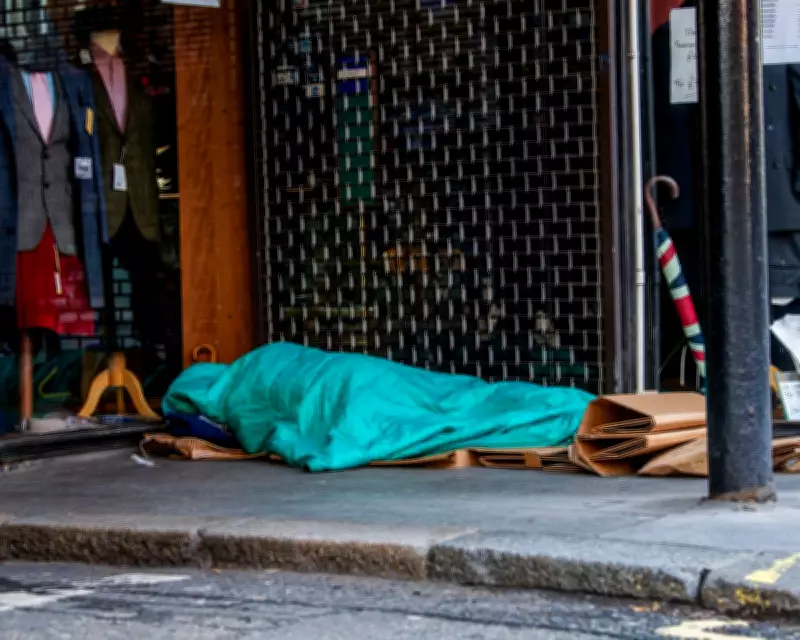
She describes her volunteer work with a group that cooks hot meals for homeless and destitute people in central Liverpool. "The hot meal they collect from us may be the only relief they get that day from the constant, grinding analogue hassles of invisibility, illness, disrespect and material poverty: the only recognition they receive that a degree of comfort is a prerequisite for survival. The specific depredations of AI, created and encouraged by men without souls, seem so distant in these cases as to be nonexistent."

Hanley acknowledges that AI will likely deepen structural inequalities but questions the priorities of those who lose sleep over AI's threat to their Louvre experience rather than over people sleeping on cardboard.
Martin Pitt from Leeds comments on a different aspect of Hurst's column: the question about the speed needed to strike a match. He criticises professors who failed to answer directly, saying: "The correct answer is: 'I'll do the experiment' (ie get some students to do it as a project). Experimental data beats all mental hand-waving and is frequently quicker."
Michael Bulley from Chalon-sur-Saône, France, offers a practical solution: "If it doesn't work the first time, have another go, moving the match a bit quicker. If that still doesn't work, buy a cigarette lighter."