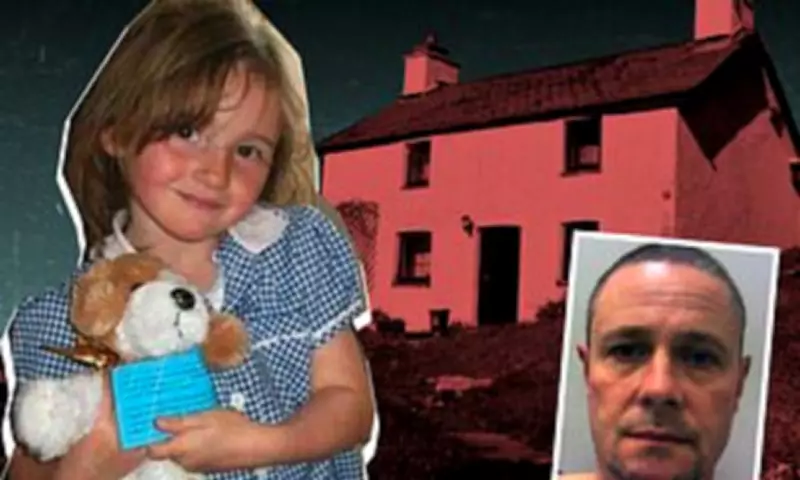
Fourteen years after the abduction and murder of five-year-old April Jones in the quiet Welsh town of Machynlleth, her older sister Hazel Jones is breaking her silence with a powerful message. Hazel, now 31, insists that Mark Bridger, the man convicted of killing April, should be made to "suffer" throughout his life sentence and has voiced strong support for proposals to chemically castrate sex offenders.
A Nation's Heartbreak and a Family's Agony
On the evening of October 1, 2012, April Jones vanished while playing on her pink bicycle just yards from her home on the Bryn-y-Gog housing estate. What followed was one of the largest child search operations in UK history, involving thousands of volunteers, sniffer dogs, and helicopters, with the entire nation holding its breath. Hope soon turned to heartbreak when it was revealed that April had been abducted and murdered by local man Mark Bridger, who lured her into his Land Rover. Despite an enormous search effort, April's body was never found, with only fragments of her remains discovered in Bridger's cottage.
"He Deserves Everything He's Getting"
Hazel Jones, who was 18 and heavily pregnant at the time of her half-sister's disappearance, recalls the moment she learned April was missing. "I was at my own home in Aberaeron with my mother, and she came up to me and said 'April's missing.' It took a couple of seconds that felt like minutes to process what she was saying. I was just in shock," Hazel remembers. Last year, Bridger was attacked in prison for a second time, and Hazel's response is unequivocal: "He deserves everything he's getting. He literally deserves it all."

She elaborates on her belief that Bridger should endure his punishment fully: "They should be made to suffer. The death penalty is an easy way out. He didn't give April an easy way out, did he? Make him suffer, make him live every day because he's not coming out. Make him live in fear."
Support for Chemical Castration
Hazel also strongly endorses proposals to chemically castrate sex offenders, a measure she views as entirely justified. "Chemically castrating paedophiles is 100 percent right. I'm so backing that," she states. While acknowledging that some commenters on news articles advocate for the death penalty, Hazel disagrees, emphasizing that lifelong suffering is a more appropriate punishment for such crimes.
The Lasting Trauma on a Family
The trauma of April's murder has profoundly shaped Hazel's life and cast a long shadow over her own children's future. "I have never spoken out once," she admits. "Only because I was mourning the loss of my sister and the actual ordeal of what happened. I felt like I was just in a nightmare, ready to wake up. And you just don't wake up from it."
Hazel fondly recalls her last moments with April, just days before the tragedy: "She was in the kitchen, she was with my dad and they were making hot chocolate, and laughing. She was wearing army pyjamas. I don't know why I remember these little details but I do. But that was the last time I ever saw her. I wish I knew that was the last time."
A Life Forever Altered
In the days following April's disappearance, Hazel tried to shield herself from the intense media frenzy, focusing on her pregnancy while clinging to hope. "The media attention was really bloody horrible, especially those first few months. I would wake up and there would just be press outside my door. I was being followed, messaged, and called 24/7," she recounts. When she learned the truth about April's fate, Hazel was "petrified," particularly as she was carrying her daughter at the time. "I was so scared to bring her into this world knowing that there were people like that on our doorstep," she adds.

Only a few weeks later, Hazel gave birth to her daughter Amelia, a moment that should have been joyous but was instead tangled in grief. "It was surreal because when Dad and Coral came to see her in the hospital when she was first born, they were just shocked because she looked like April," Hazel says. Now a mother of three, with Amelia aged 12, Ethan aged 9, and Hefin aged six, Hazel admits the anxiety has never fully subsided. "My daughter is coming to the age of 13, she'll be going into year eight this year and she wants to go and do stuff with her friends. I don't know how I'm meant to let her grow up. Because I am quite scared of who is even around, who can you actually trust?"
A Father's Unending Grief
The tragedy also took a severe toll on Hazel's father, Paul Jones, who died in May of last year from a brain disease without ever discovering where April was buried. "My dad was never right after April," Hazel reflects. "Once April went, a part of him went completely and he never came back from that. All I think is that he is now back with April and back to a peaceful life. Him passing was just like a part of me went too. I fought for him for so long."
The family's bonds were further strained by the tragedy, with some relatives no longer speaking to each other, illustrating how such an event can tear a family apart. Even after more than a decade, Hazel struggles to accept reality. "It's been 13 years now and it's still not actually sunk in. I still don't believe it. I don't know whether I don't want to believe it but I just don't believe it happened to us. I'm still waiting to wake up from this nightmare," she confesses.
Hazel has been honest with her children about what happened to April, keeping a box of memories and newspaper clippings for them to explore when they are ready. "I have never hid it away from my kids and I won't hide it away. At the end of the day it's real life, it has happened and I want them to be wary of their own selves," she asserts. Through her pain, Hazel's message remains clear: justice must involve suffering for those who commit heinous crimes, and measures like chemical castration are necessary to protect society from future harm.