The chaotic civil war in Syria drawing to a close, coupled with the United States withdrawing from the region, has opened a window for Australian women who married ISIS soldiers, along with their children, to escape the conflict-torn country.
Background of the Conflict
The Middle Eastern nation has endured over a decade of brutal division and conflict. However, this month, the United States moved to support the new interim Syrian government, signalling a shift in regional dynamics.
The Camps and Their Inmates
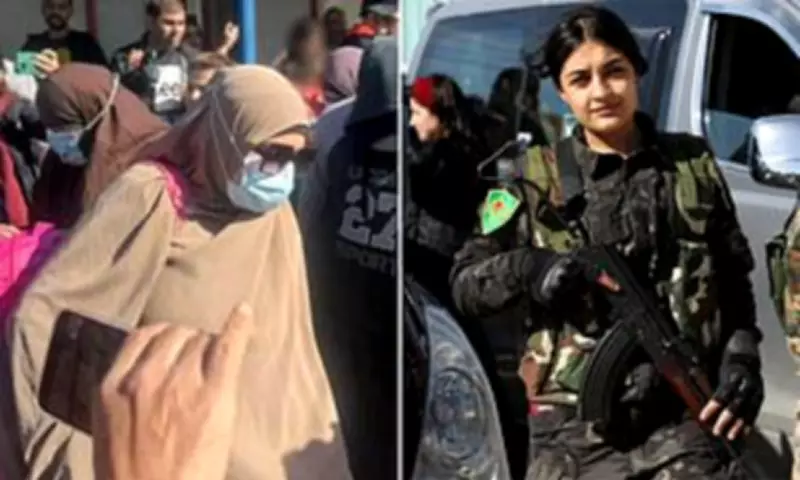
Al-Hawl and Al-Roj camps, situated in north-eastern Syria, once held more than 70,000 prisoners at their peak in 2019. Among those detained were Australian women who had joined ISIS and their children. These camps were administered by the US-backed Kurdish military force known as the Syrian Democratic Forces (SDF), which played a key role in defeating the Islamic State in 2019.

Nevertheless, Kurdish control over these camps has been fragile since rebels toppled Syrian President Bashar al-Assad's regime in late 2024, installing a new government under former fighter Ahmed al-Sharaa.
Recent Developments
Ahmed al-Sharaa vowed to reunify Syria and, in January, seized the Al-Hawl camp, prompting thousands of prisoners to flee. That same month, Syrian government forces targeted the Kurdish SDF, who eventually agreed to a ceasefire after several days of violent clashes.
The terms of the ceasefire call for the gradual absorption of Kurdish military and civil structures by the Syrian government, including the Al-Roj camp where the Australian women and children are being held.
US Withdrawal and Handover
The United States also handed over its last major base in Syria to Ahmed al-Sharaa's forces earlier this month. This marks the end of nearly a decade of US military presence in Syria aimed at combating ISIS, following an admission by US officials that the SDF had outlived its usefulness.
The handover of Al-Roj from Kurdish to Syrian forces has led to an agreement to release prisoners who possess travel documents to their home countries.
Australian Citizens on the Move
Among those released are four women and nine children, all Australian citizens, who left the camp on Friday. Foreign Minister Penny Wong has indicated that they could face arrest for travelling to a conflict zone and potential imprisonment if they return to Australia.
These individuals have obtained Australian passports and airline tickets to leave Syria but are likely to undergo intense security checks that could last several days in Damascus, the Syrian capital.
This group of 13 is part of a larger cohort of 34 Australians—11 women and 23 children—who previously attempted to leave Al-Roj in February but were turned back by local authorities.
Legal and Governmental Response
One of the women has been subject to a Temporary Exclusion Order, barring her return to Australia for up to two years while investigators consider potential criminal charges. The Australian government has previously warned that returning ISIS brides would face "the full force of the law" if found to have committed crimes.
Wong reiterated this warning during a press conference in Adelaide on Monday: "These are Australian citizens and the government is not assisting them to return. And if they do, they will face the full force of the law."
Defence Minister Richard Marles also told ABC Radio National on Monday that the government is not involved in the repatriation of the families. "The fundamental point to make is that the government is not involved in the repatriation of these people," he said. "We are not providing any assistance for them to come back to Australia."
A previous group of "ISIS brides" who returned under the Morrison government were not arrested and have resettled in Australia. Marles added that Australia's intelligence agencies are closely monitoring the situation and would assess any security risks associated with people returning to the country.