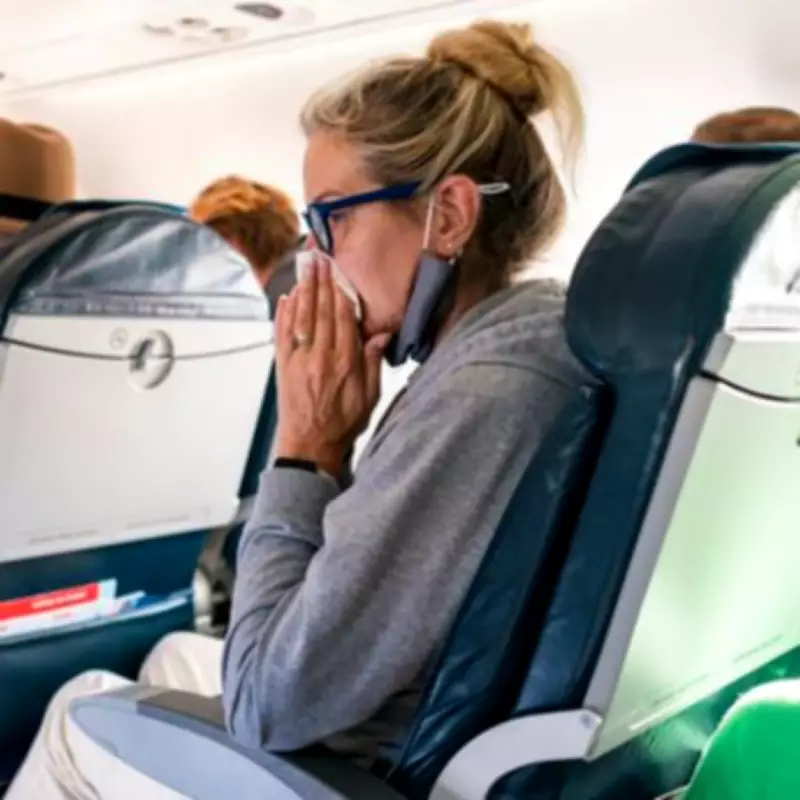
British holidaymakers planning summer trips abroad are being urged to verify their vaccination status following a sharp rise in measles cases worldwide. The warning comes as global health authorities report increasing outbreaks across Europe, Asia, and the Americas.
Measles Resurgence Across Europe and Beyond
Measles, a highly contagious viral infection, typically begins with cold-like symptoms, red eyes, and a distinctive blotchy rash. In severe cases, it can lead to complications such as meningitis, seizures, and even death. The Travel Health Pro website, a resource for travel health advice, has highlighted that the disease is on the rise in numerous countries.
Experts stated: "The summer holidays provide opportunity to explore different countries, head off for a city break, have a beach holiday or take the children to visit friends and family overseas. Good preparation and planning ahead helps ensure a safe and enjoyable trip. Travellers should be up to date with routine vaccination courses and boosters as recommended in the UK."

These vaccinations include the measles-mumps-rubella (MMR) vaccine. The guidance added: "Measles is a risk in many countries, and there has been an increase in measles cases and outbreaks reported worldwide, including in parts of Africa, Asia, Europe, and the Americas, including Canada and the United States."
European Data Highlights Alarming Trends
Data from the European Centre for Disease Prevention and Control (ECDC) revealed that 3,607 measles cases were reported by 30 EU/EEA member states in the year following 1 April 2025. Among the 3,029 individuals with known age and vaccination status, 78.2% were unvaccinated, 10.6% had received one dose, and 9.9% had received two or more doses. During this period, five deaths were reported in France, the Netherlands, and Romania.
A separate report by the World Health Organisation (WHO) and UNICEF found that measles cases in Europe reached their highest level in 2024 since 1997, with 127,350 cases recorded—double the 2023 figure. Children under five accounted for over 40% of cases, and more than half required hospitalisation. Preliminary data as of March 2025 documented 38 deaths.
Dr Hans P Kluge, WHO regional director for Europe, warned: "Measles is back, and it's a wake-up call. Without high vaccination rates, there is no health security. As we shape our new regional health strategy for Europe and Central Asia, we cannot afford to lose ground. Every country must step up efforts to reach under-vaccinated communities. The measles virus never rests—and neither can we."
Rising Cases in the UK
Measles cases are also increasing in the UK. The UK Health Security Agency (UKHSA) reported 2,911 laboratory-confirmed cases in England in 2024, the highest annual total since 2012. In 2025, there were 959 confirmed cases. Between 1 January 2026 and 11 May 2026, 542 cases were reported, an increase of 65 cases since the previous report on 27 April 2026.
Symptoms and Transmission
Measles spreads very quickly through coughing, sneezing, or breathing. Initial symptoms resemble a common cold, followed by a rash that appears several days later. Symptoms include:
- A high temperature
- A runny or blocked nose
- Sneezing
- A cough
- Red, sore, watery eyes
The rash typically starts on the face and behind the ears, then spreads across the body. Spots may become raised and merge into blotchy patches, which are usually not itchy. The NHS warns that measles can cause severe complications if it spreads to the lungs or brain, including pneumonia, meningitis, vision loss, and seizures. In serious cases, it can be life-threatening.
Prevention and Vaccination
To prevent the spread, the NHS advises staying off nursery, school, or work for at least four days after the rash appears. Avoid close contact with babies, pregnant women, and those with weakened immune systems. If you suspect measles, call your GP before visiting to avoid infecting others.
Self-care measures include resting, drinking plenty of fluids, taking paracetamol or ibuprofen for fever, and gently cleaning crusts from the eyes with cooled boiled water. Open windows and doors to reduce transmission, wash hands frequently, use tissues for coughs and sneezes, and avoid sharing cutlery, cups, towels, or bedding.

The MMR or MMRV vaccine is the best protection against measles. The NHS states: "Both vaccines also protect you from mumps and rubella, and the MMRV vaccine also protects you from chickenpox." The MMRV vaccine is offered to young children in the UK, while the MMR vaccine is recommended for adults and older children who missed earlier vaccination. Check with your GP if you are unsure about your vaccination status; the vaccine is free on the NHS.